
Reviewed · BOSPHORUS SUNSET CRUISES
Majestic Istanbul: Walking Tour & Sunset Cruise on the Bosphorus
Footprints in old Istanbul, then sail. This tour strings together major sights in and around Sultanahmet and ends with a sunset Bosphorus cruise, so you get daytime architecture and evening water views in one smooth day. I especially like the guide-led pacing, including moments like Mohammed, who gets attention for helping people nail great photos. One key consideration: you do not do Hagia Sophia inside, and access at the Blue Mosque can be limited on Fridays (exterior only).
By the time you reach the waterfront, the whole day feels less rushed. I also love the included food plan, from Turkish baklava and cookies to fresh fruit and tea or coffee, plus the sense that the cruise staff actually make the experience comfortable. It is also a practical choice if you prefer a moderate walk and clear transit steps instead of trying to stitch together these sights on your own.
In This Review
- Key things that make this tour worth your time
- Price and Logistics: What $119.14 actually buys you
- How the day moves: meeting, tram hops, and getting to the pier
- Sultanahmet Square: the Hippodrome’s monuments up close
- Start with the Hippodrome track and spina
- Walled Obelisk: a built-from-stones survivor
- Serpent Column: Greek victory turned into bronze symbolism
- Obelisk of Theodosius: an Egyptian monument re-erected in Constantinople
- German Fountain: a modern marker in an ancient arena
- Blue Mosque and Süleymaniye: comparing Ottoman power through architecture
- Blue Mosque (Sultan Ahmed Mosque): tiles, domes, and the minaret story
- Süleymaniye Mosque: Mimar Sinan’s space and scale
- Hagia Sophia without the inside, plus Topkapi’s first courtyard
- Hagia Sophia: a monumental masterpiece, no interior visit
- Topkapi Palace: only the first courtyard
- Çemberlitaş Column of Constantine: a quick stop with a big meaning
- Markets in a plan: Grand Bazaar plus Spice Bazaar
- Grand Bazaar: size, age, and the one-day closure you must know
- Spice Bazaar (Mısır Çarşısı): flavors and Ottoman-era commerce
- Bosphorus sunset cruise: the part you will talk about later
- Snacks, drinks, and the pace of a 7-hour afternoon
- Value check: when this is a smart buy, and when it is not
- Who should book this tour, and who should skip it
- Final call: should you book Majestic Istanbul
- FAQ
- What is the price per person?
- How long is the tour?
- What time does the tour start?
- Where do I meet the guide?
- Where does the tour end?
- Is the tour offered in English?
- What is the maximum group size?
- Is there an interior visit to Hagia Sophia?
- What happens if I visit on a Friday?
- Is the Grand Bazaar open on Sundays?
Key things that make this tour worth your time
- Small group size (max 20) keeps the day from feeling chaotic.
- Sultanahmet monuments in a tight route helps you understand the Byzantine core fast.
- Tram rides are built in, so you are not guessing how to hop between areas.
- Blue Mosque + Süleymaniye pair well for comparing Ottoman styles.
- Topkapi and Hagia Sophia are limited by design, so you still see a lot without getting stuck indoors.
- Sunset Bosphorus cruise with snacks and heaters turns the afternoon into an evening event.
Price and Logistics: What $119.14 actually buys you
At $119.14 per person for about 7 hours, the value is not just the sightseeing names. You are also paying for a professional guide, included tram tickets for key hops, transportation from the old city to the pier, and a set food-and-drinks package that includes light snacks, cookies, Turkish baklava, tea and coffee, and a fruit platter. That matters in Istanbul, where buying your own transit plus snacks plus guided time can add up quickly.
You start at the Turkish & Islamic Arts Museum on Binbirdirek, near At Meydanı (Fatih), and you end at Kabatas Square (Beyoğlu). The route is designed around public transport connections, and the walking portion is described as moderate, focused on the Sultanahmet old-city area.
One more practical point: this is offered in English, and the group is capped at 20 travelers. That size is big enough to meet people, but small enough that your guide can keep track of timing and questions.
Catch the mosques silhouetted at golden hour
- Istanbul Bosphorus Sunset Cruise on Luxury Yacht
★ 5.0 · 4,465 reviews - Istanbul: Bosphorus Sunset Cruise on Yacht with Live Guide
★ 4.9 · 2,845 reviews - Istanbul: Bosphorus Sunset Cruise with Drinks & Snack
★ 4.8 · 2,716 reviews
How the day moves: meeting, tram hops, and getting to the pier
The schedule starts at 1:00 pm, with a guided city walk that gradually leads you away from Sultanahmet and into markets and viewpoints. A notable logistics win is that the tour explicitly uses the tram to move between Sultanahmet Square and two later stops: Column Constantine and the Grand Bazaar.
That tram step is more than convenience. It helps you avoid the most common first-time Istanbul headache: spending time figuring out buses and lines while your daylight is disappearing. Instead, your day stays structured, and you can spend more mental energy on what you are seeing.
When you reach the water side, the tour shifts from walking to cruising. Transportation is included to get you from the old city to the pier, which you will appreciate if your hotel is not within easy walking distance.
Sultanahmet Square: the Hippodrome’s monuments up close
Most visitors get a quick glance at the pieces of the old imperial core. This tour gives you a concentrated walk through the Hippodrome of Constantinople area, which was the public heart of Byzantine Istanbul for centuries. You see how the space worked, even if only fragments remain, including the track area and the monumental markers along the central divider.
Start with the Hippodrome track and spina
You begin at Sultanahmet Meydani, where the Hippodrome’s structure is still legible in the layout. It is a U-shaped racing track with tiered seating in its original design, built for tens of thousands. The guide’s role is important here, because the monuments will mean more once you understand the Hippodrome as a political and social stage, not just a leftover plaza.
Walled Obelisk: a built-from-stones survivor
Next is the Walled Obelisk, also known as the Masonry Obelisk. Unlike the big single-piece Egyptian obelisks, this one is made from roughly cut stones, which is why it earned the nickname “masonry.” It is a small stop in time, but a good reality check that Istanbul’s ancient layer cake does not always survive in pristine form.
More of Istanbul beyond the obvious sights
- Istanbul: Blue Mosque, Hagia Sophia, & Old Town Walking Tour
- Istanbul: Fener Balat Half-day Guided Walking Tour
- Istanbul Highlights Small-Group Walking Guided Tour
- Istanbul: European and Asian Side Guided Foodie Walking Tour
- Half day Fener-Balat Walking Tour in Turkiye
- Istanbul: Colorful Fener & Balat Walking Tour w/Expert Guide
Serpent Column: Greek victory turned into bronze symbolism
Then you hit the Serpent Column, a bronze monument that originally stood at Delphi in Greece and was moved here later. The story matters: three serpents’ heads intertwine to form the shaft, and they once supported a golden tripod. The commemoration is tied to the Greek victory over the Persians at the Battle of Plataea in 479 BC, so it reads like history plus myth in one object.
Obelisk of Theodosius: an Egyptian monument re-erected in Constantinople
The Obelisk of Theodosius is another visual anchor. It is made of red granite and is about 20 meters tall today, originally constructed for Pharaoh Thutmose III around 1450 BC, then re-erected here under Theodosius I in the late 4th century. Even if you never read a hieroglyph closely, you can still grasp the empire-wide habit of relocating impressive monuments to new capitals.
German Fountain: a modern marker in an ancient arena
Your next short stop is the German Fountain. You will not lose time here, but it gives you another point along the same old imperial axis, which helps you connect the full area into a single mental picture.
What you should do at this stage: take a slow lap, look back at where you started, and notice how the monuments align along the old track divider idea. This is where the walking tour earns its keep, because you learn the “why” behind what looks like scattered leftovers.
Blue Mosque and Süleymaniye: comparing Ottoman power through architecture
After the Hippodrome pieces, you shift from Byzantine remnants to Ottoman architecture, with two major mosque stops that work as a direct comparison.
Blue Mosque (Sultan Ahmed Mosque): tiles, domes, and the minaret story
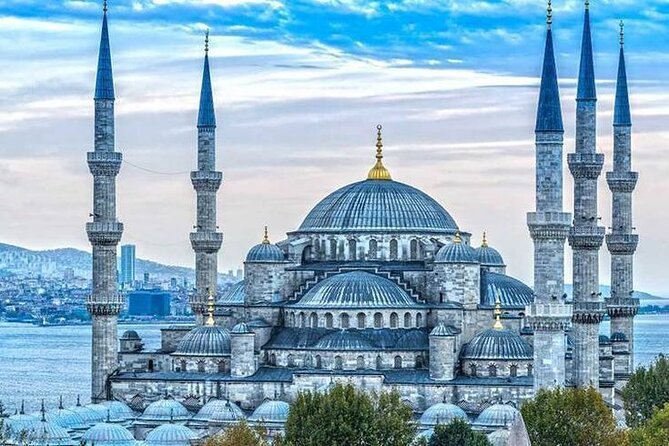
The Blue Mosque is constructed between 1609 and 1616 under Sultan Ahmed I, and the nickname comes from the blue tiles inside. The tour also flags a fun architectural detail: the mosque has six minarets, which was unusual at the time because many mosques had four, two, or one. That created controversy because six minarets matched the number at Masjid al-Haram in Mecca, and the fix involved adding a seventh minaret there later.
On Fridays, your access will be limited to exterior visits only. If you plan this trip on a Friday, that is not something to worry about, it is just something to plan for. Also, ladies are recommended to bring scarfs to use during your visit.
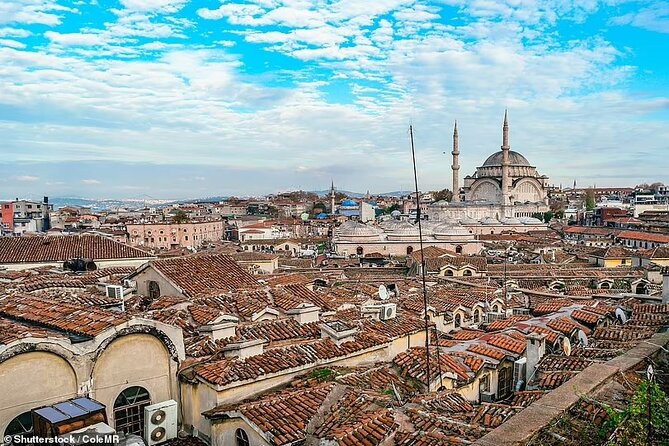
Even if you already know Istanbul’s big-name mosques, this one is worth the stop because it forces you to look at symmetry and proportions. The main dome, the half structure of the surrounding domes, and the way the six minarets shape the skyline all make the place feel intentional, not just decorative.
Süleymaniye Mosque: Mimar Sinan’s space and scale
Next comes the Süleymaniye Mosque, commissioned by Sultan Süleyman the Magnificent and designed by the architect Mimar Sinan, completed in 1557. The tour highlights how Sinan blended Ottoman tradition with Byzantine influence, especially in the dome design that draws inspiration from Hagia Sophia.
A standout detail from the description is the dome scale: about 53 meters high and roughly 27.5 meters in diameter. That is the kind of number that helps you understand why people can feel small here, but in a good way. This stop is also a lesson in engineering, since the structure uses half-domes and buttresses to carry the space.
What you should do here: slow down at the edges. Even if you only get limited time inside or at the exterior, your best photos and best understanding usually come from stepping back and letting the whole silhouette register.
Hagia Sophia without the inside, plus Topkapi’s first courtyard
Not every tour gives you both Hagia Sophia and Topkapi because it takes time and lines can be intense. This one makes a different choice, and that choice can be smart if you hate being stuck indoors for hours.
Hagia Sophia: a monumental masterpiece, no interior visit
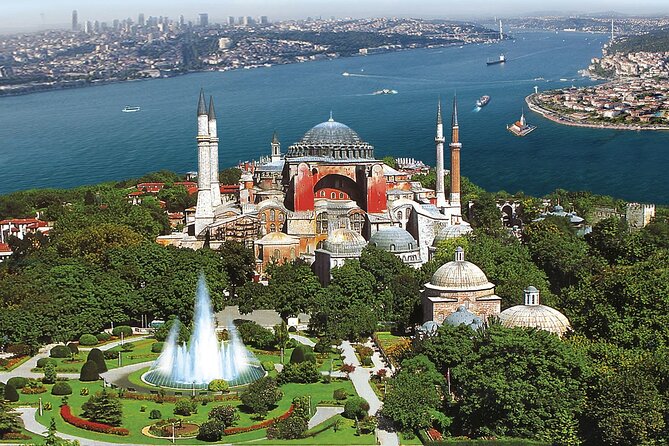
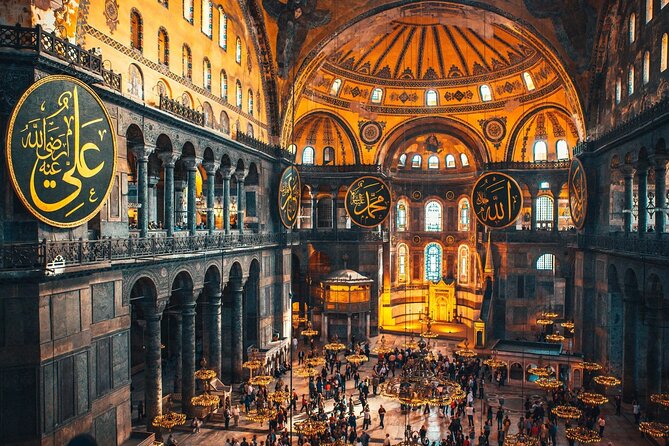
You will visit Ayasofya (Hagia Sophia), described as spanning over a millennium and shifting roles over time from cathedral to later functions. The key limitation is clear: there is no interior visit.
That means you are not going to walk the inside spaces for the full effect, so manage expectations. Still, an exterior look is helpful for orientation because it lets you connect the building’s scale to the Ottoman mosques you see later the same day.
Topkapi Palace: only the first courtyard
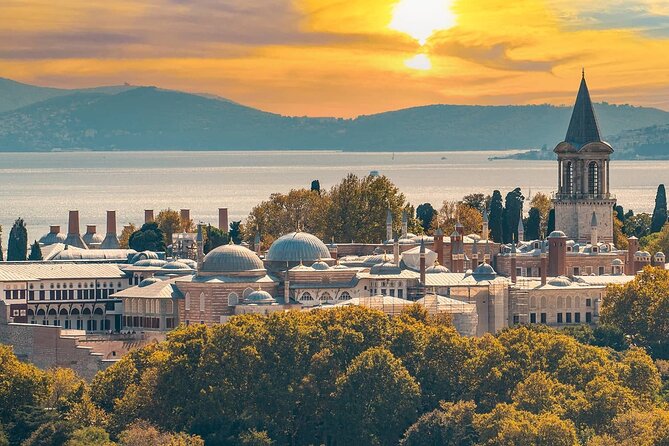
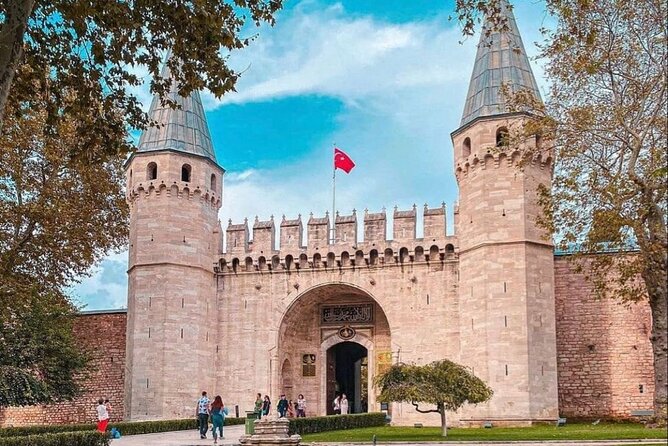
Then you reach Topkapi Palace, home of the Ottoman sultans for nearly 400 years, from the 15th to the 19th centuries. The palace complex is huge at about 700,000 square meters at its zenith, but your visit is limited to the first courtyard only.
Again, that sounds like a compromise, but it can be a practical one. You get a taste of the palace’s layout and status without burning your afternoon in areas where you might need more time to truly absorb details. If you are a first-time visitor, the first courtyard is a solid starting point because it gives you the “palace as world” feeling quickly.
Who this fits: people who want major highlights, and who prefer moving through Istanbul with structure instead of getting stuck in long museum-style loops.
Çemberlitaş Column of Constantine: a quick stop with a big meaning
Your route includes Cemberlitas Sutunu, also known as the Column of Constantine or the Burnt Column. This is tied to the dedication of Constantinople as a new Roman capital in 330 AD.
The guide material includes a fascinating symbolism angle: the column was made from porphyry with a purple hue, and the original statue at the top depicted Constantine dressed like Apollo, tying the emperor to the idea of a sun god and savior. The original statue is lost, and restorations happened after fires and earthquakes, so you are seeing a monument that has lived through history rather than a pristine antique display.
Time here is brief, so use it for what it is best for: a quick “this city used to build its identity in stone” moment.
Markets in a plan: Grand Bazaar plus Spice Bazaar
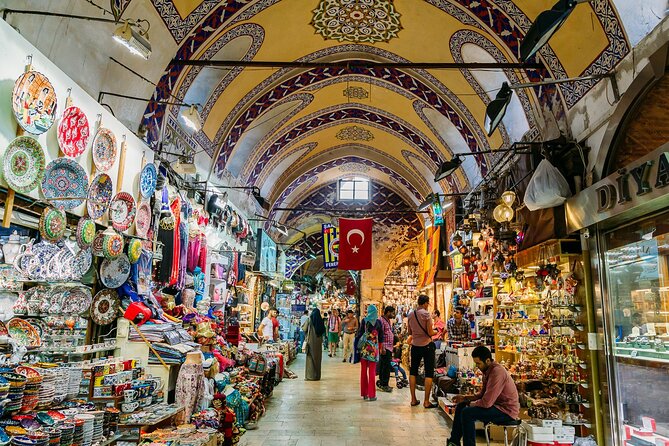
From there, the day turns more hands-on with two famous markets. The tour uses the tram to reach at least the Grand Bazaar, which saves you from the worst part of market navigation, walking in the wrong direction while trying to orient.
Grand Bazaar: size, age, and the one-day closure you must know
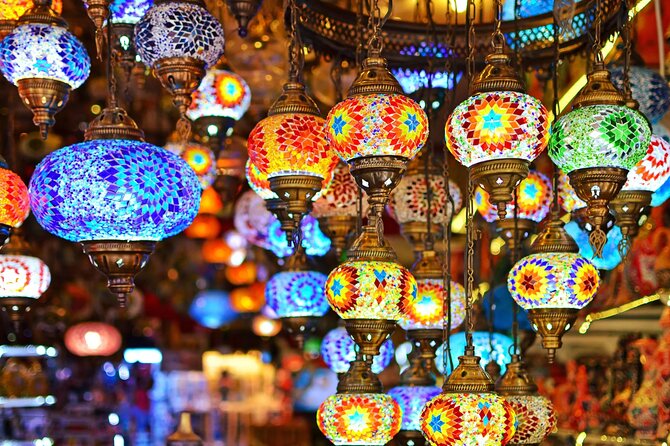
The Grand Bazaar is the world-famous covered market, called Kapalıçarşı. Construction began in 1455 after the Ottoman conquest under Sultan Mehmed II, and the bazaar grew until it reached its final shape in the 17th century, with thousands of shops in a maze of streets.
There is one practical rule to remember: Grand Bazaar is closed on Sundays. If your trip lines up with a Sunday afternoon, plan on skipping this part or reorganizing your day outside this tour.
In the time you have, focus on browsing rather than hunting for one perfect item. This is a place where momentum matters, and a guided time box helps you avoid getting trapped for too long.
Spice Bazaar (Mısır Çarşısı): flavors and Ottoman-era commerce
The tour also includes Misir Carsisi (Spice Market), also called the Egyptian Bazaar. You can expect a strong emphasis on spices, herbs, sweets, dried fruits, nuts, and other culinary goods.
It was built in the 1660s as part of the New Mosque complex, with revenues meant to support mosque maintenance. There are 85 shops lined along an L-shaped, vaulted corridor, with multiple entrances that make it easier to enter and exit than some other market spaces.
Market tip that actually helps: take in the smells first. Then, when you spot something you want, you will shop with clearer priorities instead of feeling overwhelmed by the options.
Bosphorus sunset cruise: the part you will talk about later
This is where the day changes tone. You go from old-city walking to open water, and the view pulls everything together.
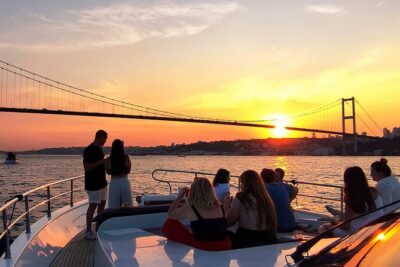
The cruise experience is described as an evening sunset yacht tour on the Bosphorus with spacious boats that feel more comfortable than the usual day-boat vibe. Staff get praise for being friendly, and you get plenty of snacks and drinks during the ride.
One of the biggest “yes” reasons is the perspective. You see both the European and Asian sides of Istanbul, including sights that are harder to appreciate as a tourist when you are landlocked. On top of that, the guide support can matter for photo timing. In one of the accounts shared, Mohammed went above and beyond to help people get the perfect shots.
Comfort details are also real here. In cold months like January, it can get cold once the sun drops. The tour provides small blankets and a heater in the cabin, but it is still smart to bring very warm clothing and gloves if you are going in winter. Another small comfort win from the shared feedback: the boats and cabins are described as luxurious and spacious, so the cruise does not feel tight or crowded.
One more note: the tour description says hotel pickup and drop-off are not included. Still, at least one group reported that the company handled a shuttle because their hotel was far from the pier. Treat that as a possible helpful extra, not a promise.
Snacks, drinks, and the pace of a 7-hour afternoon
The included food is more than filler. You get light snacks, cookies, Turkish baklava, and a fresh seasonal fruit platter. Drinks include tea and coffee, plus homemade lemonade in summer months and fresh fruit juice in winter months.
That menu matters because the walking portion is packed with stops. You are not expected to “power through” on an empty stomach while you bounce from monument to mosque to palace area to markets.
If you care about pacing, the tour is built for a steady rhythm. Short stops at the Hippodrome monuments keep things moving, while longer mosque and palace segments add weight where it counts. The whole structure is meant to reduce the most common Istanbul travel problem: spending too much energy on logistics.
Value check: when this is a smart buy, and when it is not
You are paying for four things at once: guided sightseeing, included transport between zones, a set food-and-drinks program, and the sunset cruise. If you were to assemble those separately, you would likely spend more on guide time plus local transit plus snacks, and you would still need to solve how to get to the pier at the right time.
This tour is also a good match if you do not want a museum marathon. The approach is highlight-focused, with no Hagia Sophia interior visit and only the first courtyard at Topkapi. That trade gives you more time for the outdoor parts of Istanbul and the evening cruising.
It may not be a perfect fit if you specifically want full interior experiences at Hagia Sophia and deep palace rooms at Topkapi. Also, if you are extremely sensitive to walking, even a “moderate walking tour” still includes walking through historic areas and market spaces.
Who should book this tour, and who should skip it
Book it if:
- You want a first-timer friendly plan that hits big names without endless line time.
- You like architecture and want Ottoman and Byzantine landmarks on the same day.
- You really want the Bosphorus at sunset, with snacks and comfort on board.
- You prefer small-group touring, capped at 20 travelers.
Skip it if:
- Interior access is your top priority for Hagia Sophia and Topkapi.
- You only visit on Fridays and cannot handle exterior-only access at the Blue Mosque.
- You are traveling on a Sunday and were hoping to include the Grand Bazaar, since it is closed that day.
Final call: should you book Majestic Istanbul
If your goal is a well-paced Istanbul day with the right mix of monuments, mosques, markets, and a true sunset payoff, I think this is a strong choice. The best reason is simple: the day is structured so you get major sights plus the Bosphorus evening without turning into a frantic transport puzzle.
My only caution is expectation-setting. You get highlights, not full interior marathons, and Friday mosque access can be exterior only. If that lines up with how you like to travel, this is a good value pick at $119.14, especially because the snack and cruise package is part of what you are buying.
FAQ
What is the price per person?
The price is $119.14 per person.
How long is the tour?
It is about 7 hours.
What time does the tour start?
The start time is 1:00 pm.
Where do I meet the guide?
You meet at the Turkish & Islamic Arts Museum, Binbirdirek, At Meydanı Cd No:12, 34122 Fatih/İstanbul.
Where does the tour end?
The tour ends at Kabatas Square, Kabataş, Meclis-i Mebusan Cd., 34427 Beyoğlu/İstanbul.
Is the tour offered in English?
Yes, it is offered in English.
What is the maximum group size?
The tour has a maximum of 20 travelers.
Is there an interior visit to Hagia Sophia?
No, there is no interior visit to Hagia Sophia.
What happens if I visit on a Friday?
On Fridays, only exterior visits are available to the Blue Mosque.
Is the Grand Bazaar open on Sundays?
No, the Grand Bazaar is closed on Sundays.
More Cruises & Boat Tours in Istanbul
- Istanbul: Bosphorus Dinner Cruise & Show with Private Table★ 4.8 · 62,058 reviews
- Istanbul: Bosphorus Sightseeing Cruise Tour with Audio Guide★ 4.6 · 4,704 reviews
- Bosphorus Yacht Cruise Experience: Visit the Asian Side★ 5.0 · 2,251 reviews
- Istanbul: Bosphorus Cruise with Dinner Show★ 4.4 · 2,181 reviews
- Bosphorus Dinner Cruise with Show and Private Table★ 4.5 · 2,021 reviews
More Evening Experiences in Istanbul
- Istanbul: Daytime or Sunset Sightseeing Cruise & Audio Guide★ 4.8 · 14,430 reviews
- Istanbul: Bosphorus Dinner Cruise & Turkish Night Show★ 4.8 · 12,954 reviews
- Istanbul: Sunset or Day Small-Group Yacht Cruise with Snacks★ 4.9 · 3,774 reviews
- Bosphorus Sunset Yacht Experience: Istanbul’s Best★ 5.0 · 2,181 reviews
- Sunset or Daytime Istanbul Guided Luxury Yacht Cruise with Snacks★ 5.0 · 1,977 reviews
Newest tours in Istanbul
Bosphorus Sunset Cruises, compared.

Istanbul Bosphorus Sunset Cruise on Luxury Yacht
Read our review →
Bosphorus Sunset Cruise on Yacht with Live Guide
Read our review →
Bosphorus Sunset Yacht Experience: Istanbul’s Best
Read our review →
Istanbul Sunset Cruise on Luxury Yacht – Guided Group Cruise
Read our review →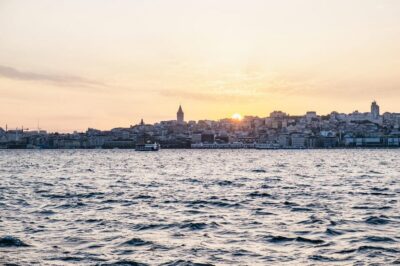
Sunset Cruise with Stop along Asia: Discover Istanbul’s Bosphorus
Read our review →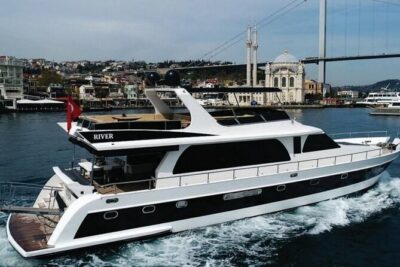
Bosphorus Sunset Cruise on Luxury Yacht with Transfers
Read our review →Browse the lists this tour appears in