Reviewed · HALF-DAY
Crossroads of Humanity: Istanbul Half-Day Tour
Four hours can change how you see Istanbul. This half-day, Christian sites walk through old Istanbul layers, from Orthodox starting points in Fener to standout Byzantine churches and ruins, with a guide who connects each stone to the bigger story.
I really like the tight focus of this route. You get a clear chain of stops, and you also get the kind of guide explanation that helps you read what you are looking at, from Constantine’s church shifts to what those mosaics and frescoes were meant to teach.
The main thing to consider is that time is short and a key site has a fixed closure day, St. Chora (Kariye Museum) is closed on Wednesdays. If your day falls that way, your experience will depend more on what is open that day.
In This Review
- Key things to know before you go
- A 4-hour route that turns Istanbul into a Christian timeline
- Fener Patriarchate: where Orthodox Christianity’s story takes a political turn
- Panagia of Blachernae and the Hagiasma healing legend
- St. Savior in Chora (Kariye Museum): mosaics and frescoes with a purpose
- Zeyrek Pantocrator: a maze of church life in one complex
- Pammacaristos at Fethiye: refined Paleologan details and a changing patriarchate
- Balıklı Zoodochos Pege: gold fishes, legends, and church buildings near water
- What you get for $354, and whether it feels worth it
- Logistics that actually affect your experience
- Choosing a guide and how the tour feels in motion
- Should you book this Crossroads of Humanity half-day tour?
- FAQ
- How long is the Crossroads of Humanity Istanbul half-day tour?
- Is pickup included, and when are shuttle times?
- What languages are available for the live guide?
- Which sites are included on the itinerary?
- Is St. Chora open every day?
- What should I bring, and are pets or smoking allowed?
Key things to know before you go
- A half-day, religion-to-architecture route that keeps the “why” tied to each stop you see
- Fener to Balıklı pacing, so you cover both church centers and waterfront-era sites
- Chora mosaics and frescoes for serious Byzantine art fans
- Zeyrek Pantocrator’s complex layout, with multiple chapel types and uses in one area
- St. Sergius and Bacchus for an easy comparison to later big Byzantine styles
- A photo-friendly plan, with stops chosen for visual details as much as stories
A 4-hour route that turns Istanbul into a Christian timeline
This is the kind of tour that works best when you want meaning fast. Istanbul has a way of layering eras on top of each other. Here, you focus that layering into one theme, Christianity’s traces, and you use architecture as your guidebook.
At 4 hours, you are not trying to conquer all of Istanbul. Instead, you are doing something smarter: you’re visiting a series of sites that show how Byzantine religious life changed over centuries, then you end with a cluster near the water where legends and church buildings mix. The route is also designed for good flow, with private A/C transportation and a guide who keeps you moving without turning it into a sprint.
One practical note: this is a private guiding experience in your chosen language (English or Spanish). If you like asking questions as you walk, this setup is a good fit. And if you are the type who wants to understand what you are photographing, the focus here is exactly that.
More of Istanbul beyond the obvious sights
- Istanbul: Fener Balat Half-day Guided Walking Tour
★ 4.9 · 1,711 reviews - Half day Fener-Balat Walking Tour in Turkiye
★ 5.0 · 308 reviews - Half Day Bosphorus Cruise with Stopover on Asian Side
★ 5.0 · 291 reviews
Fener Patriarchate: where Orthodox Christianity’s story takes a political turn
You start at the Patriarchate at Fener, a cornerstone for Orthodox Christianity in Istanbul. This first stop matters because the guide frames the story with an event that changed the status of Christianity across the Roman Empire: Constantine the Great’s declaration of Christianity as the religion of the Roman Empire.
Even if you only remember one date from the tour, remember the idea. When Christianity gained official status, the church’s center of gravity moved, and Istanbul became a major hub. Standing in the Fener area, you get a sense of why later Byzantine and Orthodox monuments cluster where they do.
I also like how this start prevents the usual “church sightseeing without context” problem. Instead of viewing each church as a random landmark, you have a framework: political shifts helped shape religious geography, and religious geography shaped architecture.
Panagia of Blachernae and the Hagiasma healing legend
Next comes the Church of Panagia of Blachernae, tied to one of Istanbul’s most famous healing legends: the Hagiasma, the fountain of holy water. The idea is simple but powerful. People believed the water could cure health problems, and even emperors reportedly visited for cleansing.
Whether you treat this as theology, history, or folklore, it is still a valuable lens. Churches like this were never only about worship inside. They also functioned as places where faith met the everyday need for healing, protection, and hope.
What to watch for as you look around is the way these sites connect sacred practice to a physical element. Holy water, holy space, and holy routine. When you walk with that in mind, you notice more than just the building, you notice the pattern of belief made physical.
St. Savior in Chora (Kariye Museum): mosaics and frescoes with a purpose
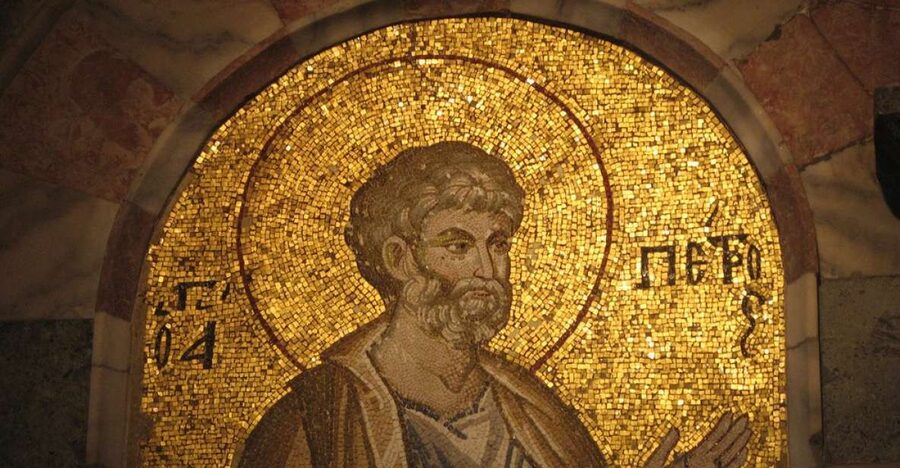
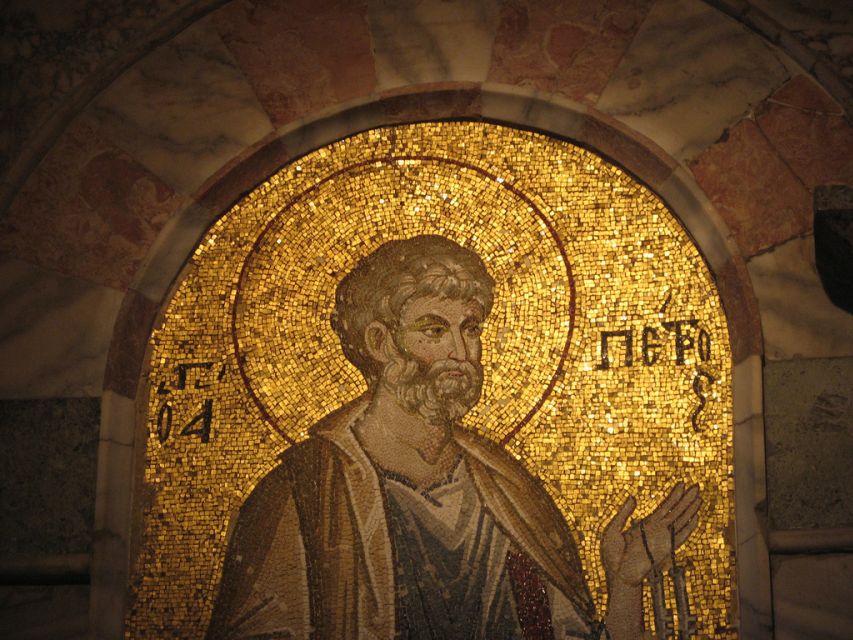
Your most art-forward stop is St. Savior in Chora, known today as the Kariye Museum. This was once a Byzantine monastery dedicated to Jesus, and it is celebrated here for its mosaics and frescoes preserved in strong condition.
This is the stop for you if you like details. Byzantine art has a “meaning per square inch” approach. The mosaics are not just decorative. They are visual theology, built to communicate doctrine and devotion through color, gold, and carefully composed scenes.
A heads-up that affects planning: St. Chora is closed on Wednesdays. If your schedule lands on a Wednesday, you will likely trade this for another open stop. The tour still stays on theme, but the “wow factor” for mosaics depends on access that day.
If you care about photos, plan to use your time here strategically. Spend a moment scanning the room composition before you shoot. It helps you choose angles that capture the art and the scale, not just close-ups.
Zeyrek Pantocrator: a maze of church life in one complex
From Chora, you head to Pantocrator (Zeyrek), described as a labyrinthine complex. And that word matters. In one area, you can find churches, funerary chapels, baths, a hospice for the aged, and even a hostel for travelers arriving today.
That mix tells you something important about Byzantine religious life. It was not only a church service in a bubble. Religious complexes also supported community needs and moving people, including care for older adults and shelter for travelers. So instead of thinking of Pantocrator as a single building, think of it as a self-contained religious city block.
The other reason Zeyrek is a favorite stop on this kind of route is architecture. The Byzantine architects figured out how to fit different functions into connected spaces. When you look at the plan, you can feel the logic even when the structure is complex.
If you like “read the ruins” sightseeing, this is a strong moment. You’re essentially practicing architectural detective work, guided by stories that help you map what you are seeing.
Add these before you book flights home:
- Istanbul: Bosphorus Dinner Cruise & Show with Private Table
- Istanbul: Daytime or Sunset Sightseeing Cruise & Audio Guide
- Istanbul: Bosphorus Dinner Cruise & Turkish Night Show
- Best of Istanbul 1, 2 or 3-Day Private Guided Istanbul Tour
- Istanbul: Basilica Cistern Fast-Track Entry and Audio Guide
- Istanbul: Hagia Sophia Skip-the-Line Ticket & Museum Option
Pammacaristos at Fethiye: refined Paleologan details and a changing patriarchate
Next you visit the remains of the Church of St. Mary Pammacaristos (Fethiye). The tour focuses on the 11th century ruins and highlights the aesthetic refinement associated with the Paleologan Age.
This stop works well for people who enjoy understanding how style changes over time. Even in ruins, you can often spot craftsmanship that tells you about the artistic mood of a later era layered onto earlier structures. The tour also adds context that helps the ruins feel connected to Istanbul’s bigger political-religious story: the site was once home to the Patriarchate after the conquests.
So you’re not just looking at a leftover shell. You are looking at a building that once mattered enough to host major church leadership. That shift in function is exactly what makes this stop rewarding, especially on a half-day schedule.
And yes, this is still a photo stop. Ruins can be tricky for photos because your eye wants the full structure that isn’t there. Let your guide orient you first, then shoot. You’ll get better angles that show proportion and detail instead of only damage.
Balıklı Zoodochos Pege: gold fishes, legends, and church buildings near water
As you move toward the water, the tour takes you to Zoodochos Pege at Balıklı. Here, you can see an underground cistern filled with gold fishes, tied to the miracle of fishes.
That blend of underground water, legend, and religious site makes Balıklı feel like Istanbul in miniature. It also pairs well with the practical reality of the tour: by the end of the half-day, your brain is tired. These stories help you reset because they are easy to remember. Miracle of fishes. Holy water. Healing and faith in a physical spot.
From Balıklı, you can also visit St. Sergius and Bacchus, highlighted as prime examples of Byzantine architecture. The tour notes that it can look like a smaller version of Hagia Sophia, and that is a helpful way to think about it. You’re seeing an architectural precursor, not the biggest showpiece, but an earlier step in the evolution of style.
If you like architecture more than crowds, St. Sergius and Bacchus is a smart finale. It gives you a strong visual memory to carry home, especially after the earlier mix of mosaics, ruins, and complex layouts.
What you get for $354, and whether it feels worth it
At $354 per person for a 4-hour private guiding experience, the real question is value. This is not priced like a quick walking group tour. You are paying for a bundle of extras that matter in Istanbul, where distance, traffic, and ticket lines can waste time.
Here’s what is included:
- Private A/C transportation
- Donations to churches
- Museum entrance fee
- Private guiding in English or Spanish
- Parking
- VAT (18%)
- Skip the ticket line
- Free pick-up and drop-off from centrally located hotels
Add it up and you can see why the price is what it is. You are buying time savings and guidance, plus the access costs. The skip-the-line part is especially relevant with popular sites like Chora.
If your goal is maximum learning in minimum time, this price starts to make sense. If your goal is to roam independently with minimal structure, it can feel high. In that case, you might prefer building your own route. But if you want the story thread, this is built for that.
One more value point: private transport and guiding make the itinerary easier to handle for people who do not want to negotiate metro routes, taxis, and walking distances with heavy context-questions in their heads.
Logistics that actually affect your experience
This tour comes with a few timing and comfort details that are worth planning around.
You can use the included free pick-up if you stay in a centrally located Istanbul hotel. The shuttle windows are split by tour time: either 08:00 to 09:00 or 13:00 to 14:00, and it takes about 45 to 60 minutes. After booking, you call the local supplier to learn the exact pick-up time and whether the shuttle is available for your hotel.
That matters because you do not want to arrive late to a half-day plan built around opening hours. It is also why you should confirm your shuttle details early. This is a short tour, so you want every stop to have its full time.
What to bring is simple: passport or ID card. Also note that pets are not allowed and smoking is not allowed.
Finally, if you are scheduling your week, remember that St. Chora is closed on Wednesdays. It is the one closure explicitly stated, so it is the one that can change your “art highlight” experience.
Choosing a guide and how the tour feels in motion
The biggest quality lever here is the guide. This route is full of religious and historical references, and without good explanations, you might feel like you are just moving between churches.
In particular, I love how this style of guide-led walking can feel like you have a calm local friend showing you what matters. If you happen to get a guide like Ertuğrul, the experience tends to read as patient and polished, with enough sophistication to handle details without rushing you.
That matters most at the stops where architecture and legend overlap, like Hagiasma and Balıklı. You need someone who can connect the story to the physical site in front of you, not just recite facts.
Should you book this Crossroads of Humanity half-day tour?
Book it if:
- You want Orthodox and Byzantine Christianity sites tied together by a story, not random sightseeing.
- You like mosaics, frescoes, and architecture, and you want help reading them.
- You prefer a tight schedule with skip-the-ticket-line convenience.
- You can travel on days when St. Chora is open, or you are okay with shifting the art focus if it is closed.
Consider skipping or switching if:
- Your trip is tightly planned around Wednesday museum time and mosaics are your top priority.
- You are comfortable building your own route and you do not need private guiding for context.
- You want a longer, slower experience rather than a packed 4-hour sweep of multiple areas.
Overall, I think this is a strong choice for first-time Istanbul visitors who care about meaning. You trade “seeing everything” for “seeing the right pieces and understanding why they matter,” and that can be the best use of a half day in a city that moves fast.
FAQ
How long is the Crossroads of Humanity Istanbul half-day tour?
The tour lasts 4 hours.
Is pickup included, and when are shuttle times?
Yes, free pick-up/drop-off from centrally located hotels is included. Free shuttle pick-up is offered between 08:00 and 09:00 or between 13:00 and 14:00, and the ride takes 45 to 60 minutes. After booking, you need to call the local supplier to learn the exact pick-up time and shuttle availability.
What languages are available for the live guide?
The live tour guide is available in English and Spanish.
Which sites are included on the itinerary?
The tour includes stops such as the Patriarchate at Fener, Church of Panagia of Blachernae, St. Savior in Chora (Kariye Museum), Pantocrator (Zeyrek), Church of St. Mary Pammacaristos (Fethiye), Zoodochos Pege at Balıklı, and St. Sergius and Bacchus.
Is St. Chora open every day?
No. St. Chora (Kariye Museum) is closed on Wednesdays.
What should I bring, and are pets or smoking allowed?
Bring passport or ID card. Pets are not allowed, and smoking is not allowed.
Newest tours in Istanbul
Half-Day, compared.
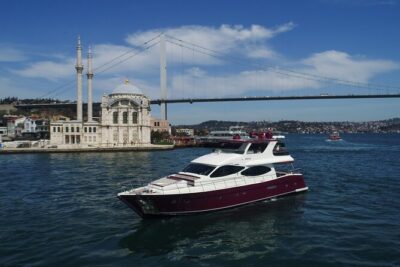
Half Day Bosphorus Cruise with Stopover on Asian Side
Read our review →
Half-Day Bosphorus Cruise to Black Sea from Istanbul with Lunch
Read our review →
Morning Istanbul: Half-Day Tour with Blue Mosque, Hagia Sophia, Hippodrome and Grand Bazaar
Read our review →