
Reviewed · EPHESUS TOURS
3 Days Ephesus, Pamukkale, Priene, Miletus and Didyma Tour from Istanbul
Western Turkey can feel like a blur of ruins. This 3-day circuit is organized around smart route choices, so you see the big names and the quieter, brainy stops.
I love the guided pacing. It walks you downhill through Ephesus from the Upper Gate, then keeps the day flowing with short museum and food breaks instead of long dead time.
I also like the variety of sites. You get Roman city life in Ephesus, philosophical roots in Miletus and Priene, an oracle giant at Didyma, and the “cotton castle” white terraces at Pamukkale.
One drawback to consider: the days are packed and walk-heavy. You’ll do museum floors, theaters, and steps, including extra climbing at the Terrace Houses, so comfortable shoes and an “I can keep moving” attitude really matter.
In This Review
- Key highlights worth planning for
- A smooth start out of Istanbul, then straight into ancient Aegean life
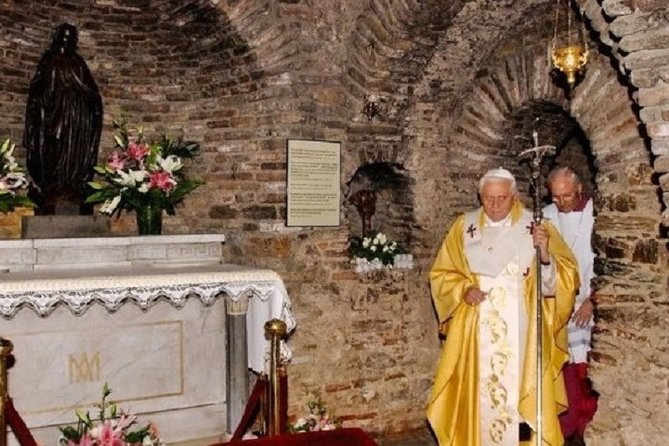
- Virgin Mary’s House: a calm first stop before the crowd wave
- Ephesus the smart way: Upper Gate, downhill flow, big Roman set pieces
- The Terrace Houses: optional luxury under a protective roof
- Ephesus Experience Museum: why the tech stop can actually help
- Selcuk lunch and the Artemis column: a quick win for variety
- Kusadasi hotel evening: don’t waste it
- Priene and Miletus: the quieter cousins of Ephesus that you shouldn’t skip
- Didyma’s Temple of Apollo: huge, weird, and very worth the detour
- Late afternoon back to Kusadasi: keep it simple
- Pamukkale day: Hierapolis necropolis views, then the white terraces
- Hierapolis Archaeology Museum: the quick art hit
- Cleopatra Pools: free area, paid swim, and a sensible choice
- Pamukkale thermal terraces: walking barefoot on cotton castle
- Lunch in Pamukkale and the final drive back to Istanbul
- Price and value: what you’re paying for at about $1,017 per person
- Who this tour fits best, and who should think twice
- Should you book this 3-day Ephesus to Pamukkale circuit?
- FAQ
- What’s included in the tour price?
- Are lunch and dinner included?
- Which sites have extra entrance fees?
- Do I need to buy domestic flight tickets?
- Is the tour walk-intensive?
- Can I cancel for a full refund?
Key highlights worth planning for
- Early start at the Virgin Mary’s House, with time to breathe before Ephesus crowds hit
- Ephesus from the Upper Gate downhill route, making the key sights line up naturally
- The Terrace Houses option, with glass walkways and step-heavy interior access (check your comfort level)
- Priene, Miletus, and Didyma, three sites often skipped because Ephesus hogs attention
- Pamukkale timing plus Hierapolis, mixing necropolis views with the white limestone terraces
- Small group size up to 15, which tends to make questions and flexibility easier
A smooth start out of Istanbul, then straight into ancient Aegean life
This trip is built like a conveyor belt, but a good one. You get private pickup from your Istanbul hotel, and you’re driven to the airport with enough buffer time to avoid the usual stress. After you fly to Izmir, you’re met and whisked to Selcuk, where your guide and group connect and the real sightseeing begins.
That opening matters more than you’d think. Western Turkey is the kind of place where one late morning can snowball into “we miss the best light” or “we’re stuck in the worst lines.” Here, the structure keeps you from wasting your energy on logistics, so you can focus on the sights.
From a reader-value standpoint, I like that the plan uses transfers efficiently. You’re not forced to self-navigate between multiple hotel areas, and you don’t spend your first day trying to figure out transport after a flight.
White travertine terraces, a day trip away
- 6 Days Turkey Tour Cappadocia, Pamukkale, Ephesus, Gallipoli Troy
★ 5.0 · 109 reviews - 7 Days Best of Turkey Tour: Istanbul-Cappadocia-Ephesus-Pamukkale
★ 5.0 · 91 reviews - 5-Day Aegean Tour – Gallipoli, Troy, Ephesus, Kusadasi, Pamukkale
★ 4.5 · 86 reviews
Virgin Mary’s House: a calm first stop before the crowd wave
Day one starts with a drive up to Mt. Koressos for the Virgin Mary’s House. The timing is the big win. You’re going before the day gets loud, which gives you a quieter feel for the stone structure, the candle area, and the wishing wall.
If you’re the type who likes a moment of stillness before plunging into archaeology, this stop works. It also helps you reset your brain. Ephesus is huge and multi-layered. Starting with something small and spiritual gives you a different lens for the rest of the Roman-and-beyond story.
There’s also a practical side. This part is relatively short, so you’re not burning your whole morning on a stop that can feel repetitive. You get the atmosphere, then you move on.
Ephesus the smart way: Upper Gate, downhill flow, big Roman set pieces
When you arrive in Ephesus, you start at the Upper Gate and walk downhill through marble streets. This matters because Ephesus is not a flat museum. The route choice turns a potentially tiring scramble into a natural descent. Your feet are still working, but the sight order makes sense.
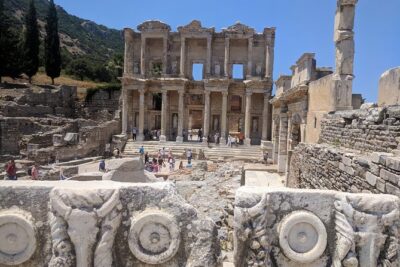
The main hits are exactly what you hope for: Celsus Library, the Temple of Hadrian, and the Great Theatre where St. Paul preached. If you’ve ever felt confused by ruins that look like random piles, this kind of guided walk can help you build a mental map fast. The key buildings line up, and you understand why they mattered.
The Terrace Houses: optional luxury under a protective roof
A standout add-on is the Terrace Houses, sometimes called a museum within a museum. You walk on glass walkways over mosaic floors, and you see frescoes and private living details that are easy to miss from the main streets.
Here’s the catch: it requires walking up steps inside the structure. There’s also an extra ticket cost. If you have knee issues or you know you’ll get frustrated by uneven, step-based access, consider whether you want to spend that energy on the extra climb. If you’re okay with it, this stop is one of the most vivid “how people lived” moments on the whole route.
Ephesus Experience Museum: why the tech stop can actually help
Right after you’ve been walking through real ruins, you finish with the Ephesus Experience Museum, an immersive-style setup with 360-degree screens, 3D audio, and sensory effects. Some people skip these because they assume it will feel gimmicky.
But placed here, it can help you make sense of the ruins you just saw. The museum is designed to visualize what the city looked like in its Golden Age, so you leave Ephesus with a clearer story rather than a list of impressive stones. It’s also a good mental break when your legs are tired, because it’s shorter and more seated than the outdoor sites.
The ticket is included, so you’re not paying extra on top of the included Ephesus time.
A Roman city still standing, marble columns and all
- Daily Ephesus & House of Virgin Mary from Istanbul – Small Group
- Istanbul, Ephesus, Pamukkale and Cappadocia 8 Day Package
- Private 4 Days Turkey Tour from Istanbul to Cappadocia, Ephesus, Pamukkale
- Istanbul to Ephesus Full Day Guided Tour, Flight and Lunch incl.
- 2 Days Ephesus and Pamukkale Tours from Istanbul
- From Istanbul: Private Guided Day Trip to Ephesus with Lunch
Selcuk lunch and the Artemis column: a quick win for variety
Between Ephesus and the next ancient site, you stop in Selcuk for Turkish food at a selected local restaurant. This part is practical: you’re not choosing from scratch, and you get time to eat without feeling rushed. You’ll typically see cold appetizers like meze, plus hot mains and desserts.
After lunch, the day continues to the Temple of Artemis area. Today you see one surviving column, but the point is how the site layers history. In the same view frame, you can see pagan temple context, Islamic-era additions like the Isa Bey Mosque, and Christian-era references connected to the basilica of St. John.
You get a short visit for photos and reflection, not an all-day dig. This is a good balance because it keeps the energy level from crashing after the longest Ephesus walk.
Kusadasi hotel evening: don’t waste it
At the end of day one, you’re dropped in Kusadasi at a 4-star hotel for check-in. The evening is free, which is smart for two reasons.
First, Pamukkale and the “cotton castle” sites need energy. Second, Kusadasi has that coastal promenade mood where a slow walk can actually make the next day easier. If you’re hungry, you can look for an Aegean seafood dinner near the water, but you’re not locked into a tour meal schedule.
This free evening is where you can reset your pace, do a quick shoe check for the next morning, and refill water before you head back out.
Priene and Miletus: the quieter cousins of Ephesus that you shouldn’t skip
Day two is where this tour earns its name. You head to Priene, often called the Pompeii of Anatolia. Unlike Ephesus, it feels calmer and more scenic, with pine trees nearby and a city plan that you can still read in your mind: the original grid streets.
You’ll walk on those old grid lines, visit the Bouleuterion (Senate House), and stand by the Temple of Athena funded by Alexander the Great. The view down over the Meander Plain can be a highlight, especially if you like stepping back for a wider context after close-up ruins.
Then you go to Miletus, where you get maritime power history and the “Western philosophy” angle linked to Thales. Here the big focus is the Grand Theatre rising above the plains and the Baths of Faustina.
If you’re interested in Christian history, Miletus also connects to St. Paul’s farewell speech to the elders of Ephesus, from Acts 20. That link can help you place the area in your head, especially if you’ve already seen Ephesus earlier in the trip.
Didyma’s Temple of Apollo: huge, weird, and very worth the detour
Next comes Didyma, with a break at a local restaurant where you can choose something filling before the final big site. The route timing is designed so you’re fed, but not so you end up spending the rest of the day stuck in a long meal.
The highlight is the Temple of Apollo. The scale is the point. You see massive columns, and then you move into dark tunnels toward the inner sanctuary area. The iconic moment here is the famous Head of Medusa sculpture, one of the best-known images from antiquity.
This is one of those stops where photos won’t fully explain the experience. Being inside the space, seeing how the underground passages connect, and standing near the giant columns makes the structure feel like a system, not just a collection of stones.
Late afternoon back to Kusadasi: keep it simple
After Didyma, you drive back through cotton fields and olive groves and return to Kusadasi late afternoon. This gives you real down time, which helps with fatigue management.
If you’re going to be tempted to “just go sightsee a bit more,” I’d hold off. You still have Pamukkale and Hierapolis ahead. I’d rather you spend the evening resting, stretching calves, and getting a shower in before the next long day.
Pamukkale day: Hierapolis necropolis views, then the white terraces
Day three starts with a long scenic drive to Pamukkale, about 2.5 to 3 hours. You pass through the Meander Valley area with cotton fields, fig orchards, and Turkish villages. Even though the drive is not the main event, it helps you feel like you’re moving through real working countryside, not just between tourist zones.
Once you arrive, you begin at Hierapolis, known as the Holy City. You start with the Necropolis, the large ancient cemetery in Anatolia. Then you walk through the Frontinus Gate and visit the theater, which gives panoramic views over the white terraces below.
This combination is excellent because it connects two kinds of “wow.” One is dramatic and human-made, full of monumental tombs and civic structures. The other is the surreal white limestone formed by thermal springs, which you’ll see later from close range.
Hierapolis Archaeology Museum: the quick art hit
Next you visit the Hierapolis Archaeology Museum, located inside restored Roman Baths. You’ll see sarcophagi, statues, and friezes, plus a highlight called the Hall of Statues with mythological figures and gladiator reliefs.
It’s not a long stop, but it adds texture. Without the museum, Hierapolis can feel like only cemeteries and theaters. With it, you get more sense of what the city valued aesthetically.
Cleopatra Pools: free area, paid swim, and a sensible choice
Then comes the Cleopatra Pools. The entrance to the pool area is free, but swimming requires an extra ticket. This is a legend-based stop, with submerged ancient marble columns from a Temple of Apollo earthquake story.
What you should know practically is that this is weather and ticket dependent. If you want to swim, plan for the extra cost and be ready for warm mineral water. If you just want the photo moment, you can still enjoy the setting without buying the swim option.
Either way, it’s a nice contrast after Hierapolis, because it’s a water-based “body experience” instead of a feet-on-stone museum crawl.
Pamukkale thermal terraces: walking barefoot on cotton castle
Finally, you reach Pamukkale’s thermal terraces, the famous Cotton Castle. You take off your shoes and walk barefoot on the warm limestone cliffs, which get their white look from calcium-rich thermal springs.
The warmth is part of why this works. It’s not just pretty, it’s physical. You can snap photos, look down at the texture of the terraces, and feel like you’ve stepped onto something almost unreal.
This stop is ticket-included, and it’s one of the easiest to remember when you compare notes with other trips later. People tend to remember the white terraces because they look like no other place on earth.
Lunch in Pamukkale and the final drive back to Istanbul
After the terraces, you stop for lunch at a selected local restaurant in the town of Pamukkale. This is where you refuel, cool off, and talk about the sites while your memories are still fresh.
Then you drive to Denizli Cardak Airport (DNZ) for the flight back to Istanbul, about a one-hour drive. Your private driver drops you at the departure gate with time for check-in.
Then it’s back into Istanbul, with a private transfer from the airport to your hotel door.
This last day is long, so I’d plan to pack a little lighter than usual. When you’re dealing with airports and one more push of walking, carrying less makes the whole return feel easier.
Price and value: what you’re paying for at about $1,017 per person
The price is $1,017.48 per person for a roughly three-day experience that includes accommodation in local hotels, all transfers in an air-conditioned vehicle, entrance fees to included sites and museums, and a professional guide, plus two breakfasts.
Domestic flight tickets are not included. That matters, because the tour plan clearly depends on you taking flights between Istanbul and Izmir, and later from Denizli back to Istanbul.
So what are you actually buying with the money?
- Time savings: you’re not negotiating transport or sequencing sites yourself.
- Entrance planning: many major sites are bundled with included admission.
- Guiding across multiple cities: Ephesus, then Priene and Miletus, then Didyma, then Hierapolis and Pamukkale. That’s a lot of moving parts.
Is it expensive? On paper, yes. But it’s also a compact “big region” circuit that would take you longer to organize and coordinate on your own, especially if you don’t want to manage airport transfers plus museum timing.
If you like comfort and you want someone else to handle the route math, the value can make sense quickly.
Who this tour fits best, and who should think twice
This tour fits best if you:
- want a well-paced, guided archaeological and spiritual route across Western Turkey
- like Roman cities, early Christian connections, and ancient philosophy references
- prefer small group movement with fewer logistical headaches
- can handle moderate walking, including steps in some indoor sites
Think twice if you:
- have trouble with stairs or uneven access (the Terrace Houses mention steps clearly)
- want a slow travel style with long unscheduled breaks
- are the type who hates “short but frequent” site stops, because this itinerary keeps momentum
Should you book this 3-day Ephesus to Pamukkale circuit?
I’d book it if you want maximum ancient value without spending your trip on route planning. The combination of Ephesus plus the lesser-seen trio of Priene, Miletus, and Didyma is a strong reason to choose this over a simpler Ephesus-only plan. Then you cap it with Hierapolis and Pamukkale, so your last day feels like a reward, not another repeat of ruins.
If you’re on the fence, use this rule: if you can handle a few long walking days and you like guided context, you’ll likely enjoy how much you see. If you want fewer stops and more breathing room, you might prefer a longer stay in one base area.
One more helpful note: guides can really shape your experience here. The company has guides such as Güfte, and guides like Yavuz also lead sections of the route, and people consistently appreciate their ability to pack a lot in while adjusting to what the group wants. A small group size up to 15 can make those adjustments feel real, not pretend.
FAQ
What’s included in the tour price?
The tour includes accommodation in local hotels, all transfers with an air-conditioned vehicle, entrance fees to sites and museums (for the stops marked included), a professional tour guide, and two breakfasts.
Are lunch and dinner included?
No. Lunch, dinner, and drinks are not included, though you do have planned restaurant breaks at several points during the days.
Which sites have extra entrance fees?
The Ephesus Terrace Houses entrance fee is not included, and the Cleopatra Antique Swimming Pool swimming is not included. The Cleopatra pool area itself is free, but swimming requires an extra ticket.
Do I need to buy domestic flight tickets?
Yes. Domestic flight tickets are not included. The tour includes private transfers related to flights, but you need to book the flights yourself.
Is the tour walk-intensive?
It requires moderate physical fitness. You should be comfortable walking through major archaeological sites and also note that the Terrace Houses include walking up steps inside the structure.
Can I cancel for a full refund?
Yes. Free cancellation is available up to 24 hours in advance for a full refund. If you cancel less than 24 hours before the start time, the amount paid is not refunded.
3-Day Experiences
- Best of Istanbul 1, 2 or 3-Day Private Guided Istanbul Tour★ 5.0 · 8,922 reviews
- Best Of Istanbul 1, 2 or 3-Day Private City Guided Tour★ 4.7 · 530 reviews
- Best Of Istanbul: 1, 2 or 3 Day Private Guided Tour★ 5.0 · 435 reviews
- Istanbul: Best of the City 1, 2 or 3-Day Private Guided Tour★ 4.8 · 373 reviews
- Istanbul City and Hidden Gem Private Guided Tour 1, 2, 3 Day opt.★ 5.0 · 264 reviews
Newest tours in Istanbul
Ephesus Tours, compared.
6 Days Turkey Tour Cappadocia, Pamukkale, Ephesus, Gallipoli Troy
Read our review →Daily Ephesus & House of Virgin Mary from Istanbul – Small Group
Read our review →
7 Days Best of Turkey Tour: Istanbul-Cappadocia-Ephesus-Pamukkale
Read our review →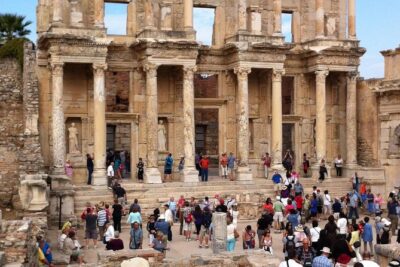
5-Day Aegean Tour – Gallipoli, Troy, Ephesus, Kusadasi, Pamukkale
Read our review →
Istanbul, Ephesus, Pamukkale and Cappadocia 8 Day Package
Read our review →
Private 4 Days Turkey Tour from Istanbul to Cappadocia, Ephesus, Pamukkale
Read our review →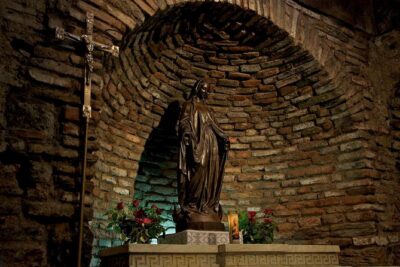
Istanbul to Ephesus Full Day Guided Tour, Flight and Lunch incl.
Read our review →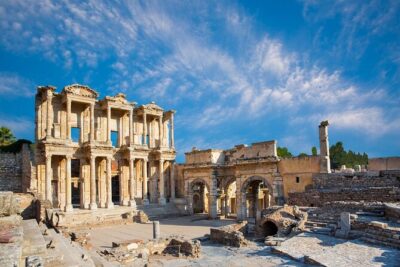
2 Days Ephesus and Pamukkale Tours from Istanbul
Read our review →Browse the lists this tour appears in