Reviewed · PRIVATE
Turkey Biblical Tour (Private)
Paul meets city icons in Turkey. This private, English-led 10-day route connects Bible settings to major landmarks, with a local guide and driver working just for your party. I like that it feels structured, not rushed, and it keeps pointing you from the sites back to the Bible stories.
Two things I’d pick as your best wins: the all-inclusive format (entrances included, plus lunch eight times), and the on-the-ground local guide insight that brings the sites into context. In Ephesus, for example, guides like Umut often tie the real location to Scripture such as Acts 19 and Revelation 2, so you are not just seeing ruins.
One drawback to plan for: the day-to-day driving is real. Even with a comfortable van, you should have moderate physical fitness and expect long travel segments between regions.
In This Review
- Key things to know before you go
- What You’re Really Buying With a Private Turkey Bible Tour
- Price and Logistics: Is $3,604.57 per Person Good Value?
- Day 1 in Istanbul: Airport Transfer and the First Night Reset
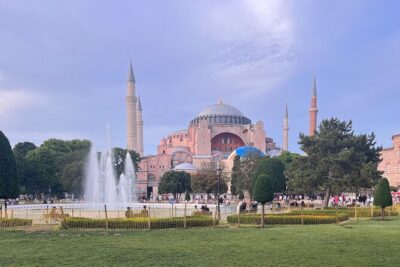
- Day 2 Istanbul at Prime Speed: Hippodrome, Blue Mosque, Hagia Sophia, Topkapi, Grand Bazaar
- Day 3 Bosphorus Cruise and the Flight to Izmir, Then Kusadasi
- Day 4 Troy and Two Acts-Linked Coastal Stops, Ending in Assos
- Day 5 Pergamon, Thyatira Area, and the Smyrna Connection
- Day 6 Sardis, Philadelphia, and Pamukkale with Roman and Philip Connections
- Day 7 Laodicea and Colossae: The Letters Meet City Ruins
- Day 8 Ephesus in Full: Artemis Temple Area, Virgin Mary House, and St. John
- Day 9 Cappadocia: Goreme Views, Open-Air Museum, Pasabag, Avanos, and Devrent
- Day 10 Cappadocia Underground and the Valleys Before Your Flight Home
- Guides Matter Here: How the Bible Interpretation Improves Every Site
- Who This Tour Suits Best (And Who Should Skip It)
- Should You Book This Private Turkey Bible Tour?
- FAQ
- What cities does this Turkey Biblical Tour cover?
- Is this tour private or group-based?
- Are airport pickups included?
- Are entrance fees included?
- Are flights included?
- What meals are included?
- Is the hot air balloon ride included in Cappadocia?
- What language is the tour offered in?
- What is the main cancellation rule?
- What fitness level is required?
Key things to know before you go
- Private by design: it’s operated with just your group and a guide and driver.
- Entrance fees included: the package covers admissions, so you avoid the ticket shuffle.
- Bible-focused interpretation: guides often connect locations to specific passages tied to Acts and Revelation.
- Major transit built in: you get domestic flight tickets covering the Cappadocia connection.
- Time-efficient touring: most days include multiple sites, so you get more than a single-city visit.
- Comfort with pickups: you meet in the hotel lobby or at the airport, so you start with less hassle.
What You’re Really Buying With a Private Turkey Bible Tour
This is not a loose sightseeing day. The whole shape of the trip is built around one theme, the Bible world in and around the eastern Mediterranean, and it stitches together Istanbul with the Seven Churches region before ending in Cappadocia. Because it is private, you can keep a steady pace that fits your group, instead of trying to match a large tour schedule.
I also like the way the tour mixes big-name landmarks with smaller, story-linked stops. In Istanbul you get the headline sights, then the itinerary progressively narrows into places tied to Paul and the early church letters. That makes the trip feel like a journey, not a checklist.
The biggest value lever here is clarity. You know what you are doing each day, and what you are paying for, because transport, guiding, entrances, parking, and lunch are handled in the package.
More of Istanbul beyond the obvious sights
- Istanbul: Bosphorus Dinner Cruise & Show with Private Table
★ 4.8 · 62,058 reviews - Best of Istanbul 1, 2 or 3-Day Private Guided Istanbul Tour
★ 5.0 · 8,922 reviews - Istanbul: Private Turkish Bath, Massage, and Spa in Old City
★ 4.6 · 3,225 reviews
Price and Logistics: Is $3,604.57 per Person Good Value?
At $3,604.57 per person for about 10 days, this is a premium price. But it can make sense if you want the “less work, more meaning” approach.
Here is the value math in practical terms:
- You are paying for a private vehicle and a guide across multiple regions, not just a single city.
- All entrance fees are included as part of the package, which matters because Istanbul and the ancient sites each have paid admissions.
- Lunchtime is covered eight times, which saves you from hunting for quality meals between sites.
- You have Cappadocia to Istanbul flight tickets included, and the itinerary also includes an Izmir connection as written.
Where the cost may feel heavy is if you love free, spontaneous wandering. This tour is structured, and it is also time-intensive. You will be doing a lot of driving days and site days back-to-back.
Day 1 in Istanbul: Airport Transfer and the First Night Reset
Day 1 is simple on purpose: you transfer from the airport to your hotel, then you settle in for an overnight stay. That matters more than it sounds. After a travel day, your energy is the real currency, and this format protects you from starting the tour exhausted.
You also get that all-important baseline logistics win. Pickup is set up either at the airport or in your hotel lobby, so you begin with someone coordinating the handoff.
Day 2 Istanbul at Prime Speed: Hippodrome, Blue Mosque, Hagia Sophia, Topkapi, Grand Bazaar
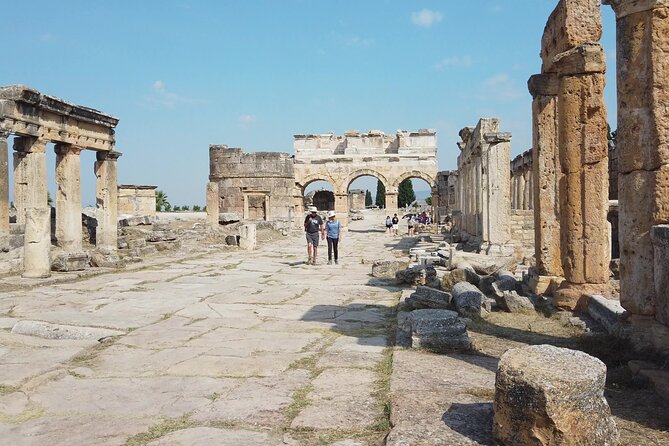
Istanbul on Day 2 is a full-color sampler. You start at the Byzantine Hippodrome, the stage for public entertainments organized by emperors. Even if you do not go deep on the details, the location helps you understand why this city became a power center.
Then you hit the three heavy hitters:
- Blue Mosque (Sultan Ahmed Mosque): famous for its handmade blue ceramic tiles. This is the kind of interior that rewards you for slowing down slightly.
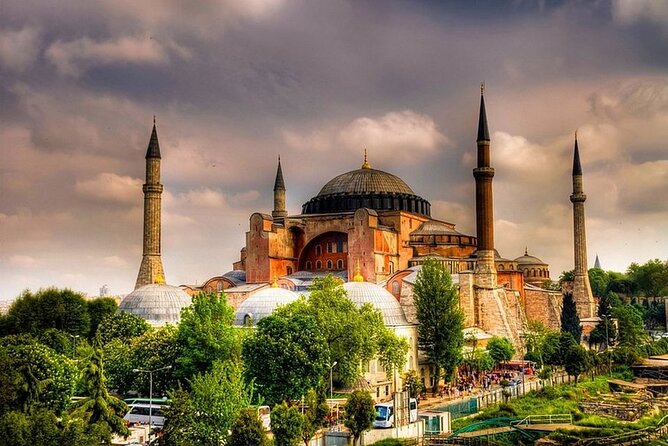
- Hagia Sophia Grand Mosque: the Church of Holy Wisdom legacy is huge for art and architecture history. Today it functions as a museum and mosque, so you’ll see layers of meaning in one building.
- Topkapi Palace: Ottoman sultans lived and ruled from here. It is one of the largest palaces in the world, and it gives you a sense of the empire’s scale and taste.
You finish with time in the Grand Bazaar, the oldest and largest covered market area with more than 4,000 shops. This stop is less about a single must-see and more about letting you shop and reset your senses after monumental architecture.
What to watch for: Day 2 is long and packed. You’ll want comfortable shoes, and you’ll benefit from planning for shopping time to be slower than you think. Markets take longer when you are actually browsing.
Day 3 Bosphorus Cruise and the Flight to Izmir, Then Kusadasi
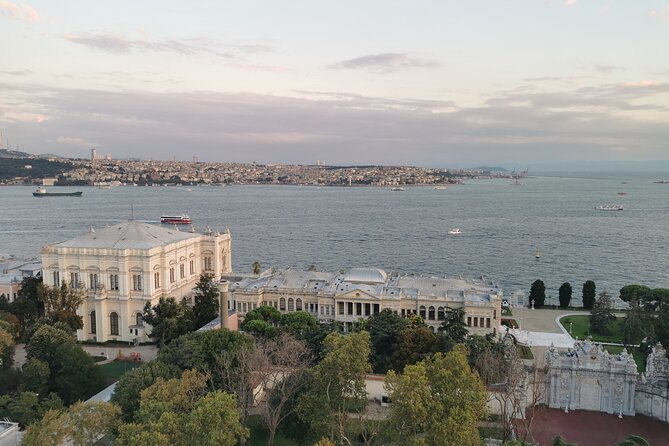
Day 3 gives you a break from constant stone and indoor sites. You take a 2-hour Bosphorus boat trip with views of the bridges of Istanbul, plus sights connected with Dolmabahce and Beylerbeyi Palaces and the forts along the strait. It is a great way to see how Istanbul sits between continents and why it mattered so much historically.
After that, you transition to the biblical geography route:
- You stop at Misir Carsisi (Spice Market), a covered market space tied to the city’s spice trade.
- Then you fly to Izmir, transfer to a hotel in Kusadasi, and overnight there.
This day is efficient but expect a travel rhythm. You are trading scenery for time, then trading time for more scenery.
Add these before you book flights home:
- Istanbul: Daytime or Sunset Sightseeing Cruise & Audio Guide
- Istanbul: Bosphorus Dinner Cruise & Turkish Night Show
- Istanbul: Basilica Cistern Fast-Track Entry and Audio Guide
- Istanbul: Hagia Sophia Skip-the-Line Ticket & Museum Option
- Istanbul: Hodjapasha Whirling Dervishes Show & Exhibition
- Topkapi Palace and Harem Skip-the-Line-Tickets & Audio Guide
Day 4 Troy and Two Acts-Linked Coastal Stops, Ending in Assos
Day 4 reads like a map of Paul’s world along the western Turkish coast.
You begin with Troy (Truva), Homer’s legendary ground, and you’ll also see a replica of the wooden horse. Even if you already know the myth, Troy works because it gives you a concrete place to anchor the stories.
Next is Alexandria Troas Antik Kenti, a site tied to Acts. The itinerary specifically notes Paul sailed to Greece from here (Acts 16:8) and that he raised Eutychus from the dead (Acts 20:5-12). This is the kind of stop where a guide’s interpretation can turn geography into story.
You close with Assos, connected to Paul’s third missionary journey (Acts 20:5-6, 13-14). The timing matters here. You are moving into a route that feels less like travel and more like “in the footsteps.”
Potential drawback: Assos and the coastal sites can mean you’ll be on the move with limited time to linger. If you want long unstructured breaks, build that into your expectations.
Day 5 Pergamon, Thyatira Area, and the Smyrna Connection
Day 5 is about the Seven Churches theme showing up in the ancient cities around it.
You start in Pergamon Ancient City. The itinerary lists many major stops, including the Acropolis, Theater, the Zeus Altar, and the Library of Pergamon. It also ties Pergamon to Rev. 1:11 and Rev. 2:13 with the reference to Satan’s throne. Even if you do not treat these labels as literal, the places help you visualize why these letters were written to specific communities.
Then you move to Akhisar, identified here as Thyatira, tied to Revelation 1:11 and 2:18-28. The itinerary also mentions Lydia the seller of purple and Acts 16:14, connecting commerce and faith in a real city context.
Finally you reach Izmir (Smyrna), tied to Revelation 2:8-11 and the early Christian setting.
This day can feel like a lot of names. The real win is that your guide can help you connect the city-to-letter logic so it does not blur together.
Day 6 Sardis, Philadelphia, and Pamukkale with Roman and Philip Connections
Day 6 is where you get a physical change of pace. You still do sites, but the region’s variety adds contrast.
You start at Sardis (Sardes), tied to Revelation 3:1-6. The itinerary lists early church remains such as the Sardis Gymnasium, Jewish Synagogue, and Diana Temple. That overlap is useful. It shows how faith communities lived alongside broader ancient civic life.
Next is Alasehir, identified as Philadelphia (brotherly love), tied to Revelation 3:7-12.
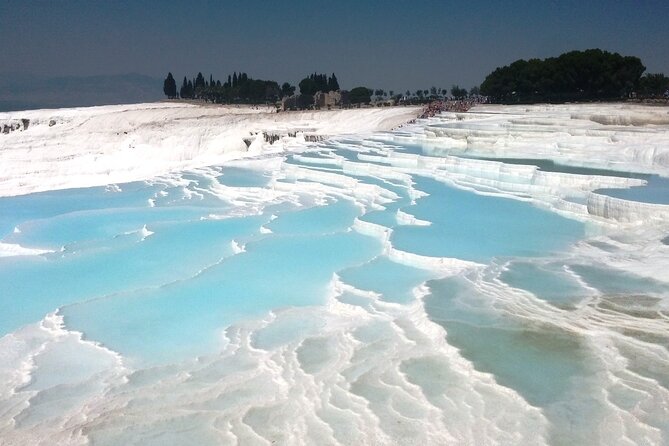
Then you go to Pamukkale and nearby Hierapolis. The itinerary emphasizes mineral-rich thermal waters running down white travertine terraces, plus Roman spa city ruins like the theater and necropolis. It also mentions the Antique Pool with submerged Roman columns, and specific stops tied to Gate of Domitian, Arcadian Way, Necropolis, and Apostle Philip’s tomb.
Admission timing notes suggest Pamukkale is an easy place to spend time without losing the story thread. If your group likes photos and walking, this is one of the better days for it.
Day 7 Laodicea and Colossae: The Letters Meet City Ruins
Day 7 keeps pushing the Bible theme deeper into the ancient church network.
You start at Laodicea, identified as Lukewarm Church. The itinerary ties it to the final letter of the churches in ancient Asia Minor and includes visits to Christian ruins plus features like a statue of Emperor Augustus, an aqueduct, stadium, and Ephesian Gate.
Then you drive to Colossae, described as an unexcavated city tied to the letter to the Colossians (Col 1:2). The itinerary also mentions Philemon living there.
You end with a 3-hour drive to Kusadasi and an overnight stay. This is a day where you may feel the “drive-to-stops-to-drive” rhythm, especially if you are sensitive to long road legs.
Day 8 Ephesus in Full: Artemis Temple Area, Virgin Mary House, and St. John
Ephesus is the big centerpiece, and Day 8 builds the story right where it belongs.
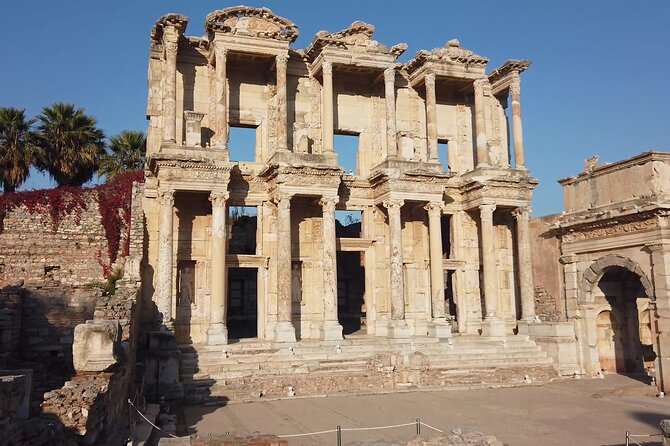
You start with Ephesus Museum and then visit major Ephesus highlights described in the itinerary: Baths of Scholastica, Library of Celsus, Temple of Hadrian, the Theater, and the Temple of Artemis, listed as one of the seven wonders of the ancient world. St. Paul’s connection is also noted as part of the framing, including Paul visiting briefly during his second missionary journey and staying more than three years.
Then you head to Meryemana (The Virgin Mary’s House). This stop is shorter at 45 minutes but meaningful if your group is focused on the devotional and historical traditions tied to Mary.
Finally you visit the Basilica of St. John, described as built in the 6th century by Justinian I over the believed burial site of John the Apostle.
The day ends with a key transit step: after the tour, you get transferred to Izmir airport for your Cappadocia flight.
Why this matters: moving to Cappadocia on the same day keeps your itinerary flowing and reduces wasted time. The tradeoff is that you’ll likely feel a bit “sight-seeing tired” by flight time, even with a good schedule.
Day 9 Cappadocia: Goreme Views, Open-Air Museum, Pasabag, Avanos, and Devrent
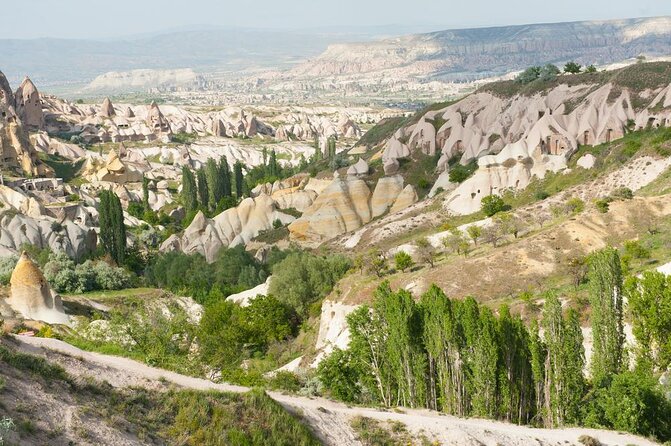
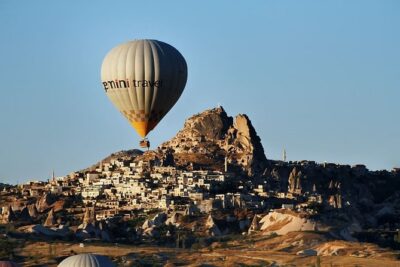
Day 9 is your transition from ancient cities to a landscape of rock formations shaped by time. You start at Goreme Panorama for views over Göreme.
Then you visit the Goreme Open-Air Museum, a UNESCO World Heritage Site that features an extended monastery life between the 4th and 13th centuries. You also get Pasabag (Monks Valley), known for fairy chimneys. This is one of those places where your imagination can do some work, because the shapes look different as you move around.
Next is Avanos, centered on the Kızılırmak river and known for pottery workshops and earthenware production. The itinerary even points out that pottery work is a visible, ongoing craft in the town.
You round out with Cavusin rock formations and Devrent Valley (Imaginary Valley) as listed stops, described as animal-shaped rock impressions.
Practical note: you’ll do lots of short walks and photo breaks. The upside is that Cappadocia days feel active without being exhausting in the same way as ancient-site walking can be.
Day 10 Cappadocia Underground and the Valleys Before Your Flight Home
Your final day starts underground with Kaymakli Underground City, described as having eight floors historically, with four open to the public. You get the defense-life idea quickly because the scale feels engineered for survival.
Then you move back above ground:
- Red Valley, noted as good for walking, with vineyards and gardens mentioned.
- Cavusin, an old Greek village with a 5th century church of St. John and views into the Rose and Red Valleys.
- Pigeon Valley (Guvercinlik Vadisi), known for dovecotes carved into soft volcanic tuff.
- Love Valley, described as an out-of-the-way scenic sunset spot with tower-shaped rock formations.
You finish with a transfer to Kayseri airport for your Istanbul flight.
What I’d watch for here is energy. This is a strong ending, but it is still multiple valley stops. If you want a slower finish, plan to pace your walking and save your longest photo sessions for the places with the clearest viewpoints.
Guides Matter Here: How the Bible Interpretation Improves Every Site
A private guide is not just “someone holding a group together.” In this kind of trip, the guide is what turns a site into a story you can remember.
From the tour history you provided, guides such as Umut and Ertunga are called out for Scripture-linked interpretation at the places where the Bible texts fit best. In Ephesus, Umut is specifically noted for connecting Acts 19 while you are in the Ephesus area and using Revelation 2 for the seven churches context. That’s exactly what you want on a themed tour: fewer random facts, more “this passage makes sense here.”
Your driver also matters because routes across these regions can be narrow and winding. The best experience comes when the road logistics are handled without drama so you can focus on the sites.
Who This Tour Suits Best (And Who Should Skip It)
This works best if you:
- Want a private itinerary with included entrances and lunch, so you can focus on the story.
- Care about the Seven Churches theme and want Bible context tied to real locations.
- Prefer a plan that reduces “what should we do next” stress across several regions.
You might skip it if you:
- Want a flexible, choose-your-own-adventure vacation.
- Get impatient with travel days and day-to-day schedules.
- Hope for a fully self-directed experience. Even with private touring, this is still a timed itinerary.
Also, if you are traveling with kids, the tour notes children must be accompanied by an adult, and the overall fitness requirement is moderate.
Should You Book This Private Turkey Bible Tour?
If your goal is Bible-linked sightseeing with the convenience of private transport, included entrances, and real guide interpretation, I think you’ll find this a strong fit. The route from Istanbul to the Seven Churches region, then into Cappadocia, is the kind of arc that makes a themed trip feel worthwhile instead of scattered.
Before booking, be honest about two things: your tolerance for long days and the premium price. If you have the budget and you want a guided, structured experience with less planning on your side, this tour checks the right boxes.
FAQ
What cities does this Turkey Biblical Tour cover?
It covers Istanbul, the Aegean coast area around Kusadasi, and multiple ancient sites in western Turkey, then it includes Cappadocia at the end.
Is this tour private or group-based?
It is a private tour. Only your group participates, with a guide and driver.
Are airport pickups included?
Yes. Pickup is offered, and you will meet either in the hotel lobby or at the airport.
Are entrance fees included?
Yes. Entrances are included as part of the private tour package.
Are flights included?
Yes. Cappadocia to Istanbul flight tickets are included, and the itinerary also includes an Izmir flight step as written.
What meals are included?
Lunch is included eight times. Dinners are not included.
Is the hot air balloon ride included in Cappadocia?
No. The hot air balloon is not included.
What language is the tour offered in?
It is offered in English.
What is the main cancellation rule?
Free cancellation is available up to 24 hours in advance for a full refund.
What fitness level is required?
Moderate physical fitness is recommended. Children must be accompanied by an adult.
Newest tours in Istanbul
Private, compared.
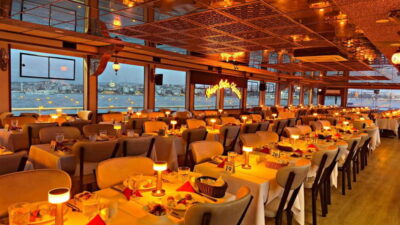
Bosphorus Dinner Cruise & Show with Private Table
Read our review →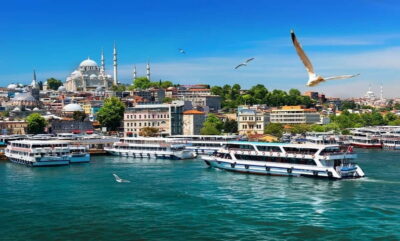
Best of Istanbul 1, 2 or 3-Day Private Guided Istanbul Tour
Read our review →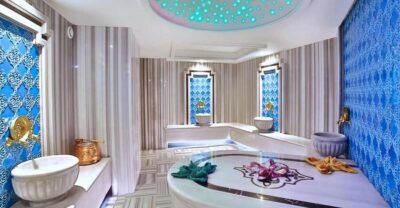
Private Turkish Bath, Massage, and Spa in Old City
Read our review →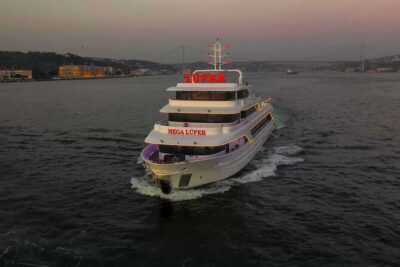
Bosphorus Dinner Cruise with Show and Private Table
Read our review →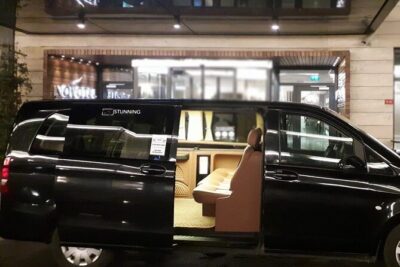
Private Transfer from Istanbul Airport to Fatih, Beyoglu and Besiktas
Read our review →
Acemoglu Historical Turkish Bath w/Private Options
Read our review →