
Reviewed · MUST-SEE HIGHLIGHTS TOURS
Private Turkey Highlight Tour With Seven Churches of Revelation
Chasing the Seven Churches route is surprisingly practical. This private 9-day loop strings together Istanbul landmarks and the Rev elation sites of western Turkey, then finishes in Cappadocia with big-sky views and fairy chimneys. I like that the trip is built around a professional guide and private transportation, so you are not wasting hours figuring out logistics. I also like the pacing on the travel days, it feels steady, not frantic.
One thing to consider: this is a packed route, so expect a mix of ruins, museums, and time in vehicles. If you hate early starts or long days in sun and stone, you will feel it more than most.
In This Review
- Key highlights you can plan around
- Entering Istanbul the practical way, from Galata to the Bosphorus
- Old Istanbul highlights in one run: Hagia Sophia, Blue Mosque, Topkapi, cisterns, and bazaars
- Pergamon, Smyrna, and the Thyatira stop that gives the theme meaning
- Ephesus day: ruins, museum stops, and the Virgin Mary house
- Sardis, Philadelphia, and Laodicea: three cities that make the theme feel real
- Pamukkale thermal pools and Hierapolis: the natural spectacle and the Apostle Philip connection
- The Cappadocia road trip: Kervansaray, Selime, Ihlara Valley, and underground cities
- Göreme, Paşabağ, and Uçhisar: fairy chimneys, pottery in Avanos, and sunset views
- Ending in Ankara: finishing outside Istanbul keeps the route clean
- Price and value: what $3,100 buys you, and what it does not
- Pacing, food, and comfort tips for a 9-day circuit
- Should you book this Seven Churches and Cappadocia tour?
- FAQ
- Where does the tour start?
- How long is the tour?
- What is included in the price?
- What is not included?
- Is the hot air balloon mandatory?
- Is swimming at Cleopatra Pools included?
- Is there pickup service?
- Is this a private tour?
- What kind of boat trip is included in Istanbul?
- What happens if weather is poor?
Key highlights you can plan around
- A true Seven Churches theme across western Turkey: You hit the main Revelation locations the tour frames as Thyatira, Sardis, Philadelphia, Hierapolis, Laodicea, Ephesus, Smyrna, and Pergamon.
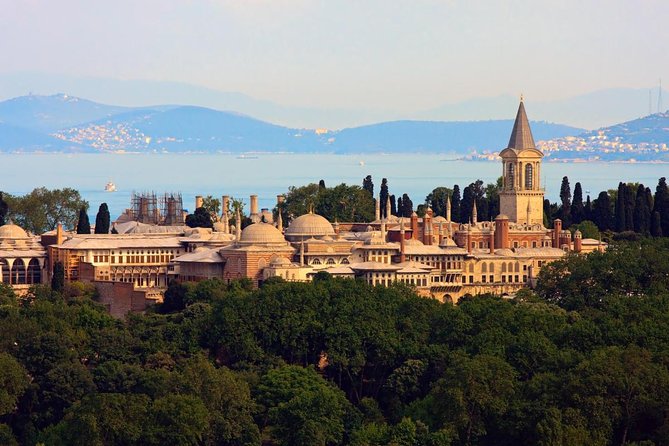
- Old Istanbul first, then straight to the Aegean: You get Hagia Sophia, Blue Mosque, Topkapi Palace, cisterns, and Grand Bazaar area, then you leave for the sites fast.
- Ephesus plus the Virgin Mary area in the same day: This is one of the most meaningful combinations on the whole route.
- Pamukkale thermal pools and Hierapolis in one package: You get both the natural spectacle and the ancient city stops.
- Cappadocia with options, not pressure: Hot air balloon is optional, and your days still work even if you skip it.
- Support when plans change: The tour team is known for quick, helpful response when adjustments are needed.
Entering Istanbul the practical way, from Galata to the Bosphorus
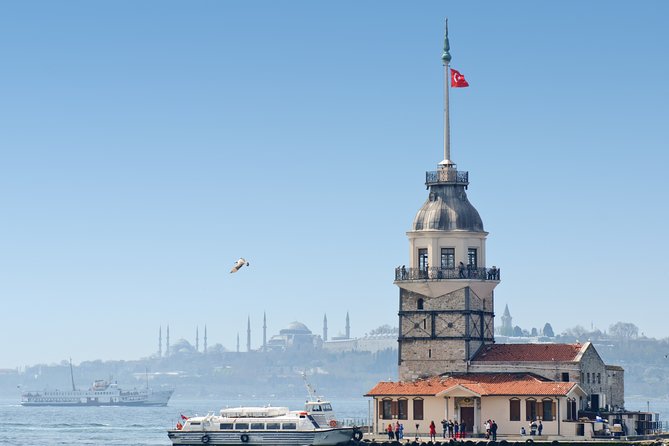
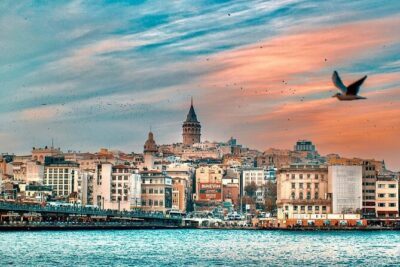
Your trip kicks off in Istanbul early, meeting at Istanbul Airport (IST) and heading into the city. You get your first taste of the modern city with Taksim Square and a walk along Istiklal Street, which is a great way to get your bearings fast. From there you go into the historic core by way of the Galata area, including St. Antuan Church and a climb up Galata Tower for a terrace view.
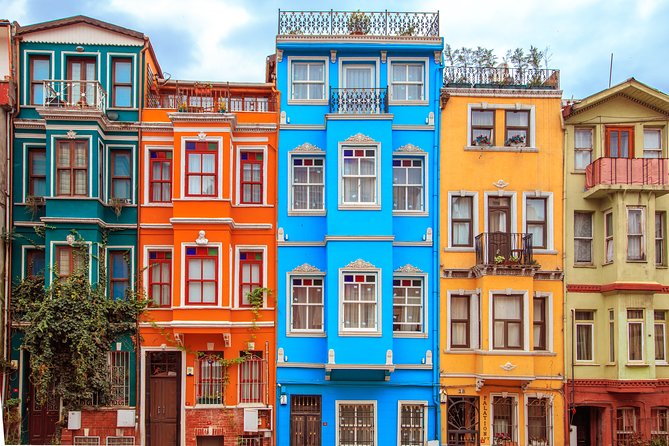
Then comes a fun, local-feeling detail: you take the historical funicular from Galata to Karaköy and stop at Karaköy Güllüoğlu Baklavacısı for baklava. This is not just a snack break. Karaköy is one of the easiest places to see Istanbul’s old and new edges at the same time, with small streets that make walking feel natural.
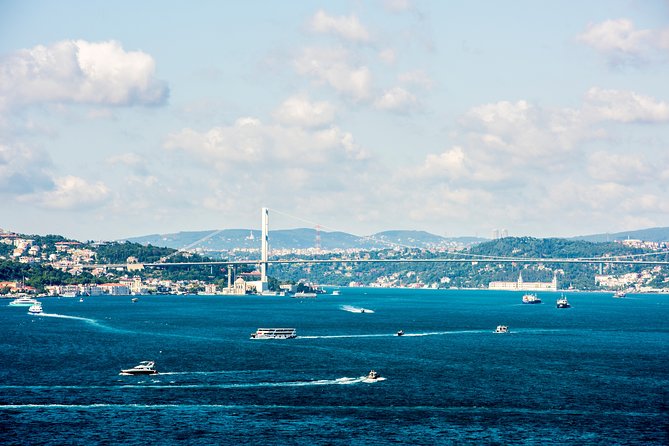
The day rounds out with a shared Bosphorus boat ride from Eminönü. It is not a private charter, but shared boats still give you the same big payoff, the bridges, the waterfront landmarks, and the classic Istanbul perspective. You will come off the water with tired legs in a good way, which sets you up for an even heavier day tomorrow.
Tip for you: wear comfy shoes and plan to lose track of time on Istiklal Street. It is an easy place to keep walking because there is always something to look at.
First time here? Start with these
- Best of Istanbul 1, 2 or 3-Day Private Guided Istanbul Tour
★ 5.0 · 8,922 reviews - Istanbul: Full-Day Highlights Tour with Guide and Lunch
★ 4.6 · 1,662 reviews - Istanbul Highlights Small-Group Walking Guided Tour
★ 4.5 · 1,346 reviews
Old Istanbul highlights in one run: Hagia Sophia, Blue Mosque, Topkapi, cisterns, and bazaars
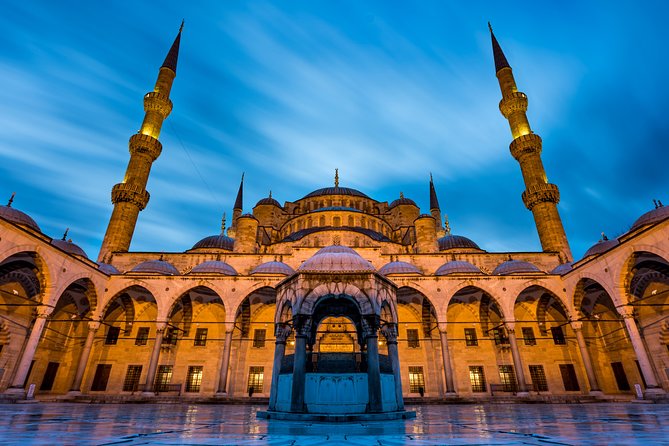
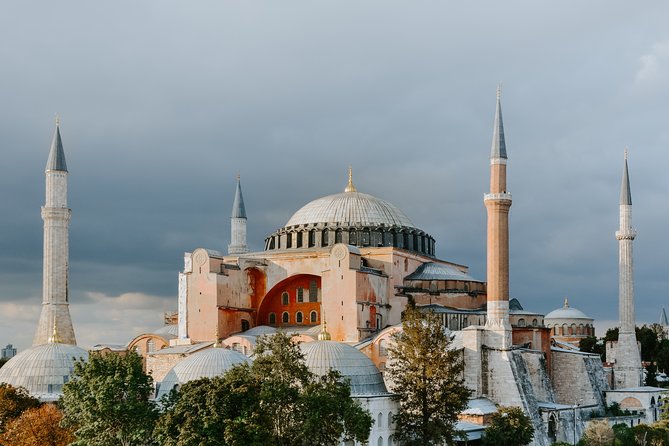
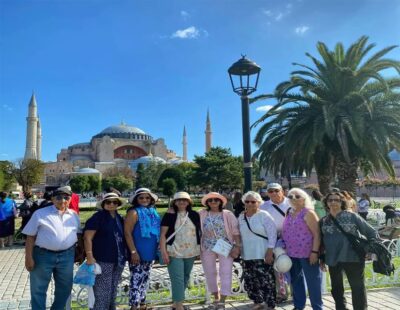
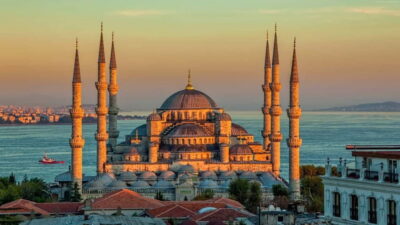
Day 2 is your “greatest hits” Istanbul push. Starting near the Hippodrome area, you go to the Blue Mosque and Hagia Sophia. These two sites alone can eat an entire vacation day, but here they are paired with Topkapi Palace, which gives you a second layer of context: the Ottoman court world right next door to Byzantine-era icons.
After the main monuments, you drop underground to the Basilica Cistern (Yerebatan Sarnıcı). Even if you are not a cistern person, it works. The scale surprises most people, and the lighting makes it feel like you are stepping into another Istanbul.
From there you move into the museum world with the Istanbul Archaeological Museum complex, then finish with time around the Grand Bazaar for shopping and atmosphere. You will not be doing a deep shopping spree here, but you will see the place and get the chance to pick up small gifts while your feet are already in the right neighborhood.
By the end of the day, you travel onward to the Pergamon region. That matters. A lot of Istanbul trips end and start late. This one uses Istanbul day 1 and 2 to set up your Turkey route without dragging the itinerary.
Small drawback to keep in mind: Istanbul days can get crowded. Even with a guide, you should expect some line and crowd time around the top sights. If you know you hate crowds, add some patience to your toolkit.
Pergamon, Smyrna, and the Thyatira stop that gives the theme meaning
On Day 3 you work from Pergamon to Smyrna, plus a stop in Akhisar tied to Thyatira. This is where the tour’s theme starts to feel more than a list of names.
Pergamon Ancient City is the first big stop. You get the Attalid dynasty backdrop and can see the remains of monumental pieces, including the famous Pergamon Altar. The tour also frames Pergamon as the northernmost of the churches mentioned in Revelation. Even if you only know the story in general terms, standing in the space helps the words make more sense.
Next you head to Akhisar, the modern area associated with ancient Thyatira. It is listed as free time on the schedule, so you are not rushed through. You get a sense of place, and you start to see the spread of early Christian communities across the region.
Then you go to İzmir’s ancient Smyrna and visit the Church of Smyrna. You also see the Church of St. POLICARP, described on the itinerary as the oldest church in ancient Smyrna, and it is tied to the identity of the Seven Churches community. This is one of those stops that is quietly emotional for people who come for the faith angle, because it connects written tradition with a physical location.
You might like this day most if you prefer history that you can stand inside. A lot of tours use buses to skip from one photo to the next. This one, at least on paper, tries to slow down just enough for the names to land.
Ephesus day: ruins, museum stops, and the Virgin Mary house
Day 4 is built around Ephesus, and it is one of the best reasons to choose this route. You start near Kusadası with Kusadasi Marina, Pigeon Island, and Kusadası Castle. It is a scenic warm-up, and it helps break up the driving.
Then you visit Meryemana, the House of the Virgin Mary. The itinerary says it is where she is believed to have spent her final years. Whether you treat it as sacred tradition or you approach it as cultural heritage, it gives your day a different tone than the Roman stone stops.
From there you hit the Ephesus Museum and the ancient city itself. This is where UNESCO-level stops show up in a practical schedule: Temple of Hadrian, Celsus Library, the Great Theatre, Public Latrines, and Roman Baths. You also walk Arcadian Avenue and hang around Agora, then visit the Church of St. John. The itinerary connects St. John’s church to the Apostle Paul’s activity in the area and the epistle tradition.
If you like seeing how a city worked, Ephesus is ideal. You are not just looking at one temple. You are seeing a whole civic organism, from public spaces to ceremonial buildings.
You end with Temple of Artemis and stops in Selçuk, including Selçuk Castle and the archaeological museum. Add Sirince Village too, with its traditional houses and a local market. This part is a nice switch from big ruins to a slower village feel.
Possible drawback: Day 4 is long and content-heavy. If you want downtime, ask your guide for a slower pocket in Sirince or around the museum area.
Sardis, Philadelphia, and Laodicea: three cities that make the theme feel real
Day 5 moves deeper into the western route with Sardis first. You travel to Salihli for Sardes, tied to the theme of a dying church in Revelation. The itinerary notes stops including an Artemis temple complex and the Temple of Cybele, plus ancient Lydian houses, gymnasium, and a reconstructed synagogue. That synagogue mention is important because it adds variety beyond just Christian church sites.
Next comes Philadelphia in Alasehir. The schedule notes it is the only church not censured, and it includes a Byzantine basilica built of brick and some 11th-century frescoes. That mix of periods helps. You see how a Christian site changes over time rather than freezing in one moment.
Then you head to Laodicea. This stop is loaded with specific landmarks: ancient theatre, remains of a basilica, stone water pipes, Gate of Domitian, Arcadian Way, the 2nd-century theatre, Nymphaion, Temple of Apollo, Plutonium, and the Necropolis. Even if some names are new, the presence of water pipes and civic infrastructure is a clue that this was a working city, not just a religious stage set.
After Laodicea, you drive toward Pamukkale for the next day’s natural and thermal highlights.
Tip for you: bring water and plan for sun. These stops are spread out, and even if the day is not the hottest season-wise, the open ruins feel exposed.
More of Istanbul beyond the obvious sights
- Istanbul: Bosphorus Dinner Cruise & Show with Private Table
- Istanbul: Private Turkish Bath, Massage, and Spa in Old City
- Bosphorus Dinner Cruise with Show and Private Table
- Private Transfer from Istanbul Airport to Fatih, Beyoglu and Besiktas
- Istanbul: Private Turkish Bath, Sauna, and Massage
- Istanbul: Acemoglu Historical Turkish Bath w/Private Options
Pamukkale thermal pools and Hierapolis: the natural spectacle and the Apostle Philip connection
Day 6 is where the itinerary gives you a break that does not feel like a filler day. You start with Pamukkale Thermal Pools, with time to relax and cool down in calcium-rich mineral springs around the travertines. It is one of those experiences where the logistics are simple, but the visuals stick with you.
Then you explore Hierapolis and visit Cleopatra Pools. Swimming is optional and listed as extra, so you can choose your level of adventure without getting forced. Either way, Cleopatra Pools are a recognizable focal point for most visitors.
You also visit Pamukkale Theater, plus the Martyrium of the Apostle Philip, which the itinerary connects to his martyrdom during persecutions ordered by Domitian. This is where the theme and the setting meet. You go from mineral-water relaxation to a named religious site in the same day, and it feels intentional.
Finally, you are back in a historical time zone. Hierapolis is the ancient city layer above the natural formations, and it adds meaning to why people settled here. You do not need to be a scholar to feel that the location was chosen for practical reasons, then became sacred over time.
The Cappadocia road trip: Kervansaray, Selime, Ihlara Valley, and underground cities
On Day 7 you start driving toward Cappadocia, but you do not just do highway miles. You stop at Sultanhani Kervansarayı, a caravanserai. The point of these stops is to show you what the route looked like for travelers centuries ago. It gives you a baseline for later Cappadocia cave-life.
Next is Selime Manastırı (Selime Monastery area). Then you go into Ihlara Valley. The schedule calls out a walk near the Melendiz River, plus ancient cave churches and historical destinations. This is a change of pace from ruins on flat plains. The valley walk adds movement, and cave churches offer lots of visual detail even if you do not read every inscription.
Finally, you visit the Kaymaklı and Derinkuyu underground cities. The itinerary frames them as being built because of mandatory situations and highlights magnificent building arts. Underground cities can feel strange until you imagine the stress of having to hide families and supplies. Here, you get that mental picture and the scale of the construction.
If you do not love cramped spaces, you can still enjoy the idea of these cities. Just pace yourself and take breaks, since the underground stops naturally involve more standing and stair climbing than typical museum visits.
Göreme, Paşabağ, and Uçhisar: fairy chimneys, pottery in Avanos, and sunset views
Day 8 is Cappadocia mode. You start with an optional hot air balloon tour very early in the morning. It is not included, so you would need to arrange it separately if you want it. That matters, because balloon timing is weather dependent and also requires commitment.
Even if you skip the balloon, you still have a strong day. You visit Göreme Open-Air Museum, with monastery, church, and chapel spaces. Then you head to Paşabağ and Zelve Open Air Museums to see fairy chimneys closely.
You also get a hands-on cultural stop in Avanos. The itinerary mentions walking along the Kızılırmak River and a pottery making workshop. You also visit Urgup Three Beautifuls and then Güvercinlik Valley and Uçhisar Castle for a panoramic view. The day finishes with the chance to enjoy Cappadocia sunset from the castle area.
This is the day that most people remember most clearly, because it has both scale and softness. Big rock formations in the distance, and then small details up close, in museums and workshops.
One consideration: Cappadocia is visual, but it also involves uneven ground. If you have knee issues, plan for slower movement and ask your guide for the easiest route segments.
Ending in Ankara: finishing outside Istanbul keeps the route clean
Day 9 wraps with a transfer to Ankara Airport for your flight home. You do not end where you started, but that can be a good thing. By finishing in Ankara, the tour avoids doubling back to Istanbul and keeps the route logical after Cappadocia.
Practically, it also means you likely pack less frantic last-day stress. You are not rushing through additional sightseeing, you are simply moving to the airport.
Price and value: what $3,100 buys you, and what it does not
At $3,100 per person, this is not a budget outing. But it is also not just “a driver and a map.” The included pieces are meaningful: private transportation, a professional tour guide throughout, comfortable accommodation, and travel health insurance. You also get breakfast 8 times, while lunch and dinner are not included.
So where is the value?
- You are paying for the work of moving between distant sites without the hassle. Private transport matters in Turkey, where routes can be long and timings add up.
- The guide matters because the theme is specific. Seven Churches sites can feel like scattered place names unless someone connects the dots for you.
- Accommodation and insurance reduce your mental load. Even when you pick great hotels on your own, you still do the arranging.
Where the value may not fit you: if you are the kind of traveler who wants to independently plan daily routes and you already know how to handle public transport and tickets efficiently, a private package can feel expensive. Also, since hot air balloon and lunch/dinner are not included, your final cost may rise depending on how you want to handle those choices.
Bottom line for you: if you want a guided, door-to-door structure across Istanbul, the Aegean, Pamukkale, and Cappadocia, the price can make sense. If you prefer a lighter, self-directed version, you might find cheaper ways to cover parts of this route.
Pacing, food, and comfort tips for a 9-day circuit
This tour aims to avoid the “tired tourist” trap. The support team is described as responsive and able to handle plan changes quickly, and guests also mention feeling relaxed rather than worn down. That fits the itinerary style: long days are broken up with purposeful stops, and you are not constantly switching hotels without notice.
Still, the route is active. You are doing museums, major historical sites, and walking through ruins. To keep it comfortable, I recommend you travel with:
- Comfortable walking shoes you can handle on uneven stone and stairs
- A reusable water bottle, especially on open-air ruins days
- Sunscreen and a hat, since many sites are outdoor by default
Food-wise, you get breakfast included, and that is big. It keeps mornings simple. Lunch and dinner are on your own, which is a good flexibility point. You can choose what you like, whether that is local dishes in a small restaurant or something quick near a stop.
And about mobility: the data says most travelers can participate, but underground city tours and open-air museums are where the physical demand shows up.
Should you book this Seven Churches and Cappadocia tour?
Book it if you want a structured, private route that connects Revelation-era sites with the real geography of western Turkey, then finishes with Cappadocia visuals and an optional balloon morning. The fact that you get a guide throughout and private transport throughout is what makes this feel like more than a checklist.
Skip or rethink it if you want a slower trip with lots of free time. This is a stop-heavy schedule, and the sites are arranged for efficiency. Also, if you want to control every detail and you do not care about a guided theme, the fixed route may feel limiting for the money.
If you are excited by the idea of seeing places that match the names from Revelation, plus the major highlights of Istanbul and the natural spectacle of Pamukkale, this one is a strong match.
FAQ
Where does the tour start?
You meet at Istanbul Airport (IST) early in the morning and then you drive to Istanbul city center.
How long is the tour?
The duration is about 9 days.
What is included in the price?
It includes private transportation, a professional tour guide throughout the tour, travel health insurance, comfortable accommodation, and breakfast for 8 days.
What is not included?
International and domestic flights are not included. Lunch and dinner are not included. Hot air balloon in Cappadocia is not included, and swimming in Cleopatra Pool in Hierapolis is optional and listed as extra.
Is the hot air balloon mandatory?
No. A hot air balloon tour in Cappadocia is offered early in the morning as optional, and it is not included in the price.
Is swimming at Cleopatra Pools included?
Swimming in Cleopatra Pools is optional and extra, so it is not included.
Is there pickup service?
Yes, pickup is offered.
Is this a private tour?
Yes. This is a private tour/activity, and only your group participates.
What kind of boat trip is included in Istanbul?
There is a Bosphorus boat tour from Eminönü, and it is listed as shared (not private).
What happens if weather is poor?
The experience requires good weather. If it is canceled due to poor weather, you are offered a different date or a full refund.
Newest tours in Istanbul


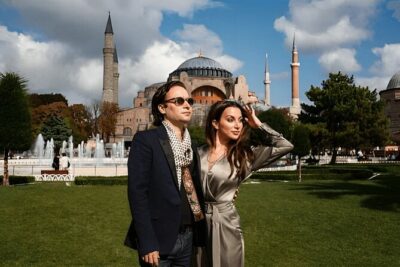
Must-See Highlights Tours, compared.
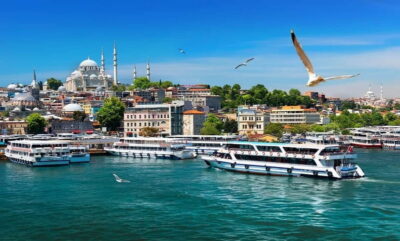
Best of Istanbul 1, 2 or 3-Day Private Guided Istanbul Tour
Read our review →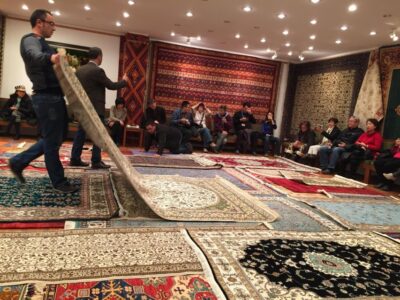
Full-Day Highlights Tour with Guide and Lunch
Read our review →
Istanbul Highlights Small-Group Walking Guided Tour
Read our review →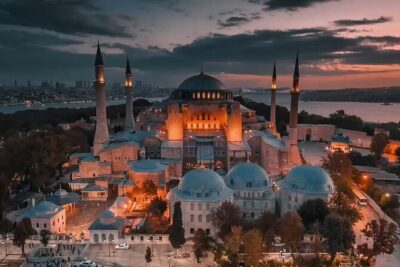
Istanbul Highlights Private Tour: Hotel Pick-Up & Drop-Off
Read our review →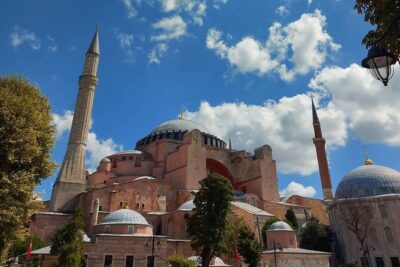
Istanbul Highlights! Blue Mosque, Hagia Sophia, Topkapı and More!
Read our review →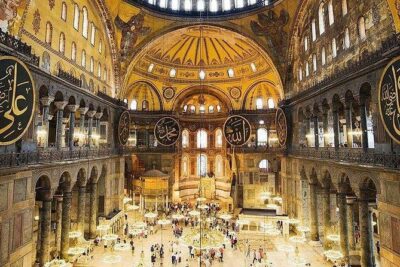
Best Of Istanbul 1, 2 or 3-Day Private City Guided Tour
Read our review →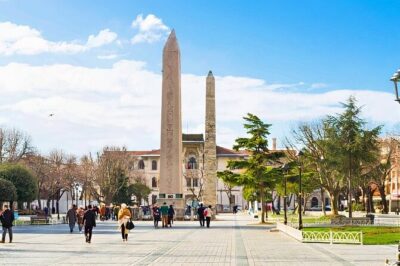
Istanbul Highlights: Small-Group Tour with a Local Expert
Read our review →Browse the lists this tour appears in