Reviewed · FULL-DAY
Private Full Day Guided Istanbul Tour
Six hours, and Istanbul’s icons are yours. I like how the route strings together the big Sultanahmet sights in a smart order, with Topkapi Palace first for the Ottoman context, and I also like that you can skip the ticket line with pre-booking. One thing to think about is added entrance ticket cost, plus site access can change for prayer hours and weekly closures.
I especially appreciated the guidance from Yusuf. He kept the story clear and the pace friendly, so the monuments felt connected instead of random stops. Wear comfortable shoes, because even with tram rides, you still do real walking in classic Istanbul terrain.
In This Review
- Key highlights worth planning for
- A 6-hour Istanbul sampler that starts right at Galataport
- Price and value: $82 for guidance plus transit, but not entrance tickets
- Topkapi Palace: Ottoman administration, relic rooms, and the Spoonmaker’s Diamond
- Hagia Sophia: Justinian’s basilica to a museum, with current access limits
- Sultan Ahmed Mosque (Blue Mosque): six minarets, Iznik tiles, and prayer-time changes
- Hippodrome monuments: Serpentine Column, Theodosius obelisk, and Wilhelm II’s fountain
- Grand Bazaar: shopping with a plan after the big monuments
- Getting around by tram: why the logistics matter more than you think
- Before you go: closures and access rules you should expect
- Who this tour suits best
- Should you book the Private Full Day Guided Istanbul Tour from Galataport?
Key highlights worth planning for
- Galataport start with public transport makes it easy to combine a port day with the main historic area
- Topkapi Palace as a museum since 1924 gives you Ottoman state power plus everyday artifacts in one visit
- Hagia Sophia’s current access reality focuses on what you can see right now, including limited galleries
- Blue Mosque placement opposite Hagia Sophia lets you compare two world icons from almost across the square
- Hippodrome monuments in a compact stop brings you to Serpentine Column, Obelisk of Theodosius III, and the German Fountain
- Grand Bazaar since 1461 with nearly 4,000 shops, so you can shop with a plan and not just wander
A 6-hour Istanbul sampler that starts right at Galataport
This tour is built for people who want maximum impact in a short window, especially if you are arriving near the port at Galataport İstanbul. You meet your guide there, get organized quickly, then move by public transport, typically tram, to the historic peninsula.
What makes this setup feel efficient is the sequence. You do the palace and museum-style stops first, when you are freshest, then you layer in the religious and public-space landmarks, and finally you end with the market experience at the Grand Bazaar.
Because it is a private group, you are not stuck listening to a huge crowd of mismatched interests. You get a licensed guide and time for photo stops and free time at each main site.
More of Istanbul beyond the obvious sights
- Istanbul: Bosphorus Dinner Cruise & Show with Private Table
★ 4.8 · 62,058 reviews - Best of Istanbul 1, 2 or 3-Day Private Guided Istanbul Tour
★ 5.0 · 8,922 reviews - Istanbul: Private Turkish Bath, Massage, and Spa in Old City
★ 4.6 · 3,225 reviews
Price and value: $82 for guidance plus transit, but not entrance tickets
At $82 per person for a 6-hour private guided outing, the value is mostly in three areas: a licensed English-speaking guide, port pick up and drop off using public transport (tram or minibus), and all local taxes. You are paying for someone to do the organizing and translating, so you spend your energy on seeing.
The trade-off is that entrance tickets are not included. The tour lists specific costs you should expect, including Topkapi Palace ticket: 2000 Lira per person and Hagia Sophia: 25€ per person. Other site entry details are not specified here, so you should plan for the possibility of additional pay-as-you-go costs once you arrive.
The good news is that you can pre-book tickets with the provider, which is the part that helps most on a busy day: you can skip the ticket line for the main timed attractions you already paid for. If you are time-limited, line-skipping is where guided tours often pay for themselves.
One more value note: if you want Spanish specifically, there is an option for a Spanish-speaking guide for a group total of 50€. That can make the experience much more comfortable.
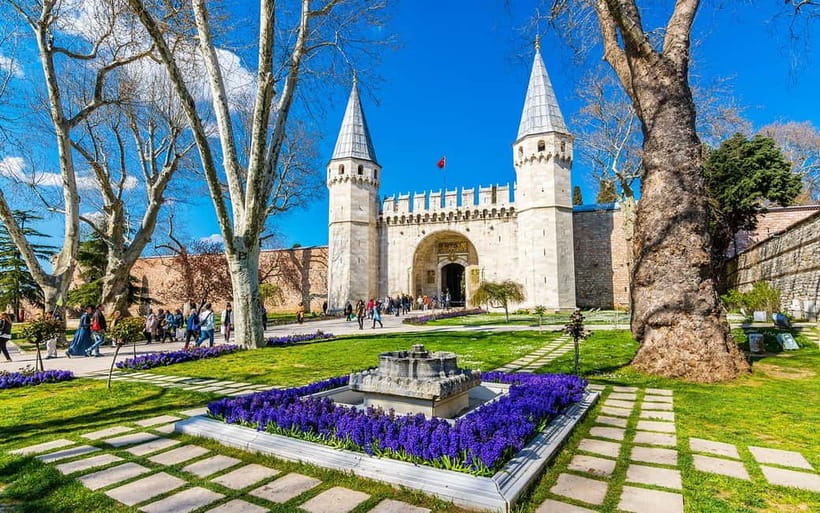
Topkapi Palace: Ottoman administration, relic rooms, and the Spoonmaker’s Diamond
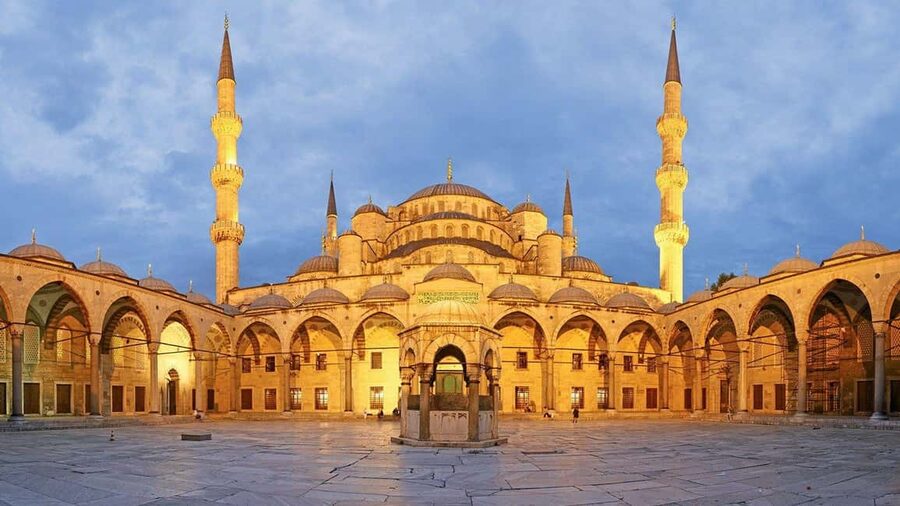
Topkapi is not just pretty courtyards and old walls. It was the official residence of Ottoman sultans and the center of state administration, and the collection inside shows that dual life, official power plus personal and cultural objects.
You start with a photo stop and then move into a guided visit with time to wander on your own afterward. The palace has multiple themed areas, so you do not just see one kind of room. The highlights described for this visit include sacred Islamic relics, a kitchen, Chinese porcelain, weapons, a calligraphy section, the harem, and the imperial treasury.
And yes, there is a diamond story. One notable exhibit is the Spoonmaker’s Diamond, described as the 7th largest diamond in the world. It is the kind of detail that makes a palace visit stick in your mind later, because it turns the grand setting into something specific.
Practical tip: expect you will need stamina. Even if the route is organized, palace grounds and rooms add up fast. If you like context, this is your best stop of the day for understanding how the Ottoman empire lived and governed, not just how it looked.
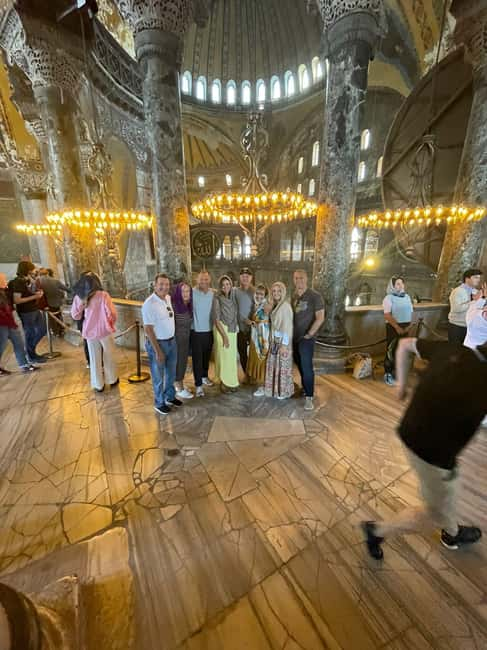
Hagia Sophia: Justinian’s basilica to a museum, with current access limits
Next comes Hagia Sophia, one of the architectural marvels of the world. It was constructed as a basilica in the 6th century by Emperor Justinian, and the information provided here notes it was the largest church in the world for about a hundred years. Today it is described as the fourth largest.
The tour frames its changing identity too: Hagia Sophia was converted into a museum in 1935. That matters because the building’s design choices make more sense when you know its past roles.
Right now, you should be aware of access limits. The tour information states that only the upper gallery is open for public visits, and the praying area is only accessible for prayers. That means your experience will still be impressive, but your routes inside might feel more restricted than what you might expect from older photos online.
You will have a photo stop, a guided tour, plus some free time. I like building in that free time here, because the building rewards pausing. You can step back, look up, and let the scale sink in before moving on.
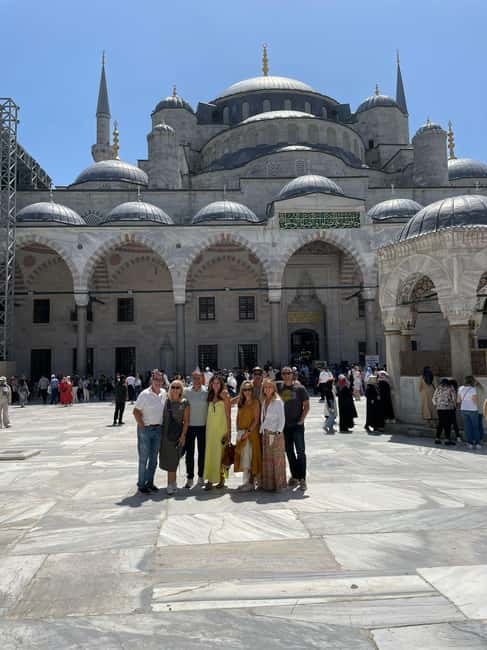
Sultan Ahmed Mosque (Blue Mosque): six minarets, Iznik tiles, and prayer-time changes
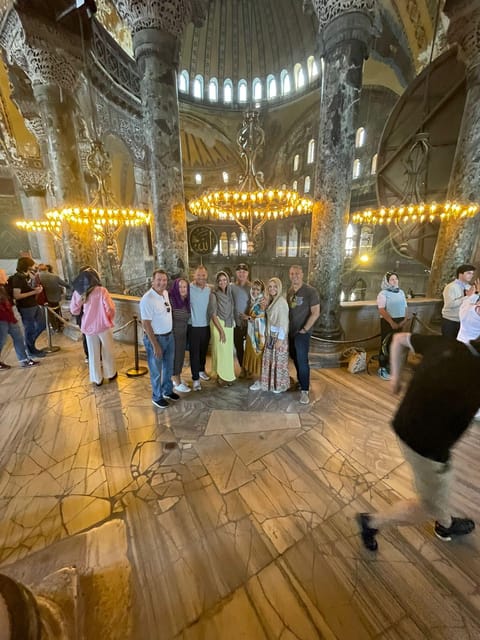
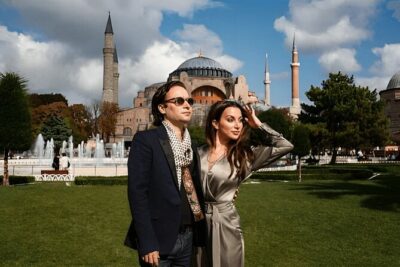
The Blue Mosque is positioned opposite Hagia Sophia, so this part of the day is built for easy comparison. You will visit Sultan Ahmed Mosque after Hagia Sophia, with photo stops, guided context, and free time.
What you are told to notice, and what you should actively look for, is the signature design: blue Iznik tiles and the mosque’s unique six minarets. It was built in honor of Sultan Ahmet.
One practical caution is timing. The tour information says the Blue Mosque may be closed during praying hours, and visiting conditions can change. That is normal for living religious sites. The best way to handle it is to be flexible. If part of your planned entry is delayed or limited, you still get a lot from the outside perspective and the guided story.
If you are the type who loves sacred architecture but does not want to guess what you are looking at, this guided stop helps. It turns a face-on sight into a legible building.
Add these before you book flights home:
- Istanbul: Daytime or Sunset Sightseeing Cruise & Audio Guide
- Istanbul: Bosphorus Dinner Cruise & Turkish Night Show
- Istanbul: Basilica Cistern Fast-Track Entry and Audio Guide
- Istanbul: Hagia Sophia Skip-the-Line Ticket & Museum Option
- Istanbul: Hodjapasha Whirling Dervishes Show & Exhibition
- Topkapi Palace and Harem Skip-the-Line-Tickets & Audio Guide
Hippodrome monuments: Serpentine Column, Theodosius obelisk, and Wilhelm II’s fountain
After the major religious sights, the day pivots to the Hippodrome, the ancient center for sports and political activities. Think of it as the public stage of the city, where crowds gathered for power and spectacle.
This is a shorter stop, with photo and a guided visit, plus sightseeing time. Even so, you will see three specific monuments:
- Serpentine Column
- Obelisk of Theodosius III
- German Fountain of Wilhelm II
These are not just random stone objects. They represent how different eras layered their messages into the same public space. If you enjoy “how the city talks over time,” the Hippodrome is a satisfying bridge between the imperial palace and the religious monuments.
Practical tip: this is a good moment to slow your pace. The earlier stops can feel dense. Here, you can reset, take photos, and let the guide’s explanations connect the landmarks to civic life.
Grand Bazaar: shopping with a plan after the big monuments
You finish at the Grand Bazaar, established in 1461 and described as the largest in the world. The scale is huge, with nearly 4,000 shops selling antiques, jewelry, gold, ceramics, leather goods, carpets, and souvenirs.
If you have ever felt overwhelmed in large markets, you will appreciate that this stop is last. By then, you understand the city better, so shopping feels less random and more like you are buying into a story.
Still, it is a market, so it can feel busy and crowded. The best approach is simple:
- Decide what category you want first (ceramics, carpets, jewelry, souvenirs).
- Set a rough budget in your head.
- Plan to take your time with the items that interest you most, and skim the rest.
You do not need to treat it like a full-day shopping project. The value here is access, orientation, and letting your guide help you navigate the maze for the kind of shopping you want.
Getting around by tram: why the logistics matter more than you think
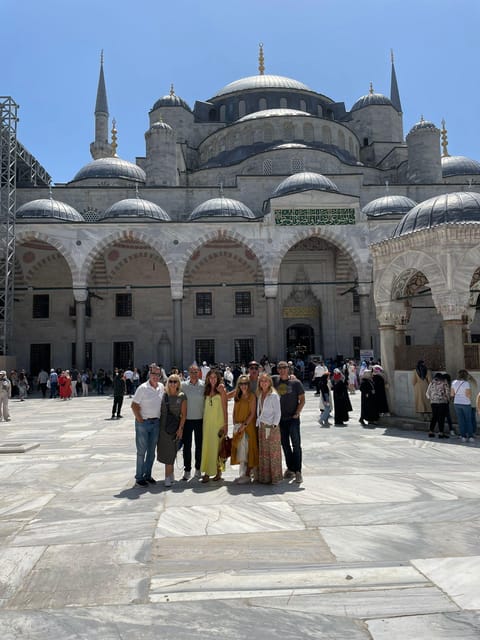
The tour uses public transport, typically tram, plus some minibus option depending on how routing works. The itinerary includes two tram segments of about 30 minutes, which helps you avoid the mental load of figuring out the city while you are on a deadline.
Why that matters: Istanbul’s historic area is walkable but not always quick. With the guide handling the movement between stops, you spend less time searching and more time looking.
Comfort matters too. The tour specifically recommends comfortable shoes, and I agree. Even if you like walking, the ground can be uneven, and you will do plenty of it across palace areas and monuments. Bring shoes you can stand in for a while.
If you hate rushing, this structure helps. You get guided time, photo stops, and free time at each place, instead of a constant “move, move, move” schedule.
Before you go: closures and access rules you should expect
Plan for the reality that Istanbul’s top sights follow rules.
- Topkapi Palace is closed for public visits on Tuesdays.
- The Grand Bazaar is closed on Sundays.
- Blue Mosque may close during praying hours.
- Hagia Sophia access is subject to authorities, and based on the current information, you should expect only the upper gallery open for public visits, with the praying area available only for prayer.
This is where a guided day helps most. Your guide can steer you to the best available version of the day, even if an area is temporarily limited.
Also, since entrance tickets are not included, you should budget for them in advance. If you pre-book ticket time, it can save stress on the day itself.
Who this tour suits best
This private full-day guided Istanbul tour is a strong match if:
- You want a structured overview of Istanbul’s most famous historic sites in about 6 hours.
- You are starting from the port area and want an organized way into the peninsula.
- You like learning context as you go, not just taking photos.
- You prefer public transport over private car routing.
It is also a decent fit for first-timers. The itinerary covers Ottoman power (Topkapi), Byzantine-era awe (Hagia Sophia), Ottoman religious architecture (Blue Mosque), civic public life (Hippodrome), and a shopping culture snapshot (Grand Bazaar).
If you are chasing total freedom and zero extra organization, then you might find the guided structure a bit limiting. You still get free time, but it is designed to keep the day flowing.
Should you book the Private Full Day Guided Istanbul Tour from Galataport?
I would book this tour if you value guided context, want a tight hit list of landmarks, and appreciate the way it uses public transport to keep things practical. The inclusion of a licensed English-speaking guide and port pick up and drop off makes it easier than trying to plan and translate everything on your own.
I would think twice if you know you will be unhappy about extra entrance ticket costs, or if your travel day lands on a closure like Topkapi (Tuesdays) or Grand Bazaar (Sundays). Also, if you expect full access everywhere at Hagia Sophia, the current limitation to the upper gallery is worth factoring in.
If your goal is a clean, efficient day with real names and real reasons behind the monuments, this private format is a smart way to do it. And if you are lucky enough to get Yusuf as your guide, you are in good hands.
Newest tours in Istanbul




Full-Day, compared.
Full-Day Highlights Tour with Guide and Lunch
Read our review →
Galata Tower All-Day Entry Ticket with Audio Guide
Read our review →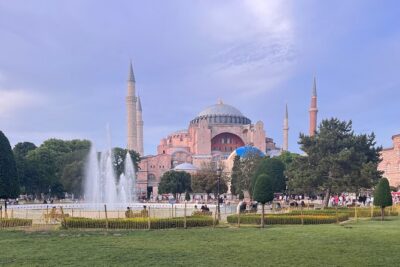
ISTANBUL BEST: Iconic Landmarks Full Day PRIVATE Guided City Tour
Read our review →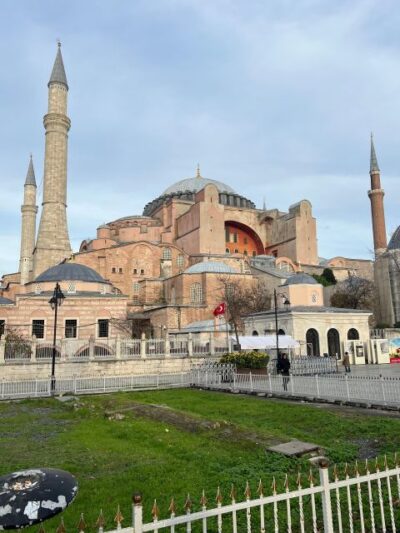

Istanbul to Gallipoli Full Day Tour with Lunch and Transfers
Read our review →