
Reviewed · GALLIPOLI TOURS
Private Day-Tour of Ancient Battle Fields (Troy & Gallipoli)
Two wars, one long day. Troy myths meet real WWI battlefields on this private, full-day run from Istanbul. You start early on the European shore of the Marmara Sea, then cross by ferry to Troy, and return by sunset from the Dardanelles region.
I really like how the tour packs two big destinations into one day without feeling rushed between themes. You get a guided walk through Troy’s key structures, plus a moving stop at Gallipoli’s most iconic WWI sites, with your guide explaining what the fighting meant for both sides.
One thing to keep in mind is the cost side: museum and ruins entry fees are not included, so you will want to budget a bit more on top of the tour price. Also, it is a full 12-hour day with some walking on uneven ground.
In This Review
- Key highlights at a glance
- Why this Troy and Gallipoli combo works from Istanbul
- Morning logistics: 6:30 am pickup and the “be ready” rule
- The Dardanelles Strait stop: where Europe and Asia pinch together
- Crossing to Troy by ferry: it is part of the experience, not just transit
- Entering Troy’s ancient city: what you actually see on the ground
- Athena’s temple viewpoints: where clear weather changes the whole feel
- The Trojan Horse moment: a short, striking time inside the story
- Behram stop: a brief Aristotle connection you might not expect
- Gallipoli: moving cemeteries plus clear campaign context
- Anzac Cove area: the 25 April 1915 landings, without the fluff
- The long-day rhythm: how the sunset finish makes it stick
- Price and value: $541.85 per person for a private, full-day route
- Who this tour is best for
- Should you book this Troy and Gallipoli private tour?
- FAQ
- What time does the tour start?
- Where do you get picked up in Istanbul?
- How long is the day tour?
- Is this a private tour?
- What language is the tour offered in?
- Are meals included?
- Are museum and entrance fees included?
- Do we get skip-the-line access?
- Is there free cancellation?
Key highlights at a glance
- Early start with hotel pickup: 6:30 am departure, ready and waiting 15 minutes early
- Ferry crossing to the Trojan shore: a real taste of the Dardanelles geography
- Troy essentials, not a drive-by: city walls, Athena’s temple area, Odeon theater, Trojan Horse reconstruction
- Gallipoli WWI focus that feels human: cemetery visits and context on Ottoman vs ANZAC troops
- A detour that adds depth: the Behram stop ties the region to Aristotle and the Academy tradition
- Private comfort: only your group, with transportation included
Why this Troy and Gallipoli combo works from Istanbul
Most people think of Istanbul as a city break. This tour treats it like a launchpad. In one day, you leave the urban vibe behind and move through the geography that shaped both ancient myths and modern wars.
You get the best of both worlds: Troy gives you the Bronze Age setting Homer made famous, and Gallipoli gives you the First World War story tied to the Dardanelles strait. It is not just sightseeing. The day is designed so you can compare how people talked about glory, strategy, and sacrifice across centuries.
And because it is private, the pace and attention are usually better than on a large group bus. Your guide can slow down when you have questions, and speed up when you just want to see one more view.
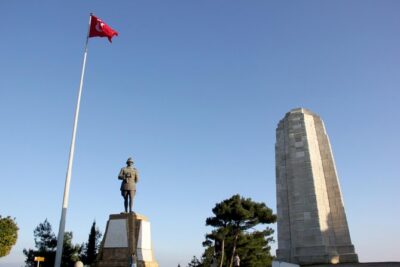
Battlefields and memorials from the peninsula campaign
- Istanbul to Gallipoli Full Day Tour with Lunch and Transfers
★ 5.0 · 567 reviews - Gallipoli Full-Day Tour from Istanbul
★ 4.9 · 468 reviews - From Istanbul: Gallipoli and Anzac Full-Day Tour
★ 4.9 · 345 reviews
Morning logistics: 6:30 am pickup and the “be ready” rule
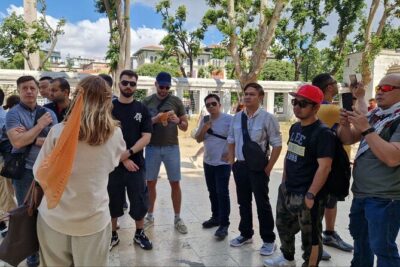
This is a 12-hour outing that starts at 6:30 am. Pickup is offered from your Istanbul hotel or port, and you confirm the exact pick-up time after booking. The practical rule is simple: be in the lobby 15 minutes before the scheduled time.
Why this matters: leaving early is what helps you see more of the day while daylight is on your side. The route is long, and you will feel it if you are late to pickup. Also, the sites you will visit are outdoors and on hills in places, so being well-rested helps.
The tour also notes you should have moderate physical fitness. That means you should be comfortable with steady walking, uneven stone at archaeological areas, and standing for viewpoints.
The Dardanelles Strait stop: where Europe and Asia pinch together
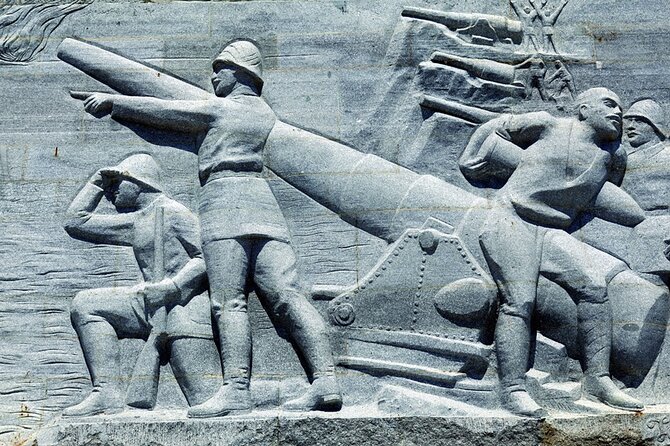
Before you even reach Troy, you stop at the Dardanelles itself, a narrow, internationally important strait that separates European Turkey from Asian Turkey. It connects the Sea of Marmara with the Aegean and Mediterranean, and it is part of the wider waterway system that also links toward the Black Sea extension via the Bosphorus.
Historically, the Ottomans had castles on both sides, and together they were known as the Dardanelles. The name has roots tied to Dardanus, an ancient figure tied to an older city associated with the Asian shore.
This is a small stop, but it is one of the most useful moments on the tour. It helps you understand why the Dardanelles mattered so much to empire planners and war strategists. When you later hear about the First World War campaign, the geography stops being abstract.
Crossing to Troy by ferry: it is part of the experience, not just transit
The tour includes a ferry crossing across the Dardanelles to the Troy archaeological area. The ferry ride matters because you are not just going from A to B, you are moving through the same water corridor that shaped movement, supply routes, and conflict.
If you like having your bearings early, this is a good time. You start to see how the coastline shapes sightlines, and you can better picture how ships and armies would have approached the shore in different eras.
Also, it breaks up the drive. You will still have a long day, but the ferry gives you a breather before walking among ruins.
Entering Troy’s ancient city: what you actually see on the ground
At Troy, you explore the ancient city with a guide. You are looking at a Bronze Age ruin site, not a fully preserved palace complex. That distinction matters. If your expectations are set to “ancient foundations and big views,” you will enjoy it a lot more.
The guided walk includes key areas like:
- The city walls
- Athena’s temple area
- The Odeon, a stone theater that is well preserved compared with many ruined structures
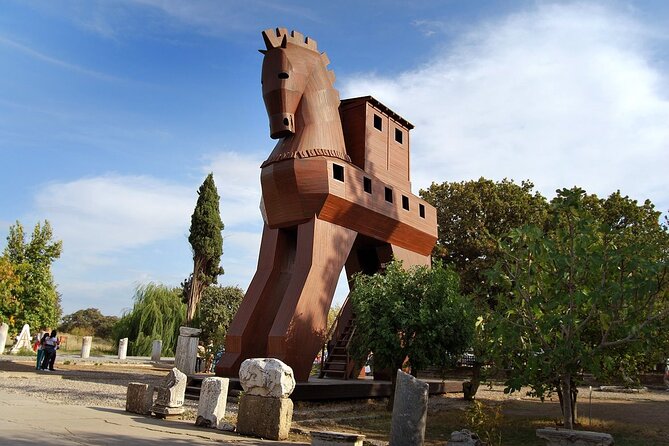
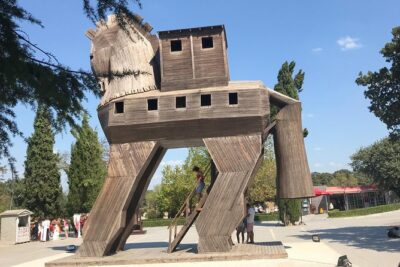
- A reconstructed Trojan Horse, designed for visitors to step inside and experience the famous endgame story
This mix is smart for two reasons. First, it balances mythology and built environment. Second, the reconstructed Trojan Horse gives you a physical sense of strategy and trickery, rather than just hearing the story as a sequence of names.
A useful mindset: in Troy, the best “wow” often comes from the combination of guided explanation and the way the site sits in the landscape. You start to see the logic of where defenders would stand and where attackers would focus.
The wooden horse story, on the actual ground
Athena’s temple viewpoints: where clear weather changes the whole feel
One of the most memorable parts of Troy is the view from the Temple of Athena area. The tour explains that the temple sits on top of a rocky outcrop, and on a clear day the sightlines can stretch far.
The details your guide may point out include views toward Lesbos to the south, Pergamum to the southeast, and Mount Ida in Phrygia to the east. On clear days, you might also notice the Tuzla River to the north, plus two massive Hellenic columns marking the gate to the city.
Even if clouds roll in, the whole point stays the same. You are seeing why ancient writers tied gods and humans to specific geography. And when later you watch how Gallipoli’s story plays out with land and sea access, you will feel the connection more clearly.
The Trojan Horse moment: a short, striking time inside the story
The reconstructed Trojan Horse is not just a photo stop. The experience is built to help you relive the strategic trick used in the Iliad narrative.
You do not need to be a Homer scholar to enjoy it. The guide’s framing helps: after a long siege, a wooden horse becomes a supposed trophy. The Trojans bring it inside the city, and that decision is the turning point.
Inside the reconstruction, you get a sense of the trap and tension in a way that feels different from reading about it. It is a great match for a guided day because your guide can tie the story back to real-world siege logic, where timing and deception can matter as much as strength.
Behram stop: a brief Aristotle connection you might not expect
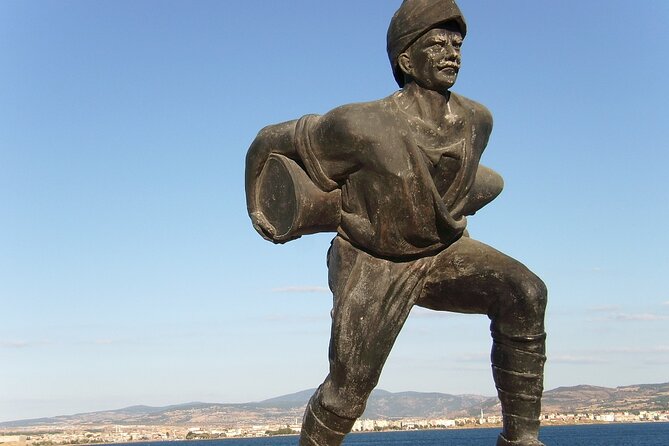
Between Troy and the World War stops, the tour includes a stop near Behram that adds a surprising layer of intellectual history. The tour connects the area to the story of Aristotle and his movement between teaching centers.
You may hear that after Aristotle left the Platonic Academy in Athens, he went to Assos, where he was welcomed by King Hermias and opened an Academy. There is also a note about Aristotle later fleeing Macedonia after Hermias was executed, and about Aristotle tutoring Alexander the Great.
There is even a modern statue of Aristotle at the town entrance. It is not the main draw like Troy or Gallipoli, but it makes the day feel less like two disconnected stops. It reminds you that this region shaped more than battles.
Gallipoli: moving cemeteries plus clear campaign context
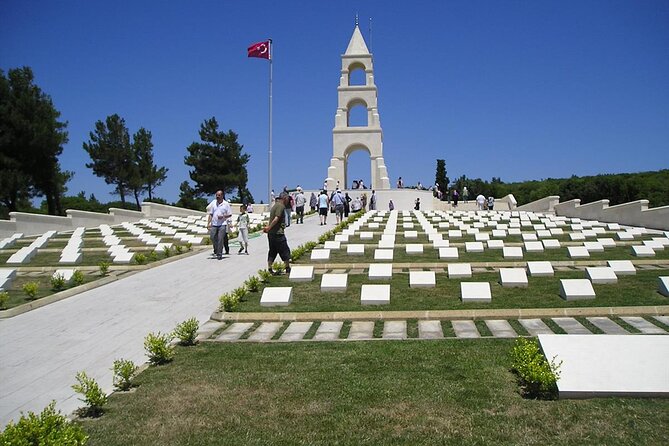
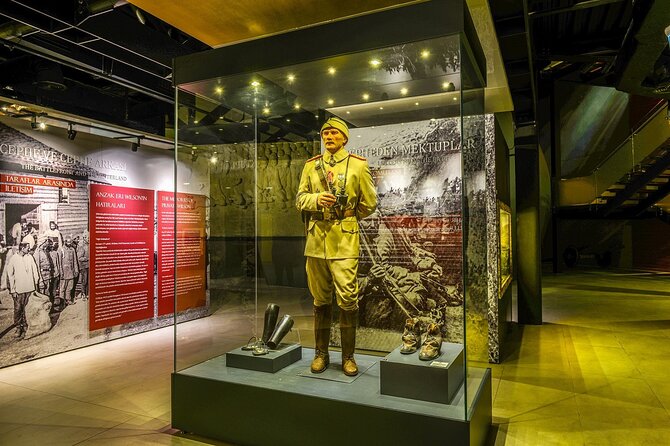
After Troy, you return to the European side of the Dardanelles and head to Gallipoli, where the tour focuses on the WWI campaign known as the Dardanelles campaign or Battle of Çanakkale.
The guide’s campaign context matters because it prevents the sites from turning into scattered monuments. You get the broad timeline, including fighting from 17 February 1915 to 9 January 1916. You also learn the basic strategic aim: the Entente powers wanted to weaken the Ottoman Empire by targeting the straits, since they were tied to a supply route connecting toward Russia.
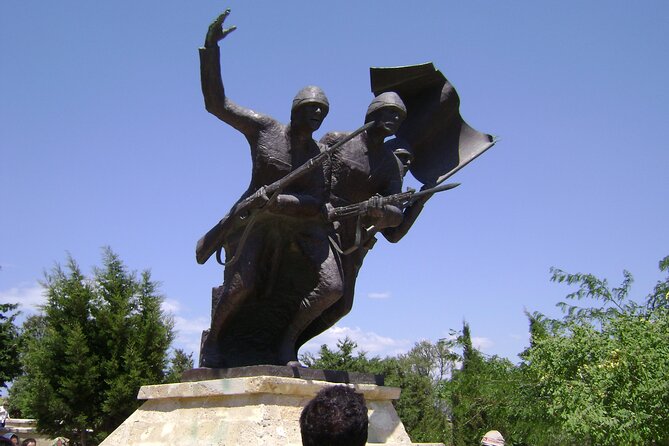
Then you move from the political map to the human one. The tour includes visits to moving cemeteries and the battlefield areas tied to the clash between Ottoman and ANZAC troops.
This is where the guide’s storytelling becomes a key part of value. You are not just reading plaques, you are being guided through what happened and why it is remembered.
Anzac Cove area: the 25 April 1915 landings, without the fluff
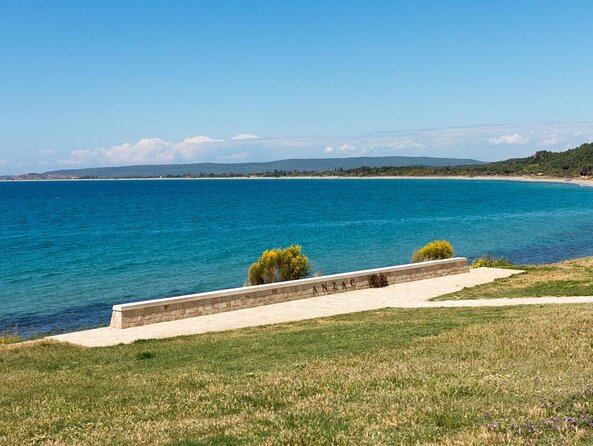
One of the most iconic stops is Anzac Bay Beach, tied to the landing at Anzac Cove on 25 April 1915. The tour also uses the alternative name Gaba Tepe and notes the Turkish naming for the event as the Arıburnu Battle.
The tour explains that ANZAC troops landed at night on the western side of the peninsula, and due to landing drift they came ashore about one mile north of their intended beach. From there, plans changed under pressure, with troops sent in piece by piece under mixed orders.
This is one of those places where the details help. If you only hear “a landing happened,” the site can feel like scenery. If you know that nighttime landing errors, confusion, and shifting orders shaped the fighting, you start to read the terrain differently.
It is also a good moment to slow down. You are looking at a landscape tied to fear, endurance, and sacrifice, not a clean victory narrative.
The long-day rhythm: how the sunset finish makes it stick
The itinerary ends with a return trip back to your Istanbul hotel or port as the sun sets over the Marmara Sea. That timing is practical and emotional.
Practical, because it gives you a natural endpoint to a long day. Emotional, because you see the sea again after spending hours thinking about water routes and strategy.
At around 12 hours total, this is not the tour for a half-asleep “see some stuff” mentality. It rewards curiosity. If you go in ready to listen, you will come away with a mental timeline connecting Troy’s strategic deception to the Dardanelles campaign’s strategic choke points.
And if your feet get tired, that is normal. The value is in the guided context, not in marathon walking.
Price and value: $541.85 per person for a private, full-day route
At $541.85 per person, this is not a budget day trip. But it can still feel fair if you compare what is included.
You are paying for:
- Private tour setup (only your group)
- Hotel or port pickup and drop-off
- Transportation across Istanbul and around the Dardanelles region
- A ferry crossing
- A professional guide
- Skip-the-line access with your guide
- English-speaking guidance
What you are not paying for is the hidden budget items:
- Meals and drinks
- Museum entrance ticket fees (and some site entry where tickets apply)
So the question becomes: will you get enough out of two major sites with expert guidance to justify a full-day private price? If you are the type who likes real context, this tour can feel like good spending. If you just want a casual drive and a couple photos, it will probably feel expensive.
Tip money is not included either. One review note suggested having tip money available for both driver and guide, which is a sensible move for a private service day.
Who this tour is best for
This is ideal if you fit one of these profiles:
- You like myth plus real-world context, meaning you enjoy Troy and also want to understand how later empires fought for the same water routes
- You want a small-group or private experience where your guide can explain in depth
- You are a fan of WWI stories on the ground, especially the Ottoman vs ANZAC perspective tied to Gallipoli’s key locations
If you dislike long travel days, or if you want frequent bathroom stops and lots of sitting breaks, you might find this too intense.
Should you book this Troy and Gallipoli private tour?
I’d book it if you can handle a full 12-hour day and you want your Istanbul trip to include two of Turkey’s most unforgettable big themes: Homer’s Troy and the First World War’s Gallipoli campaign.
I would hesitate if you are trying to keep costs tight, because museum and ruin fees plus meals will likely add on. Also, set expectations for Troy correctly. It is not a fully intact city, it is a ruin site with major atmosphere and big viewpoint payoffs.
If you do book, show up early, bring water, plan for sun and walking, and treat the guide’s explanations as part of the ticket value. The best moments here come when the story lands and you can look at the landscape with new context.
FAQ
What time does the tour start?
The tour starts at 6:30 am.
Where do you get picked up in Istanbul?
Pickup is offered from your Istanbul hotel or from the port.
How long is the day tour?
It is approximately 12 hours.
Is this a private tour?
Yes. It is private, meaning only your group participates.
What language is the tour offered in?
The tour is offered in English.
Are meals included?
No. Meals and drinks are not included.
Are museum and entrance fees included?
No. Museum entrance ticket fees are not included.
Do we get skip-the-line access?
Yes. Skip-the-line access with your guide is included.
Is there free cancellation?
Yes. You can cancel for a full refund up to 24 hours in advance.
Newest tours in Istanbul


Gallipoli Tours, compared.
Istanbul to Gallipoli Full Day Tour with Lunch and Transfers
Read our review →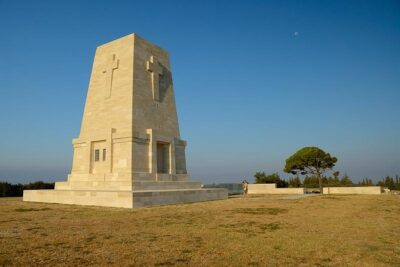

Istanbul to Gallipoli, Canakkale and Troy. 2 Day Tour with Hotel
Read our review →
6 Days Turkey Tour Cappadocia, Pamukkale, Ephesus, Gallipoli Troy
Read our review →
5-Day Aegean Tour – Gallipoli, Troy, Ephesus, Kusadasi, Pamukkale
Read our review →Browse the lists this tour appears in