
Reviewed · HAGIA SOPHIA TICKETS
Istanbul: Hagia Sophia, Blue Mosque Guided Tour, & Tickets
Three icons, one smart walking plan.
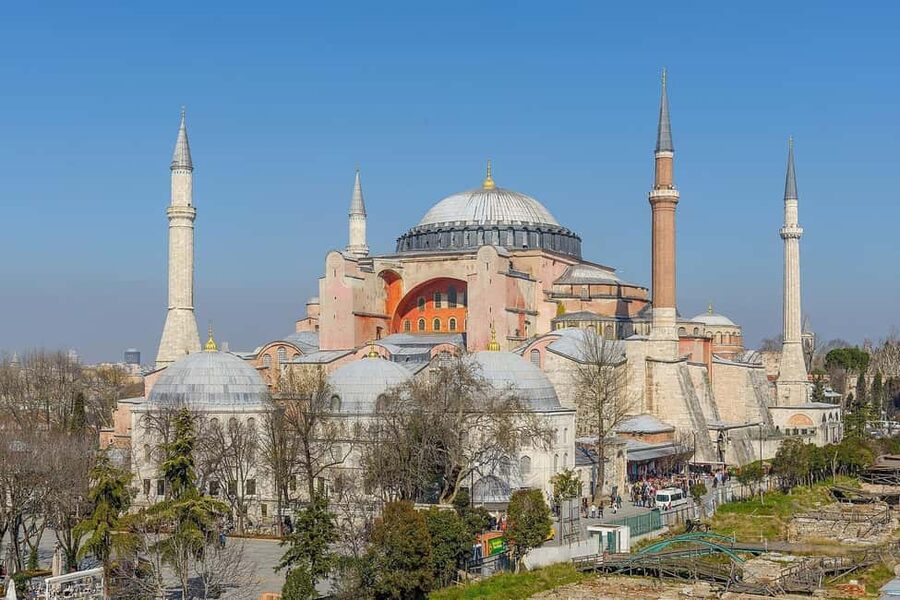
This 2.5-hour guided tour strings together Hagia Sophia and the Blue Mosque, plus a stop at the Hippodrome, giving you the why behind what you see in Sultanahmet. You’ll move at a human pace, and the guide keeps the story going even when you’re stuck in line.
Two things I really like: first, the focus on the “compare and contrast” between religions at Hagia Sophia, including what the building meant as a coronation site and how the space shifted over time. Second, the Blue Mosque visit is all about what your eyes should catch, especially the inside tiles tied to Iznik craftsmanship, not just the big exterior silhouette.
One consideration before you book: there is no guaranteed skip-the-line at Hagia Sophia or the Blue Mosque. In peak season, expect security lines that can take around 45 minutes, even if your guide helps keep you moving and informed.
In This Review
- Key highlights worth planning around
- Why this Hagia Sophia, Blue Mosque, and Hippodrome tour works so well
- Meeting point and practical start: what you need to know before you go
- Hagia Sophia: what to look for besides the obvious
- Blue Mosque (Sultanahmet Mosque): tiles, naming traditions, and what photographs can miss
- Hippodrome of Constantinople: turning a square stop into real perspective
- How the guide pacing makes or breaks the experience
- Price and value: is $59 really fair for what you get?
- Who this tour suits best, and who should reconsider
- Quick rules for mosque entry so you don’t lose time
- Should you book this Hagia Sophia, Blue Mosque, and Hippodrome tour?
- FAQ
- Where is the meeting point?
- How long is the tour?
- What does the tour include?
- Are tickets handled in advance and is there a skip-the-line service?
- Do I need a headscarf?
- What should I wear or bring?
- What is not allowed during the tour?
- Is the tour suitable for wheelchair users or medical conditions?
- What is the cancellation policy?
Key highlights worth planning around
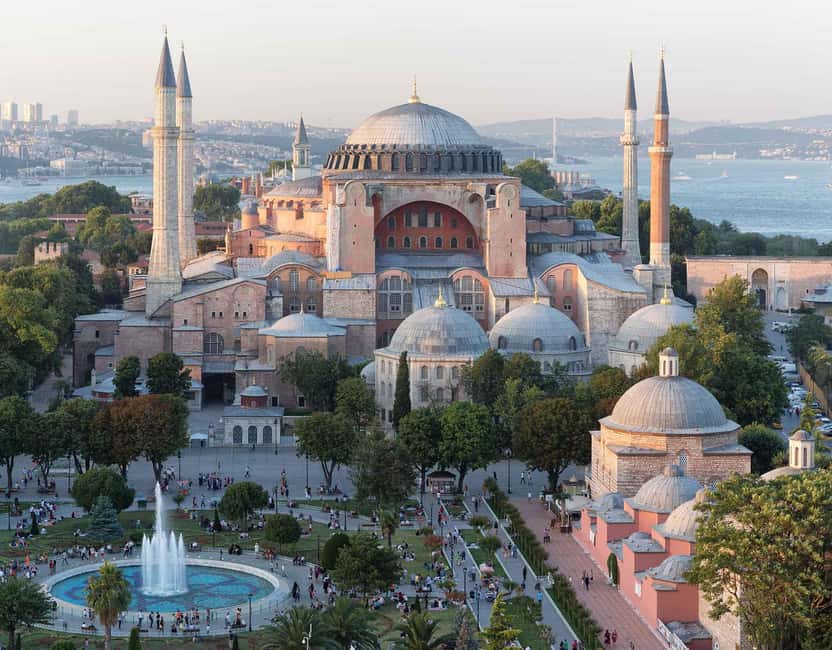
- Hagia Sophia’s two-religion story inside one 1500-year landmark, including the dome facts that define its scale
- Blue Mosque tile craft from Iznik, with a clear guide to what you’re looking at once you’re inside
- Hippodrome photo moment at the Obelisk of Theodosius, plus a quick grounding in Byzantine public life
- Small group pacing, which helps you actually hear the guide while still getting time to look around
- Meet-up is easy to find if you show up at the Double Decker stop across from Hagia Sophia with the Istanbul E-pass flag
Why this Hagia Sophia, Blue Mosque, and Hippodrome tour works so well
Sultanahmet is packed. You can see a lot on your own, sure. But it’s also easy to wander in circles, miss the important details, and end up leaving with photos and no meaning.
This tour is designed for tight timing: 2.5 hours that hits the big three. Hagia Sophia gets you the headliner scale and the layered religious history, the Blue Mosque adds a masterclass in Ottoman decoration, and the Hippodrome stop gives you the civic backdrop that used to power daily life in Constantinople.
You also get a guide who can read the room. On hot days and busy mornings, that matters. A few guides named in past tours, like Onur and Gamze, are praised for keeping groups engaged and adjusting when lines get long.
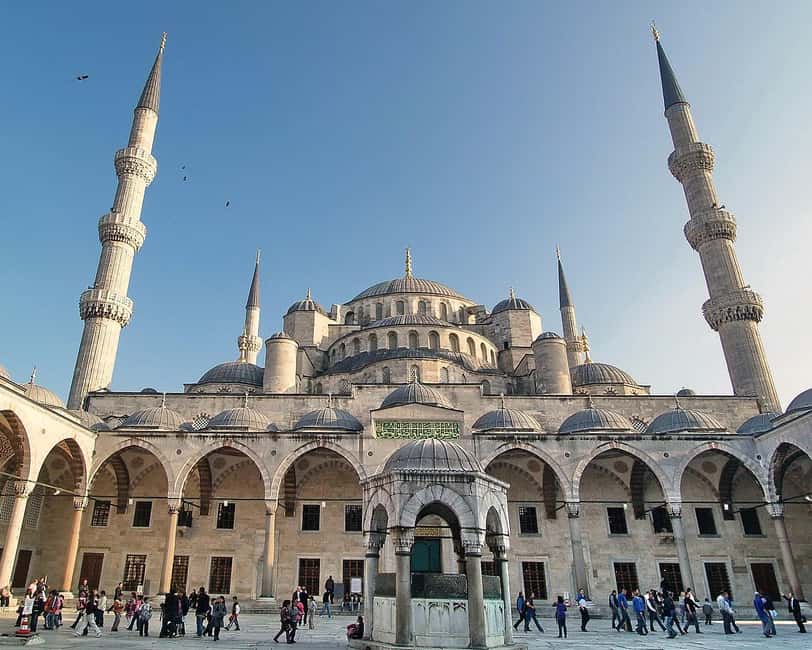
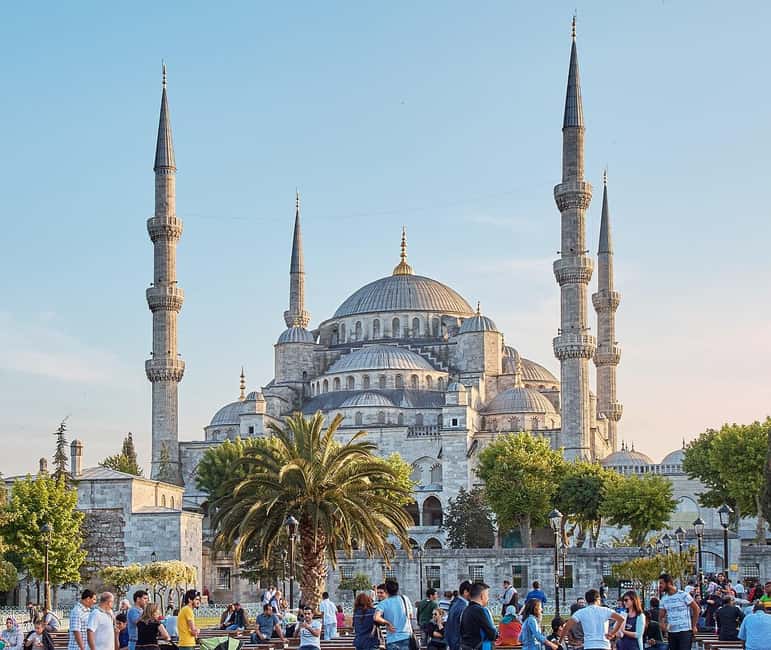
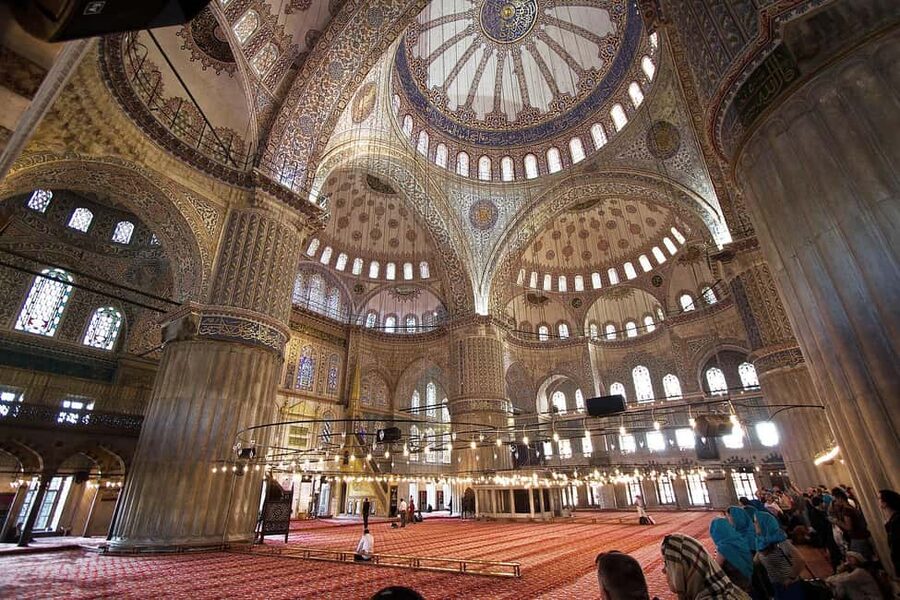
Blue tile domes rising over the old city
- Istanbul: Blue Mosque & Hagia Sophia Guided Tour w/ Tickets
★ 4.8 · 3,600 reviews - Istanbul: Blue Mosque, Hagia Sophia, & Old Town Walking Tour
★ 4.8 · 2,372 reviews - Istanbul: Basilica, Hagia Sophia, Blue Mosque Tour & Cruise
★ 4.5 · 1,929 reviews
Meeting point and practical start: what you need to know before you go
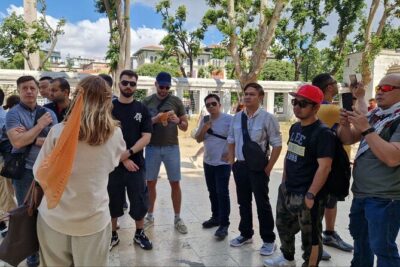
You’ll meet near the action, not at some random office. The guide holds a white flag with the Istanbul E-pass logo at the Double Decker Sightseeing Tourist Bus Stop across from Hagia Sophia.
Comfort beats style here. You’ll be walking and standing for the mosque interiors and the Hippodrome square area, so wear comfortable shoes. Bring a headscarf for mosque entry, and keep in mind that the tour has clear rules: no shorts, no short skirts, no flash photography, and no large bags or backpacks.
If you’re arriving early, use the time wisely. Get water if you need it, but don’t plan on eating on the move during the short tour window. This is a morning-or-afternoon “see and understand” block.
Hagia Sophia: what to look for besides the obvious
Hagia Sophia is the type of place that makes you stop talking. The building feels like it has a pulse, and that’s exactly why a guided visit helps so much.
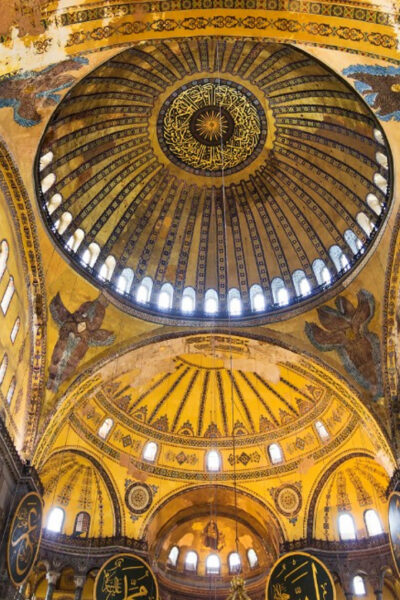
Here’s the kind of context you should expect to hear: Hagia Sophia is described as a 1500-year landmark, built within just five years, and shaped by centuries of changing use. The dome numbers matter because they explain the illusion. The dome height is given as 55.60 meters, with a diameter of 31.87 meters, and it held the record for biggest-dome size in the world for around 800 years.
But the most useful part of the guide’s job is helping you notice the “side-by-side” religious elements. You’ll hear how the building functioned as the headquarters of Orthodox Christendom, then became the first mosque in Istanbul after the Ottoman conquest. That shift is more than politics. It changes what people emphasized, what survived visually, and what visitors should mentally compare as they look around.
You’ll also get the story of how it served as a major stage for rulers. The tour notes that Hagia Sophia was a coronation place for Roman emperors and a meeting space between the Sultan and his people. That helps you understand why this building matters even if you’re not religious.
My practical tip: when you’re inside, resist the urge to rush straight to one feature. The best photos and the best “wow” moments often come after you’ve taken 2 minutes to orient yourself and let the guide point out what to look for first.
Blue Mosque (Sultanahmet Mosque): tiles, naming traditions, and what photographs can miss
The Blue Mosque is famous for a reason, but most people only notice its presence. A good guide helps you get past the postcard view and focus on the interior details that make it special.
The tour frames the “Blue Mosque” nickname around the interior tile work. The key detail here is that the tiles are linked to Iznik, the well-known tile-producing region in Turkey. Once you’re inside, it’s much easier to recognize patterns, color, and craftsmanship when someone tells you what you’re seeing and why it was important.
You’ll also hear how Ottoman naming worked. The tour describes a naming tradition where mosques were often named after the order and spending associated with the mosque’s construction. That leads to the Sultanahmet naming logic, where the name connects mosque, sultan, and the area itself.
That naming story sounds small until you’re walking around Sultanahmet. Suddenly, the names on maps and signs stop feeling random. You start understanding how the city organized identity through architecture.
One more thing to keep your expectations realistic: the Blue Mosque has big beauty, but Hagia Sophia’s religious and political weight often feels more unique in scale and historical layers. Some guided experiences end up being shorter on deep architecture at the Blue Mosque compared with Hagia Sophia, largely because time is limited and crowds can be intense. Still, for first-timers, the guide-led tile focus is usually the difference between seeing and understanding.
Practical tip: if your entry timing runs tight due to security, ask the guide where to stand for the best interior views quickly. It’s a faster path to worthwhile photos without losing the meaning of what you’re looking at.
Hippodrome of Constantinople: turning a square stop into real perspective
The Hippodrome is one of those places you might feel is “just a square” at first. That’s why a context stop helps. Even if you don’t stay long, you walk away understanding what the space once powered.
The tour describes the Hippodrome as originally built in the 3rd century CE and later expanded in the 4th century by emperors associated with Rome’s shift into Byzantine identity. It served as the stage for chariot races and public gatherings, basically the entertainment and civic centerrolled into one.
The big visual hook is the Obelisk of Theodosius, described as a towering Egyptian relic brought in the 4th century. When you see it in the square, it’s easier to appreciate why it still draws attention centuries later: it’s the physical clue that the city imported and repurposed symbols of power.
This stop is intentionally shorter. You get a photo stop and a short guided walk, around 30 minutes total for the Hippodrome portion. The goal is not to turn it into an all-day history lecture. It’s to add a missing piece so the rest of Sultanahmet starts to click.
My practical tip: plan for quick photos, then keep your eyes up. The Hippodrome area works best as a “place in the city” perspective, not a single artifact you can stare at forever.
Byzantine church, Ottoman mosque, both at once
- Istanbul: Hagia Sophia Skip-the-Line Ticket & Museum Option
- Basilica Cistern & Hagia Sophia with Optional Topkapi Palace
- Istanbul: Hagia Sophia Entry Ticket with Audio Guide
- Combo: Hagia Sophia+Basilica Cistern Optional Topkapi Palace
- Hagia Sophia Skip-the-Line Ticket & Blue Mosque Audio Guide
- Istanbul: Blue Mosque, Hagia Sophia, & Basilica Cistern Tour
How the guide pacing makes or breaks the experience
This is a guided walking tour, but what matters is pacing. You’re moving through places that are both religious spaces and heavy-traffic tourist sites. That means plans change based on security lines and on-the-ground flow.
The tour format is built for flow: Hagia Sophia gets about 1 hour, the Blue Mosque about 45 minutes, and the Hippodrome photo/walk around 30 minutes. That’s enough time to see key areas, hear the main stories, and still have a chance to take photos.
A recurring praise point from different guides, such as Ebrahim, Koray, and Akhmed, is that they answer questions and adjust timing when crowds form. Some even keep an eye on shade and comfort on hotter days. That small care is not fluff. It helps you stay present instead of just surviving the heat.
Also, don’t expect the guide to do everything for you. You’ll still need to follow mosque rules and security checks. But the guide makes the experience feel organized rather than frantic.
If you’re sensitive to crowds: the small group size is a big plus. A group that stays together is easier to manage in tight interiors and reduces the feeling of being swept along.
Price and value: is $59 really fair for what you get?
At $59 per person for a 2.5-hour guided experience, the value comes from three places: a live guide, paid entry access for Hagia Sophia, and ticket handling that reduces guesswork.
Entrance ticket inclusion is explicitly listed for Hagia Sophia. For the Blue Mosque, the tour still focuses on an in-mosque visit experience as part of the package flow, and the experience is marketed around visiting both sultan mosques and the Hippodrome efficiently.
Where value can feel complicated is the “skip-the-line” language. The fine print says skip-the-lines service is not offered at Hagia Sophia and the Blue Mosque, and peak season security lines can take about 45 minutes. That means you should think of the guide as a process helper, not magic. You may still wait for security. Your advantage is that you’re waiting with context, not boredom.
So is it worth it? For first-time Istanbul visitors, limited time, or anyone who wants architecture and Ottoman/Byzantine context without piecing it together yourself, yes. The tour condenses major sites into one focused morning or afternoon with an English-speaking professional guide.
Who this tour suits best, and who should reconsider
This is a solid fit if you want a guided introduction to Istanbul’s most iconic monuments and you like structured walking routes.
It’s especially good for:
- First-timers who want the big landmarks in one session
- History-minded visitors who enjoy how empires change religious spaces
- Time-limited travelers who do not want to plan ticket logistics and timing from scratch
It’s not a great fit if:
- You use a wheelchair, since the tour is not suitable for wheelchair users
- You have a pre-existing medical condition, since the tour is a walking experience in crowded environments
- You hate standing in security lines, since the tour notes that waiting can be significant in peak season
Quick rules for mosque entry so you don’t lose time
You’ll need to dress for mosque entry and security. The tour’s non-negotiables are clear: no shorts, no oversize luggage, no baby strollers, no large bags or luggage, no short skirts, no flash photography, and no backpacks.
Bring a headscarf. Even if you think you’ll be fine without one, you’ll be the person slowed down while others file through.
One more smart move is to plan your phone habits. No flash photography. If you want photos, turn on your normal lighting, then focus on capturing what the guide points out.
On days when you forget something, some guides have offered practical help with cover-ups for a small fee, but don’t count on it. Pack what you need and move confidently.
Should you book this Hagia Sophia, Blue Mosque, and Hippodrome tour?
Book it if you want an efficient, guided way to understand why these buildings matter, not just how to pose in front of them. The best part is the guide-led attention to details like Hagia Sophia’s dome scale, the Iznik tile work inside the Blue Mosque, and the Obelisk of Theodosius as a tangible clue to Constantinople’s public life.
Skip it if you’re already comfortable self-guiding and you know you’ll be unhappy waiting in security lines. Also skip if walking and crowded interiors are tough for you.
If you do book, I’d treat it like a “context ticket,” not a “zero-wait guarantee.” You’ll still have to pass security, but the stories, pointing out what to notice, and smooth stop order are exactly what make the $59 feel like money well spent in a short time window.
FAQ
Where is the meeting point?
The guide meets you holding a white flag with the Istanbul E-pass logo at the Double Decker Sightseeing Tourist Bus Stop across the Hagia Sophia.
How long is the tour?
The tour duration is 2.5 hours.
What does the tour include?
It includes an English-speaking professional guide, a visit to Hagia Sophia, the Sultanahmet Mosque (Blue Mosque), and the Hippodrome area, plus an entrance ticket to Hagia Sophia.
Are tickets handled in advance and is there a skip-the-line service?
There is an included ticket service claim, but the important info says skip-the-lines service is not offered at Hagia Sophia and Blue Mosque. Security lines can still take about 45 minutes in peak season.
Do I need a headscarf?
Yes. The tour lists a headscarf as something to bring for mosque visits.
What should I wear or bring?
Wear comfortable shoes. Bring a headscarf. The tour also has rules against shorts and short skirts.
What is not allowed during the tour?
Flash photography is not allowed. Also avoid shorts, oversize luggage, baby strollers, luggage or large bags, short skirts, and backpacks.
Is the tour suitable for wheelchair users or medical conditions?
No. It is not suitable for wheelchair users, and it is also not suitable for people with pre-existing medical conditions.
What is the cancellation policy?
You can cancel up to 24 hours in advance for a full refund.
Newest tours in Istanbul

Hagia Sophia Tickets, compared.
Hagia Sophia Skip-the-Line Ticket & Museum Option
Read our review →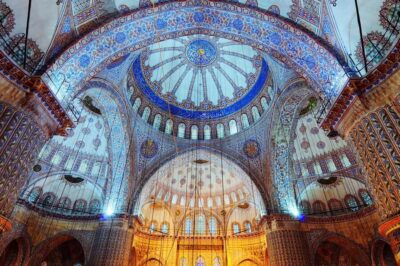
Blue Mosque & Hagia Sophia Guided Tour w/ Tickets
Read our review →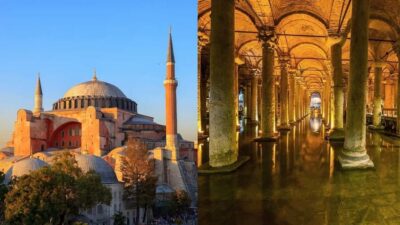
Basilica Cistern & Hagia Sophia with Optional Topkapi Palace
Read our review →Blue Mosque, Hagia Sophia, & Old Town Walking Tour
Read our review →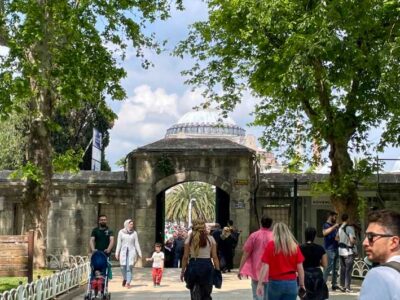
Basilica, Hagia Sophia, Blue Mosque Tour & Cruise
Read our review →
Combo: Hagia Sophia+Basilica Cistern Optional Topkapi Palace
Read our review →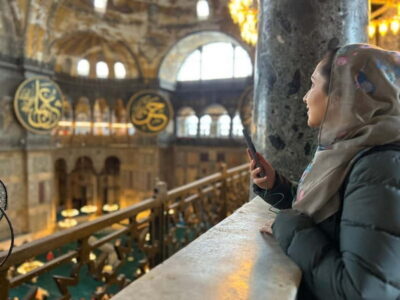
Hagia Sophia Skip-the-Line Ticket & Blue Mosque Audio Guide
Read our review →Browse the lists this tour appears in