
Reviewed · BLUE MOSQUE GUIDED TOURS
Istanbul-Blue Mosque,Hippodrome Guided Tour
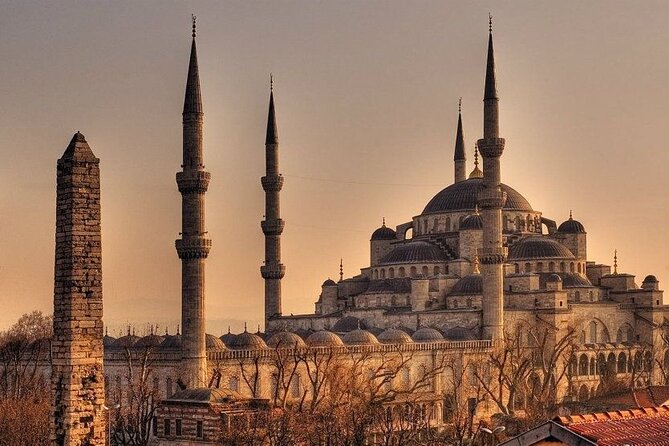
Obelisks and minarets in one guided loop. What makes this tour fun is how it stitches Hagia Sophia and the Blue Mosque together with the Hippodrome, so you see Roman spectacle and Byzantine-Ottoman change in the same morning. I also like that the guide work is the main event here, with clear explanations for the key monuments and what you are actually looking at on the ground.
The tradeoff? This is a shared, small-group walk, and when multiple groups overlap in busy areas, the pace can feel a bit less tight than you might expect, so build in a little patience around timing.
In This Review
- Key highlights you will notice right away
- Getting oriented in Sultanahmet from the start
- What I like about the walking approach
- The one caution I would plan for
- The Hippodrome: where chariots once raced and stories still show up
- Surviving obelisks and why they matter
- Wilhelm II’s German Fountain: a fast history-jolt
- What you should watch for as you walk
- Hagia Sophia: seeing the Byzantine and Ottoman story in one view
- Why this stop is worth doing with a guide
- The practical part
- The Blue Mosque (Imperial Mosque): minarets and meaning, not just photos
- What you should aim to do during the Blue Mosque portion
- Group size, pacing, and how the tour feels in real life
- How long is enough, and what you might miss
- Price value: what $42.33 really covers
- Who gets the best value
- Who this tour suits, and who should choose differently
- Should you book this Istanbul Blue Mosque and Hippodrome tour?
- FAQ
- What is the duration of the Istanbul-Blue Mosque and Hippodrome guided tour?
- How much does the tour cost?
- Is the tour offered in English?
- Where does the tour start and end?
- What time does the tour begin?
- What is included in the price?
- What is not included?
- How big is the group?
- Is there free cancellation?
Key highlights you will notice right away
- Serpentine Column from Delphi: It is one of those details that sounds strange, then becomes oddly satisfying to spot.
- Hippodrome track marked in paving: The chariot-race course is about 2 meters below ground, but the outline still helps you picture the action.
- Surviving obelisks and the German Fountain of Wilhelm II: These pieces connect different eras without needing a museum stop.
- Byzantine church ruins and Ottoman Imperial Mosque context: You are not just looking at buildings, you are learning how the stories shifted.
- Licensed English-speaking guide, up to 20 people: Small enough to hear, large enough to feel like a real shared city walk.
Getting oriented in Sultanahmet from the start
Your tour starts at Marmara University, Küçük Ayasofya, Sultan Ahmet Parkı No:2. The timing matters because you start at 9:00am, right when Sultanahmet is starting to wake up but before it turns into full-on crush mode. That gives you a better chance to actually look up at the buildings, instead of just weaving through crowds.
The meeting point is also a practical choice: it is described as near public transportation, which is useful if you are not staying right in the historic core. And since the tour uses a mobile ticket, you can keep things simple. Just make sure your phone battery is decent before you leave, because you will rely on that ticket at the start.
This is a walking experience, and the value comes from what the guide points out while you are on foot. If you like getting your bearings quickly and then understanding what you are seeing, this style works well.
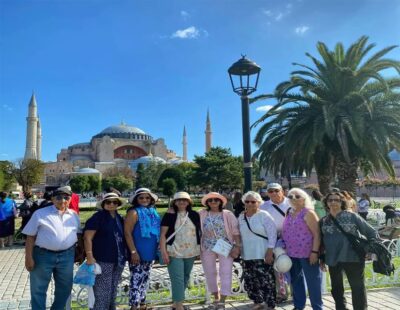
Where chariots once raced, now a public square
- Morning Istanbul: Half-Day Tour with Blue Mosque, Hagia Sophia, Hippodrome and Grand Bazaar
★ 4.5 · 103 reviews - Istanbul: Old Town, Blue Mosque, Hippodrome & Hagia Sophia
★ 4.5 · 57 reviews - Blue Mosque Sultanahmet Old Town and Hippodrome Walking Tour
★ 5.0 · 53 reviews
What I like about the walking approach
You get a steady flow of sights rather than one long time in a single place. In about 3 hours, you can cover the Hippodrome area and the nearby mosque complex without feeling like you are racing. The tour also notes that the guide will spend a long time at the places, which is a big deal for these sites. Sultanahmet is easy to skim, hard to understand.
The one caution I would plan for
A shared tour means the group mix matters. One consistent theme from the experience report I saw is that the information quality can be strong, but coordination between different groups can get messy in busy areas. So if you hate delays or waiting around, keep expectations realistic. You will still learn a lot, but you may not always feel like every minute is perfectly controlled.
The Hippodrome: where chariots once raced and stories still show up
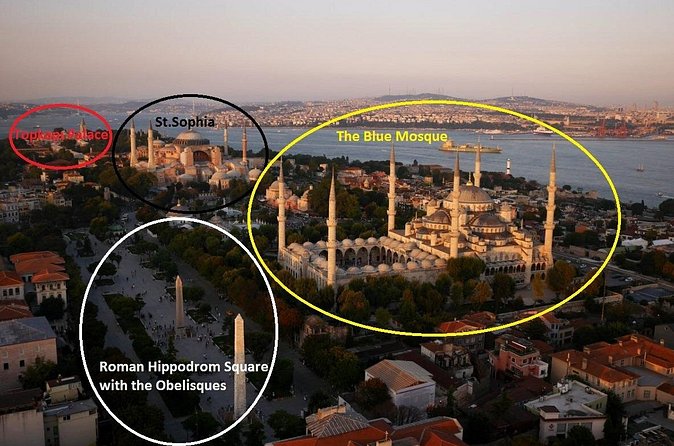
The Hippodrome is the tour’s “how did Istanbul become Istanbul?” moment. On the surface today, it can look like an outdoor square with monuments. The magic is that the area was once the center of Roman spectacle. The tour helps you picture the scale by explaining that the actual chariot-race track sits about 2 meters below ground, yet the course is marked on the paving of Sultan Ahmet Square.
That one detail changes everything. Instead of staring at obelisks like they are random trophies, you can map where the action used to be. Even if you do not know the names of every Roman faction, the visual logic is clear once you understand what you are standing on.
Surviving obelisks and why they matter
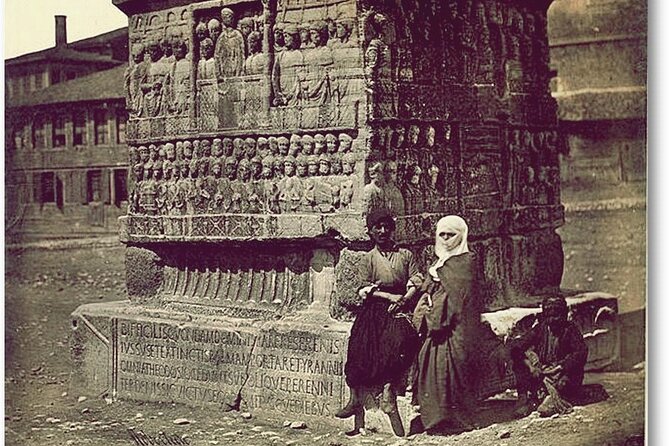
You will see the surviving obelisks and also the Serpentine Column from Delphi. These are not just decorative. They are physical leftovers from the ancient world that ended up here, reused and reinterpreted as power shifted.
Obelisks are especially helpful for first-time visitors because they give you a height reference in a place full of buildings. They also signal that Constantinople thought in big gestures. Roman rulers brought monuments like this to claim prestige, and later eras kept them as trophies or landmarks.
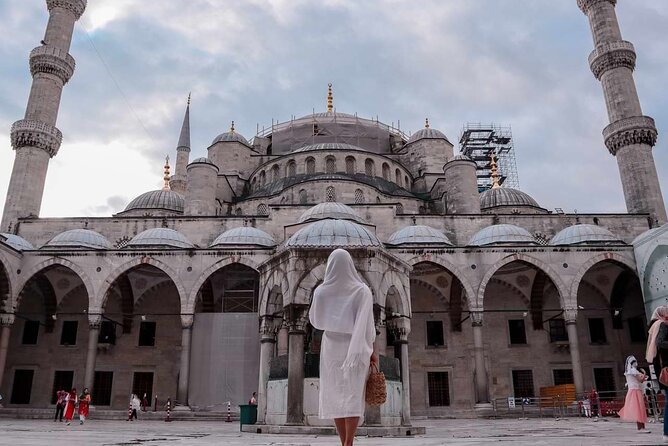
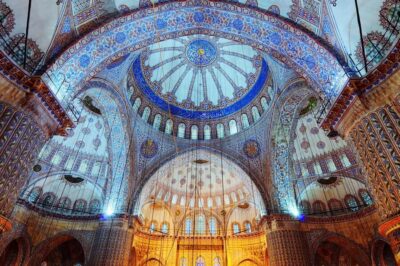
Blue tile domes rising over the old city
- Istanbul: Blue Mosque & Hagia Sophia Guided Tour w/ Tickets
- Istanbul: Blue Mosque, Hagia Sophia, & Old Town Walking Tour
- Istanbul: Basilica, Hagia Sophia, Blue Mosque Tour & Cruise
- Istanbul: Blue Mosque Guided Tour
- Hagia Sophia Skip-the-Line Ticket & Blue Mosque Audio Guide
- Istanbul: Blue Mosque, Hagia Sophia, & Basilica Cistern Tour
Wilhelm II’s German Fountain: a fast history-jolt
Another standout is the Byzantine German Fountain of Wilhelm II. This is a reminder that the Hippodrome story did not stop in Roman or Byzantine times. Later European connections left their own stamp, even if the original Roman circus vibe was long gone.
What I like about including something like this is that it prevents the tour from becoming a pure “ancient only” exercise. You end up with a layered sense of time: old remains, newer additions, and a city that kept repurposing what it inherited.
What you should watch for as you walk
When you are in this area, slow down for three things:
- The paving lines that indicate the track, so you can mentally place where chariots would have turned.
- The monument spacing, because the Hippodrome was built for crowd visibility.
- The way ruins and remnants sit next to later structures, which is the whole point of this stop.
This is also the part of the tour where the guide’s explanation style really matters. If the pacing is a little loose because groups are mixing, at least use that time to study the paving and column placements. You can still get a lot out of the space itself.
Hagia Sophia: seeing the Byzantine and Ottoman story in one view
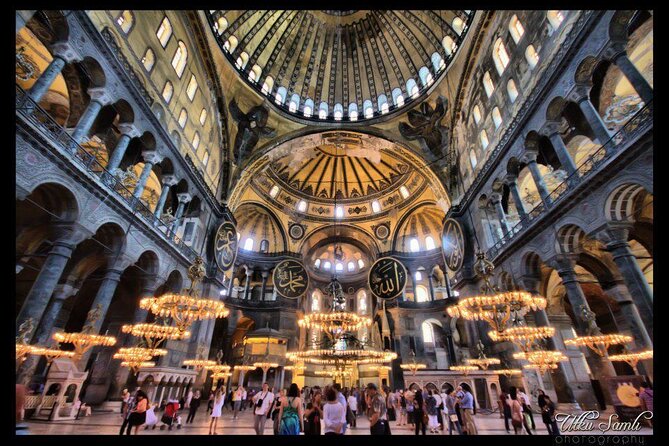
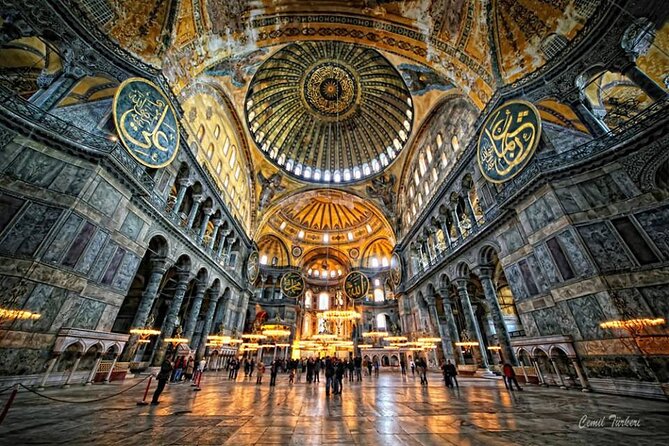
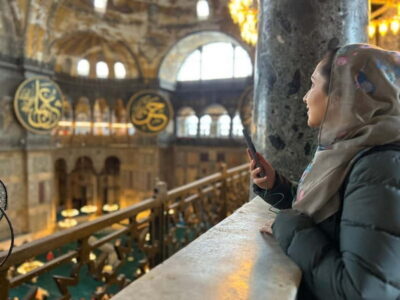
Hagia Sophia is one of those places where the building is so famous that it is easy to treat it like a postcard. A guided stop helps you get past that. The tour frames what you see through both the Byzantine and Ottoman perspectives, so you understand how the site functioned as power and belief changed hands.
Even if you only get a short look from the right angles, the guide’s commentary can connect details you might otherwise miss. This is where the “spend long time at the places” note pays off. You are not just sprinting between famous facades. You are given time to orient yourself and then catch the key architectural signals.
Why this stop is worth doing with a guide
Hagia Sophia can feel confusing because it carries multiple identities at once. A guide helps you keep those identities straight. You start to recognize that you are not looking at one era frozen in time. You are looking at layers that were shaped by different rulers and different religious needs.
If you are visiting on a first trip, this is a strong use of your limited time. You leave with a clearer mental map of what you saw, and that makes the rest of Istanbul feel more readable.
The practical part
This is a walking tour, and mosque-area crowds can rise quickly. Come ready to stand for explanations and to look up often. Wear shoes you trust. You will be shifting positions to see different viewpoints.
The Blue Mosque (Imperial Mosque): minarets and meaning, not just photos
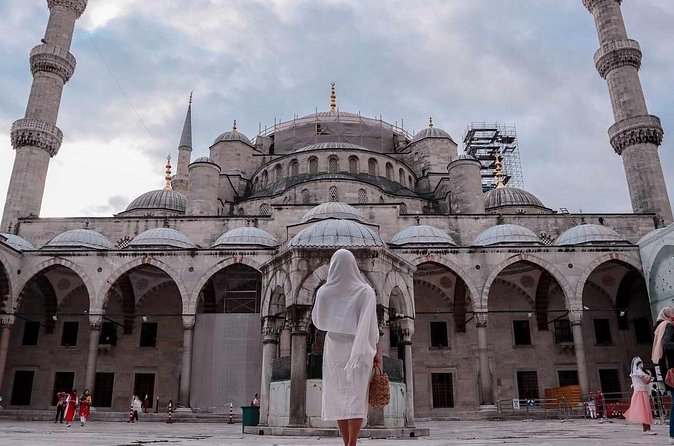
The final mosque focus is the Imperial Mosque, known to many visitors as the Blue Mosque. The tour description calls out the magical minarets, and that is exactly what first grabs you. They are tall, elegant, and they frame the skyline of Sultanahmet in a way that other buildings do not.
But the guide’s role is what turns those minarets from “pretty towers” into part of a bigger story. By connecting what you see to the Byzantine and Ottoman Empire perspective, the explanation helps you understand why the mosque looks the way it does and why it became such an enduring symbol.
What you should aim to do during the Blue Mosque portion
Plan for this to be more than a quick photo stop. When you are there, try to:
- Look for visual balance between the domes and the minarets, not only the minarets alone.
- Pay attention to where you stand, because the building’s proportions can look different from different angles.
- Listen for the explanation of what makes the mosque distinctive in its historical context.
If your group feels slightly disorganized at times, do not assume the value is gone. Use your attention on the guide’s points when they happen, and treat the building itself as the anchor.
Group size, pacing, and how the tour feels in real life
This is a shared walking tour with a maximum of 20 travelers. That size is a sweet spot for many people. It is small enough that you should be able to hear the guide without standing five rows back. It is also large enough that it feels like you are experiencing the area with other people, not being rushed through like a private appointment.
That said, the shared format can affect pacing when several groups converge near the same monuments. Based on the experience feedback I saw, the guide can be attentive and the attraction explanations can be strong, but coordination can feel loose with multiple groups and mixed flow.
So my practical advice is simple: do not treat this tour like a tight train schedule. Treat it like a guided walk with built-in flexibility. If you arrive ready to adapt, you will enjoy the explanations more.
How long is enough, and what you might miss
In about 3 hours, you are not going to cover every corridor and hidden detail inside every monument. Instead, you are aiming for a solid overview plus a few “aha” facts at the Hippodrome and the two iconic mosques.
If you want deep museum-style detail or lots of quiet time inside, you might need a second plan after this. If you want a smart first pass that helps you understand what you see on your own later, this tour fits well.
Price value: what $42.33 really covers
At $42.33 per person for a roughly 3-hour guided walking tour, the real value depends on what is included. Here, you get:
- A professional English-speaking, Licensed tour guide
- Service charges and taxes
- Entry fees
- A mobile ticket
That combination matters. In Istanbul, entry fees and ticket handling can quietly add up. If you can avoid separate ticket purchases and still get a guided context for the sites, the price feels more fair.
What is not included is also important to factor in. Hotel transfers and transport to the meeting point are not included, and food and drink are not included. So budget a snack and water before or during the tour window. Even if you are not a heavy eater, mosques and walking can work up thirst fast.
Who gets the best value
This price and time window make the most sense if you:
- Are short on time but want an organized sense of the area
- Prefer guided context over wandering without direction
- Like the idea of connecting monuments across Roman, Byzantine, and Ottoman themes
If you are traveling slowly and already know a lot about Constantinople’s monuments, you might choose to self-guide. But for many first-timers, the guided link between Hippodrome and mosques is exactly what makes the day click.
Who this tour suits, and who should choose differently
This tour is described as suitable for most travelers, and it is offered in English. With a max group size of 20, it is also a good choice if you want a lively but not chaotic experience.
You should consider booking if:
- You want a focused route in Sultanahmet without planning every step
- You value on-the-ground explanations at the Hippodrome track and monuments
- You are okay with a shared-group pace and a little crowd reality
You might want to skip or adjust expectations if:
- You need a perfectly timed itinerary with no waiting
- You prefer long, silent time inside major sites rather than a guided overview
Should you book this Istanbul Blue Mosque and Hippodrome tour?
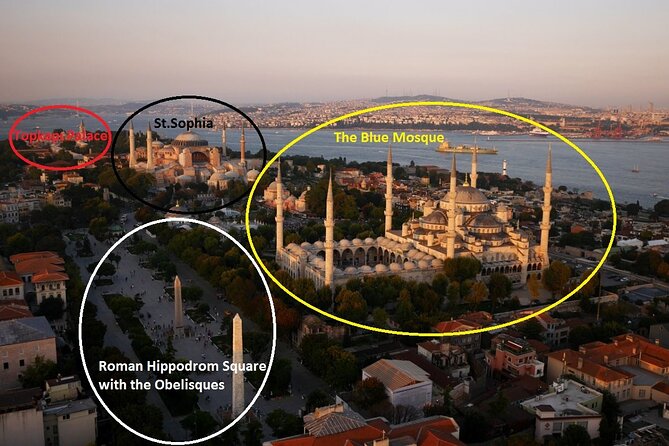
I think this is a solid pick for first-time visitors who want meaning, not just landmarks. The best part is the way the tour links the Hippodrome monuments, including the Serpentine Column from Delphi and the track marked in Sultan Ahmet Square, to the big symbolic pull of Hagia Sophia and the Blue Mosque.
If you book, go in with two expectations:
- You will get strong guidance on what you are seeing, especially at the major photo-and-detail points.
- You might experience some loose coordination with shared groups in a busy zone.
If that sounds like a fair trade, this tour is good value for your time and a practical way to understand Sultanahmet quickly.
FAQ
What is the duration of the Istanbul-Blue Mosque and Hippodrome guided tour?
The tour lasts about 3 hours.
How much does the tour cost?
It costs $42.33 per person.
Is the tour offered in English?
Yes, it is offered in English.
Where does the tour start and end?
It starts and ends at Marmara University, Küçük Ayasofya, Sultan Ahmet Parkı No:2, 34122 Fatih/İstanbul, Türkiye.
What time does the tour begin?
The start time is 9:00am.
What is included in the price?
Included are a professional English-speaking, Licensed tour guide, service charges and taxes, and entry fees.
What is not included?
Hotel transfers, transport to the meeting point, and food and drink are not included.
How big is the group?
The tour has a maximum of 20 travelers.
Is there free cancellation?
Yes, free cancellation is available. You can cancel up to 24 hours in advance for a full refund.
Newest tours in Istanbul




Blue Mosque Guided Tours, compared.
Blue Mosque & Hagia Sophia Guided Tour w/ Tickets
Read our review →Blue Mosque, Hagia Sophia, & Old Town Walking Tour
Read our review →
Basilica, Hagia Sophia, Blue Mosque Tour & Cruise
Read our review →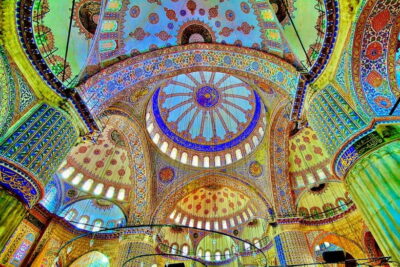
Hagia Sophia Skip-the-Line Ticket & Blue Mosque Audio Guide
Read our review →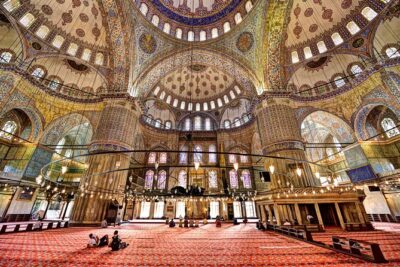
Blue Mosque, Hagia Sophia, & Basilica Cistern Tour
Read our review →
Basilica Cistern Guided Tour & Blue Mosque Audio Guide
Read our review →Blue Mosque, Hagia Sophia & Basilica Cistern Tour
Read our review →Browse the lists this tour appears in