
Reviewed · BASILICA CISTERN GUIDED TOURS
Istanbul: Basilica Cistern Skip-the-Ticket Line Entry
Step underground, and Istanbul turns eerie. This Basilica Cistern visit gets you in fast with skip-the-ticket-line entry and a 25-language audio guide, so you can hunt for the forest of marble columns and the Medusa heads at your pace. My only caution: the air is very humid, so protect your phone and expect a bit of dripping and occasional noise from groups.
I like that the experience is built for pacing yourself. You descend into a cathedral-sized Byzantine reservoir, then you decide how long to linger over columns, the famous carvings, and the lighting effects. If you are planning to use the audio guide, do the one-time download before you arrive, because the cistern has no Wi-Fi.
Price-wise, $62 is not cheap, but it is easy to justify in Istanbul’s peak-season lines. The big value is time, plus the 25-language audio guide option, which turns a quick pass through into a meaningful visit.
In This Review
- Key points to know
- Where the Basilica Cistern Turns Istanbul Weirdly Magical
- Skip-the-Ticket-Line Entry: How the “30 minutes” Really Feels
- Price and Value: Is $62 Worth Skipping the Queue?
- Descend 52 Steps into Justinian’s Water Machine
- Medusa Heads, Marble Columns, and the Stories You’ll Actually Use
- Light, Views, and the Realistic Crowd Factor
- Audio Guide Setup: The One Thing You Must Not Forget
- What to Bring, What to Wear, and How to Stay Comfortable
- Should You Book This Basilica Cistern Skip-the-Ticket-Line Ticket?
Key points to know
- A fast entry strategy: Skip-the-ticket-line helps you avoid waiting in the sun and lets you get inside sooner.
- 52 stone steps into a water system: You are walking into an underground reservoir fed by aqueducts and rebuilt under Emperor Justinian.
- Medusa heads with a story: The audio guide helps explain the mystery behind the Medusa carvings.
- Very high humidity inside: Expect damp air and ceiling drips, so keep electronics protected.
- Use the audio offline: Download first on internet, then listen without Wi-Fi once inside.
- Guides can add clarity: If you choose the guided option, you meet at Dsign Cafe and look for a purple and fuchsia umbrella.
Where the Basilica Cistern Turns Istanbul Weirdly Magical
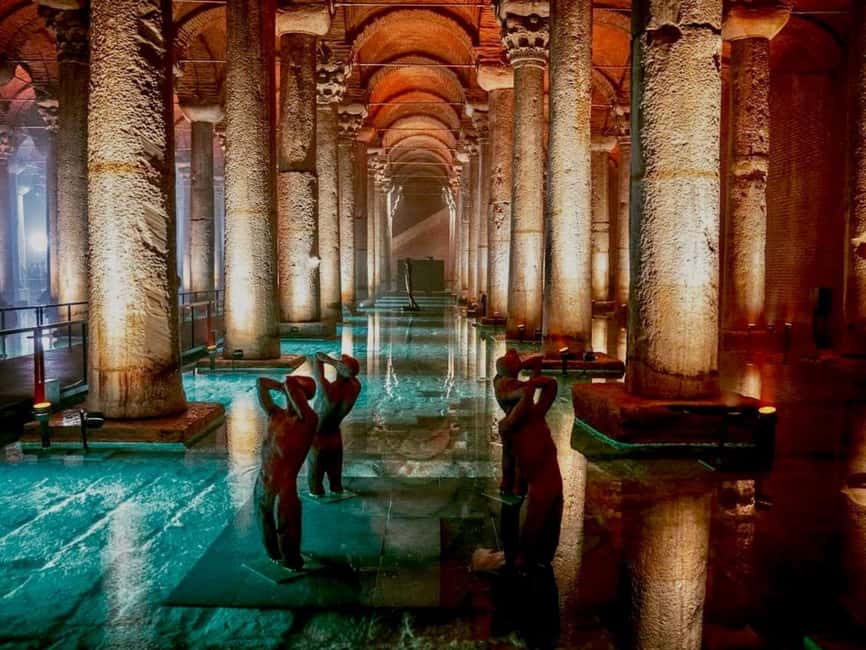
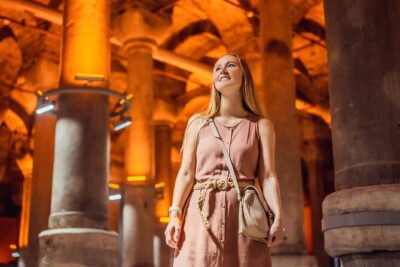
Basilica Cistern is one of those Istanbul places that feels like it was invented for movies, but it is also stubbornly real. You are walking into a Byzantine water reservoir that holds up under the weight of time, damp air, and hundreds of marble columns.
What makes this experience work is flexibility. With skip-the-ticket-line entry, you cut down on the most annoying part, the outdoor queue. With the audio guide available in 25 languages, you can switch from sightseeing mode to story mode whenever you want. And yes, the Medusa heads and the “forest” of submerged-looking columns are the main draw, even before you start listening.
The other thing you should know upfront: the cistern does not feel like a quiet museum. It can be busy, and you might hear groups around you. If you are sound-sensitive, treat the audio guide as your personal soundtrack.
Underground columns and the carved Medusa heads
- Istanbul: Basilica Cistern Fast-Track Entry and Audio Guide
★ 4.6 · 7,521 reviews - Basilica Cistern & Hagia Sophia with Optional Topkapi Palace
★ 4.6 · 3,547 reviews - Istanbul: Basilica Cistern Skip-the-Line Entry Ticket
★ 4.6 · 2,270 reviews
Skip-the-Ticket-Line Entry: How the “30 minutes” Really Feels
The duration listed is 30 minutes. In practice, that is a good window if you want the highlights without turning it into a long sit-down. You can do a focused lap with audio, stop for photos, then move on.
The key benefit is simple: you avoid hanging around while the line forms outside. Several guides and tour experiences emphasize that you are paying to get in faster, and that matters in Istanbul, especially when the weather is warm.
One more reality check. Even with the ticket, security checks are mandatory. They are not skipped. So your “skip-the-line” win is mostly about the ticket queue, not the whole building entrance process.
If you are choosing between independent entry and a guided version, think about what you want most:
- If you like independent pacing, the audio guide is your best friend.
- If you want faster answers on what you are seeing, a short group guide can help you connect the dots quickly.
Price and Value: Is $62 Worth Skipping the Queue?
At $62 per person, this is a premium add-on for Istanbul. But it earns its keep in three ways based on what the experience is actually offering.
First, you are buying time. Istanbul’s Basilica Cistern lines can get slow, and waiting in the sun is the worst kind of “sightseeing tax.” Skip-the-ticket-line entry is basically insurance against that.
Second, you are not just buying an entrance ticket. If you select the audio option, you get an audio guide in 25 languages. That is useful because the cistern looks like a single big room until someone explains what you are standing on, how it was supplied with water, and why the famous carvings ended up here.
Third, the value shows up because the cistern is dense with details. You will see columns, lighting, and specific spots that most people miss. Audio helps you notice what you are looking at.
My rule: if your schedule is tight, or you dislike lines, it is worth paying. If you are traveling slower and do not mind waiting, you might decide to shop around. But given the humidity and the outdoor queue risk, the fast entry option is usually the smarter move.
Descend 52 Steps into Justinian’s Water Machine
The Basilica Cistern visit is built around a dramatic descent. You go down 52 stone steps to reach the underground reservoir.
Once inside, you can feel why this place worked as infrastructure, not just architecture. The cistern is enclosed by a firebrick wall that is 4 meters thick, coated with waterproofing mortar. That is practical engineering, not just impressive decoration.
Then comes the “how it worked” part, and this is where the audio guide earns its money. The cistern stores water supplied by a larger system:
- It was originally built in the 4th century and expanded in 532 AD during Emperor Justinian I.
- It could hold up to 80,000 cubic meters of water.
- Water traveled from a reservoir near the Black Sea through about 20 kilometers of aqueducts.
- The route includes the Eğrikapı Water Distribution Center in the Belgrade Forest.
- Then it moves through the Valens Aqueduct (about 971 meters long) and the Mağlova Aqueduct (about 115 meters long).
You do not need to memorize those numbers to enjoy the place. But when you hear how the water arrived, the columns stop being just pretty and start looking like the skeleton of a city’s survival.
One practical note for your comfort: humidity can be very high, up to 96%. You may even see water dripping from the ceiling. That means cover your phone or camera, use a case that protects against splashes, and expect the air to feel wet.
Medusa Heads, Marble Columns, and the Stories You’ll Actually Use
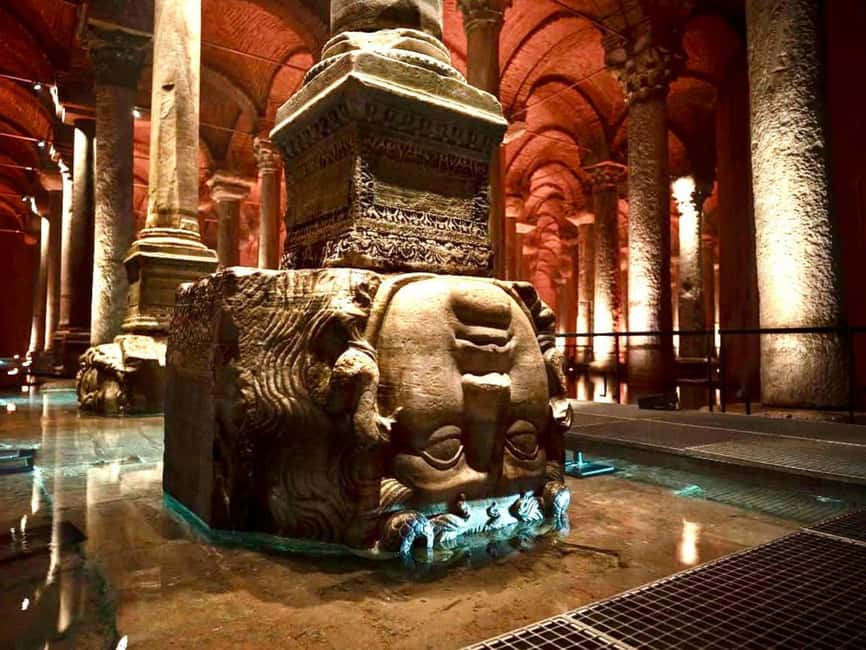
Let’s talk about the big attraction: the Medusa heads. They are famous for a reason, and the audio guide is designed to explain their mystery so you are not just staring at an eerie face with no context.
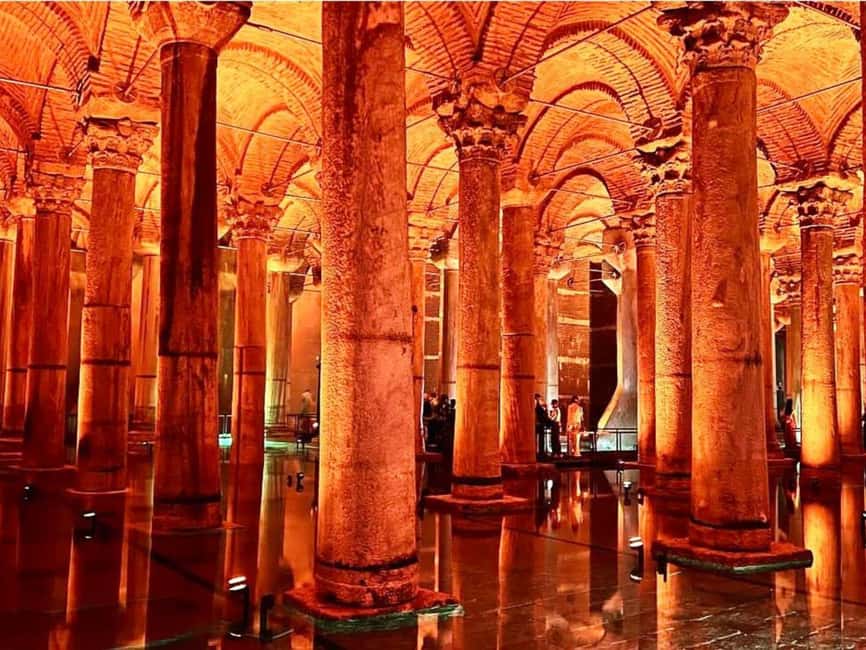
Just as important is how the cistern is organized visually. You walk into a cathedral-size chamber filled with marble columns. From a distance, it looks like a forest. Up close, the columns and stone textures become more than set dressing.
There is also a “spot-and-stop” culture here. You may find yourself naturally drawn toward specific points of interest like the Medusa heads and other named columns. For example, guides often point out the Slaves’ Tears column, a nickname attached to one of the features that visitors look for during a guided walk. Even if you skip the guide, the audio guide should help you navigate to the moments worth pausing for.
Then there are the rules that keep things respectful and safe:
- Touching or entering the water is forbidden.
- Do not remove or interact with wish coins.
It sounds strict, but it is basically about protecting the water and the historic surfaces. Consider it part of the experience, like taking off your shoes in a church.
More of Istanbul beyond the obvious sights
- Istanbul: Hagia Sophia Skip-the-Line Ticket & Museum Option
- Topkapi Palace and Harem Skip-the-Line-Tickets & Audio Guide
- Istanbul: Blue Mosque & Hagia Sophia Guided Tour w/ Tickets
- Istanbul: Hagia Sophia Entry Ticket with Audio Guide
- Istanbul: Topkapi Palace and Harem Ticket with Audio Guide
- Hagia Sophia Skip-the-Line Ticket & Blue Mosque Audio Guide
Light, Views, and the Realistic Crowd Factor
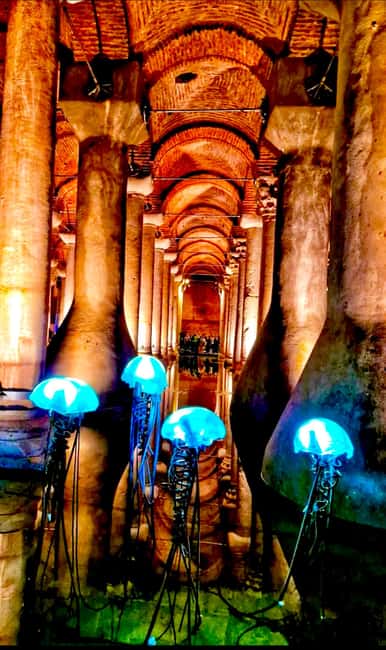
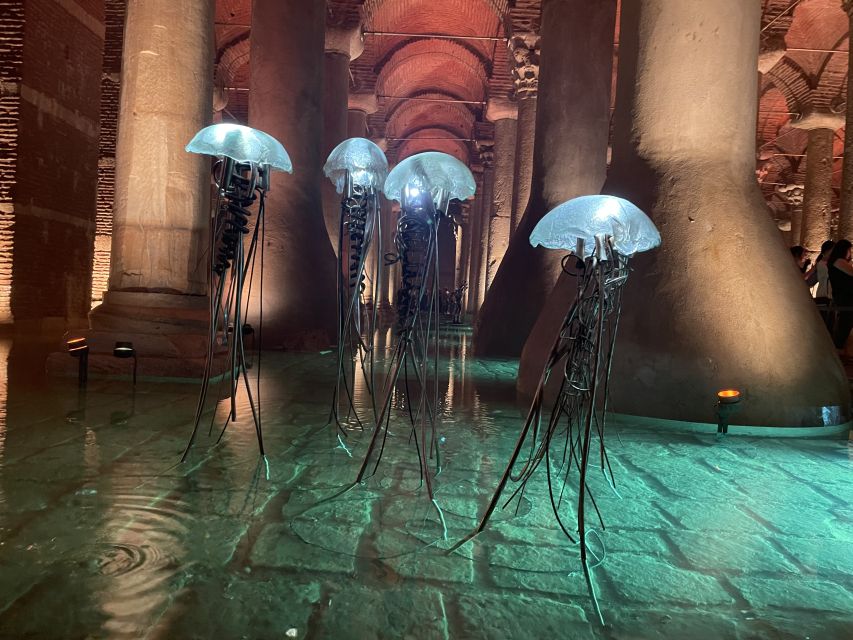
This cistern is not totally dark. Lighting is part of the visual experience, and some visitors describe the light effects as beautiful. You might also notice modern sculptures or temporary installations mixed into the ancient setting, depending on what is currently on display.
That blend is not always to everyone’s taste. Some people love the contrast, others find it a little distracting. Either way, it is good to know before you arrive, because it changes the vibe from purely ancient to ancient plus something current.
Now, about views. The experience highlights mention views of the Golden Horn and Bosphorus from inside the cistern. While most of your time is underground, you may catch glimpses framed by openings or angles where the outside scenery appears.
Finally, crowds. The cistern can get loud, especially with school groups moving through. A few practical strategies:
- Use your audio guide rather than trying to hear everything around you.
- If there is a guide-led group, stand near the narrator so the sound carries.
- If you want a quieter moment for photos, aim to visit at a time when you expect fewer tour groups.
Audio Guide Setup: The One Thing You Must Not Forget
This is where many people accidentally make the visit harder than it needs to be.
You will receive your entry ticket QR codes and an audio guide link by email, separate from your main booking details. The audio guide is available in a long list of languages, including English, French, German, Spanish, Italian, Russian, Japanese, Korean, Turkish, Arabic, Persian, and more.
But the audio guide requires a quick tech step:
- Download the audio guide in advance from the link in your confirmation email.
- You need internet for the first download.
- The cistern has no Wi-Fi.
- Once downloaded, you should be able to use it offline.
- You may need to accept browser cookies for the audio to work properly.
My advice: do the download before you arrive, ideally on Wi-Fi. Then, once you are inside, use headphones if you are going for personal pacing and reduced noise from crowds.
If you prefer a guided walk instead of self-paced audio, there is a guided option that runs at set times every day except Friday (10:30 AM, 1:30 PM, and 3:45 PM). For that, you meet at Dsign Cafe at least 15 minutes early, and the guide is easy to spot with a purple and fuchsia umbrella.
In terms of guide quality, names show up repeatedly in the experience world, including Oguzhan, Augustus, Emre Eriskon, Ozy, Furkan, and Oğuzhan Gürkcü. You should not expect the same person, but it is a good sign that this site often gets staffed by guides who can turn an architectural site into a story you remember.
What to Bring, What to Wear, and How to Stay Comfortable
This is an indoor underground stop, so plan like you are stepping into a damp stone cellar.
Bring:
- Your passport or ID card.
Protect:
- Electronics from humidity and drips. A phone in a sealed case is your best friend.
Dress:
- Think practical. You are descending 52 steps, then walking on stone floors in a humid space. Comfortable shoes matter.
Also, the official note is clear about restrictions:
- No touching or entering water.
- Do not remove or mess with wish coins.
One last detail that affects your day: you can visit any day between 09:00 and 18:00. If you are building a sightseeing plan, try to place Basilica Cistern earlier rather than later if you want shorter waits and calmer audio experiences.
Should You Book This Basilica Cistern Skip-the-Ticket-Line Ticket?
I would book it if two things are true for you:
1) You want to avoid waiting in long queues and getting delayed.
2) You like having context, so you do not just take photos and move on.
This ticket is especially smart for:
- First-time Istanbul visitors who want the big architectural moment without wasting time.
- Travelers who like self-paced sightseeing, because the audio guide lets you pause when you want.
- People who visit during busy hours and want that entry-speed buffer.
I would pause and rethink if:
- You hate humid indoor spaces and are very sensitive to damp air and low circulation.
- You expect a quiet, reflective experience, because the cistern can be noisy when groups arrive.
- You are fine spending time waiting outside, since the biggest value is speed.
If you book, do one simple thing that changes everything: download the audio guide before you go, then treat the cistern like a small walking story, not just a photo stop. The columns, the Medusa heads, and the water system behind them make a lot more sense when you hear the story while you are standing in the setting.
Newest tours in Istanbul




Basilica Cistern Guided Tours, compared.
Basilica Cistern Fast-Track Entry and Audio Guide
Read our review →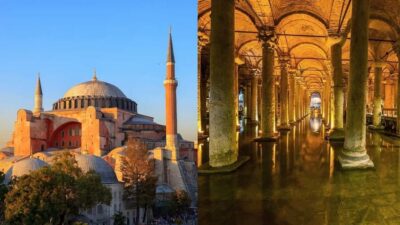
Basilica Cistern & Hagia Sophia with Optional Topkapi Palace
Read our review →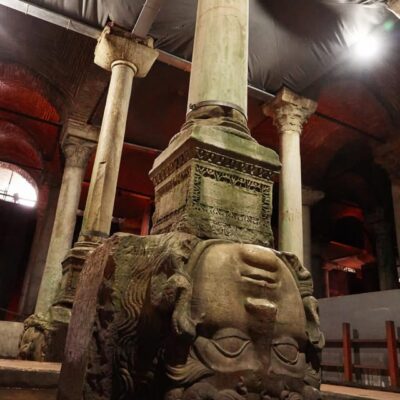

Combo: Hagia Sophia+Basilica Cistern Optional Topkapi Palace
Read our review →
Blue Mosque, Hagia Sophia, & Basilica Cistern Tour
Read our review →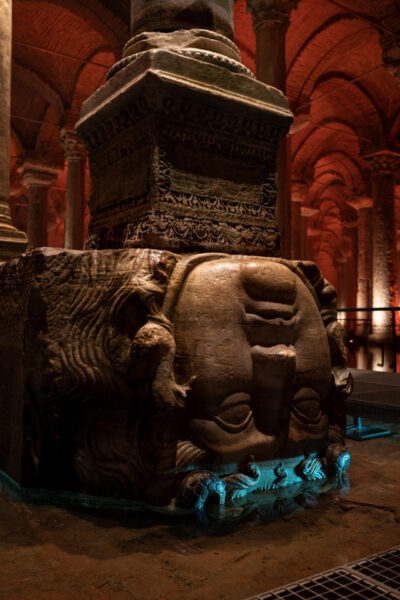
Basilica Cistern Skip-the-Line Entry & Audio Guide
Read our review →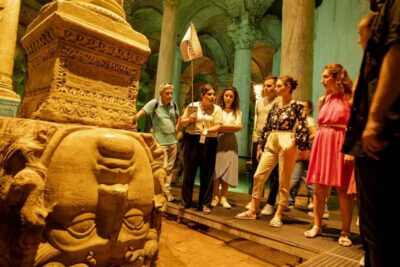
Basilica Cistern Guided Tour & Blue Mosque Audio Guide
Read our review →
Basilica Cistern &Topkapi Palace &Hagia Sophia Combo Tickets
Read our review →Browse the lists this tour appears in