Reviewed · FULL-DAY
Full Day Private Guided Istanbul Tour From Hotel or Cruise Ships
Old Istanbul in one day. This private guided run through Sultanahmet and beyond is built for flexibility, not cookie-cutter hours, with a guide who can steer you toward what you care about. I especially like the private format for easier pace control, and the fact that you can cover major landmarks plus neighborhoods like Fener and Balat without feeling lost.
One possible drawback: the day mixes lots of stops and walking, and some key sights have day-of-week closures, so a poorly timed booking can force changes.
In This Review
- Key points
- Price and value for a private full-day Istanbul highlight tour
- Pickup, meeting point, and the real logistics of a walking day
- Sultanahmet start: Top sights plus the rhythm of Old Istanbul
- Hagia Sophia and the Blue Mosque, what to notice once you are inside
- Topkapi Palace, courts, and the Ottoman behind-the-scenes feel
- Hippodrome and Basilica Cistern: quick stops with big atmosphere
- Grand Bazaar and Spice Bazaar: where to shop like you actually mean it
- Dolmabahce Palace and Galata Tower for the Bosphorus edge
- Taksim Square and Istiklal Caddesi: city energy in a short window
- Bosphorus Cruise time and the one thing to budget for
- Fener and Balat neighborhoods: cobblestones, churches, and UNESCO-level character
- Fener Greek Patriarchate, St. George, and the Iron Church
- Pierre Loti Tepesi and Halic: finishing with views and context
- Who should book this private tour, and who might want a different plan
- Should you book this Istanbul private highlights tour?
- FAQ
- Is this tour private or shared?
- How long does the Istanbul tour take?
- Do you get pickup from a hotel or from a cruise port?
- Are entrance tickets included?
- Can I visit Hagia Sophia without waiting in line?
- Which attractions are closed on certain days?
- Are there dress rules for mosque visits?
- Where is the meeting point?
Key points
- Private guide, customizable pace so you can spend more time on photos or on details that catch your eye
- Hotel or cruise pickup on foot from central spots, which saves you from juggling taxis for every transfer
- Museum tickets usually not included, so the day can cost more once you start adding palace and mosque entry fees
- Skip-line help has limits, since Hagia Sophia may still require waiting at ticket and security lines
- Plan for mosques dress rules, head covering and covered knees matter for both men and women
Price and value for a private full-day Istanbul highlight tour
At $67 per person for a private day lasting about 7 to 8 hours, this tour can be good value if you care about two things: getting a real guide for the big historical anchors, and having help timing your walking route across different parts of the city.
What you get for that price is not just “someone to lead you.” You get a private expert local guide, pickup from central hotels or cruise ports on foot, and official tour-guide support that includes skip ticket lines for some stops. You do not get the palace and museum admissions built into the price, so your final spend depends on which museums you choose to enter and how many you decide are worth paying for.
If you are traveling with people who like to ask questions, this kind of day often pays off quickly. If your group prefers to wander solo and hates structured routes, the cost may feel harder to justify.
More of Istanbul beyond the obvious sights
- Istanbul: Bosphorus Dinner Cruise & Show with Private Table
★ 4.8 · 62,058 reviews - Istanbul: Daytime or Sunset Sightseeing Cruise & Audio Guide
★ 4.8 · 14,430 reviews - Istanbul: Bosphorus Dinner Cruise & Turkish Night Show
★ 4.8 · 12,954 reviews
Pickup, meeting point, and the real logistics of a walking day
You start at the German Fountain, Binbirdirek (At Meydanı Cd, 34122 Fatih, Istanbul). If you are on a cruise, your guide meets you at the port gate on foot, and you should be ready with your cruise details like ship name and docking and re-boarding times.
The tour is described as a walking tour, so comfortable shoes are not optional. Still, it is not only foot power. The day is set up so your guide can use practical local movement when helpful, and you may also use public transportation if there is a good reason to do so, with that transport cost paid by you.
This matters because Istanbul can be unpredictable. Even on a “normal” sightseeing day, you might hit rain, crowds, or rerouted foot traffic. Having a guide who can adjust the plan is the difference between a smooth day and a frustrating one.
Sultanahmet start: Top sights plus the rhythm of Old Istanbul
Sultanahmet is where most first-timers want to be. The tour begins in the historic core, which is ideal because so many landmarks sit close enough to make a single-day loop possible.
You get time in the Sultanahmet district to orient yourself, then the tour flows into several must-sees. A big plus here is that your guide can tailor how long you linger. Some people want the grand architecture and photo angles. Others want stories about how the buildings changed hands over time and what that means for what you see today.
Two practical notes to keep in mind at the start of the day:
- If you are visiting mosques, bring a scarf. Women may need to cover head and shoulders and knees, and you might be able to use scarves provided at entrances for a charge. Men also need to cover knees if shorts or bermudas are above the knee line.
- Pick a realistic expectation for timing. Even with skip-line help on some sites, you will still spend real time in security and lines at big-ticket buildings.
Hagia Sophia and the Blue Mosque, what to notice once you are inside
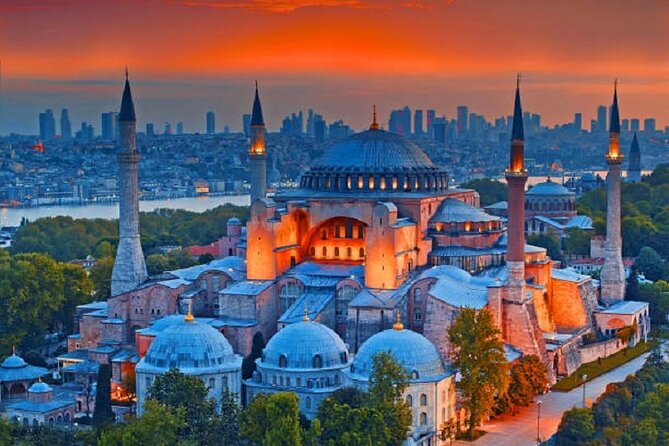
This is the part of the day that most people talk about, because these are two of Istanbul’s most recognizable religious landmarks and they sit right across from each other.
For Hagia Sophia, you should go in ready to study layers. The building has a complicated identity in its history: it was a Byzantine cathedral, then became a mosque after the 1453 conquest, and it later functioned as a museum. Now it is a mosque again, so your visit experience is shaped by both worship space and historic design. Even if you are not a “mosaics person,” the scale of the dome and the way Ottoman and Byzantine elements coexist is worth your attention.
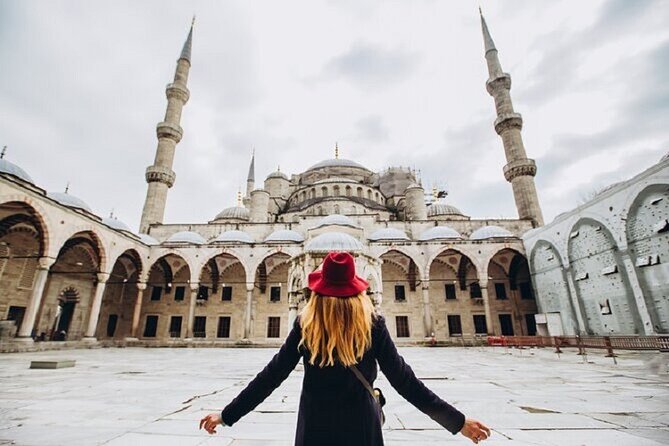
For the Blue Mosque, the standout detail is the famous İznik tile work. It is world-famous for the patterned look created with thousands of handmade blue tiles, and the mosque’s six minarets give it that instantly recognizable skyline profile. The connection to Hagia Sophia is useful too. You can compare the design choices side-by-side and feel the transition between eras.
One more timing consideration: the tour’s skip-line help does not fully apply to Hagia Sophia. You may still need to wait at the ticket and security line, so plan your mindset for that.
Topkapi Palace, courts, and the Ottoman behind-the-scenes feel
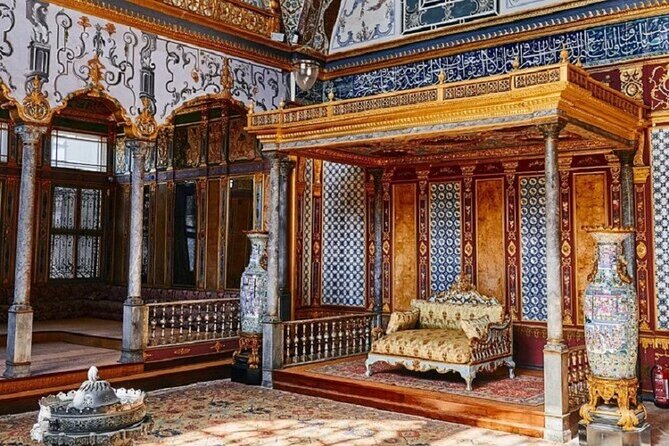
Topkapi Palace is the Ottoman power center that shaped daily life for the royal family and the empire’s educational system. Even if you only have about an hour on it, the palace is designed around courtyards, gates, and a sequence of spaces that gradually expands your understanding of how the empire functioned.
In practical terms, your time is best spent choosing what you prioritize. If you love architecture and scale, focus on how the courtyards connect. If you care about the story, ask your guide to point out the Ottoman roles tied to the royal family areas and training spaces.
Admission is not included in the tour price, so you will decide on the spot if you want to pay. If your day already feels full, Topkapi is still a strong pick because it anchors the rest of Sultanahmet with context.
Add these before you book flights home:
- Best of Istanbul 1, 2 or 3-Day Private Guided Istanbul Tour
- Istanbul: Basilica Cistern Fast-Track Entry and Audio Guide
- Istanbul: Hagia Sophia Skip-the-Line Ticket & Museum Option
- Istanbul: Hodjapasha Whirling Dervishes Show & Exhibition
- Topkapi Palace and Harem Skip-the-Line-Tickets & Audio Guide
- Istanbul: Bosphorus Sightseeing Cruise Tour with Audio Guide
Hippodrome and Basilica Cistern: quick stops with big atmosphere
The Hippodrome is one of those places that looks small until you realize how many major monuments once marked the same central space. The tour covers key pieces:
- The Egyptian Obelisk, brought from Egypt in the classical period
- The Serpentine’s Column, tied to a Greek origin and later bronze snake-head history
- The Column of Constantine, with stories of bronze and silver covering that later got stripped during the Crusader period
You do not need a long time here, which is exactly why it works in a tight schedule. It acts like a living timeline.
Then comes the Basilica Cistern, and this is the “what am I doing underground?” stop. You descend into a massive underground water storage system, described as the largest and best excavated cistern open to visitors. The atmosphere is cool, dim, and quietly cinematic.
A fun detail to keep in your head while you walk through: this cistern has been used in international films, including From Russia with Love and Inferno. Even if you have not seen those scenes, it helps you understand why the space feels like a movie set.
As with other museum-style stops, admission for Basilica Cistern is not included.
Grand Bazaar and Spice Bazaar: where to shop like you actually mean it
The Grand Bazaar is Istanbul’s original covered-market idea in a big, Ottoman-branded package. The main draw is that it feels like a place you could return to. Your guide can help you “read” the layout, since sections are specialized and the streets reflect the merchandise categories.
It is a great stop if your goal is atmosphere. It is less ideal if you want a calm museum vibe or if you dislike bargaining and crowds. Still, with a guide, you can spend your time efficiently and avoid getting sucked into the slow, loud drift through every side street.
Admission for the bazaar itself is listed as free. That said, it is still a zone where you might spend money if you get tempted. I suggest you treat browsing as the main activity and set a budget before you go in.
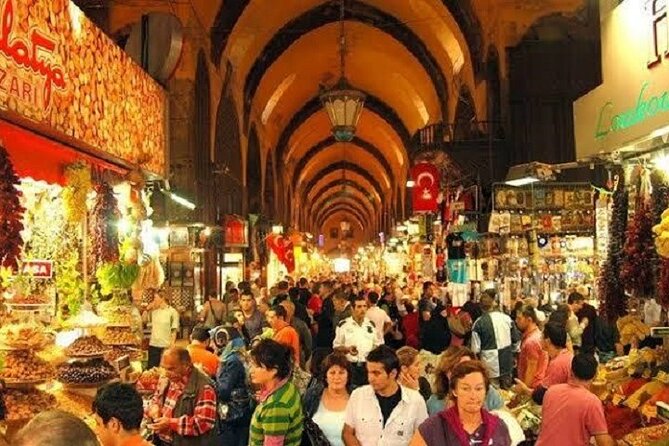
Next is the Misir Carsisi, also known as the Spice Market or Egyptian Bazaar. This is smaller, but it has a strong identity: the market was built as part of the mosque complex, and it became known for spices and imported goods, with the building historically funded through taxes on those imports.
If you want a “taste of Istanbul” moment, the Spice Bazaar is one of the best places in the city for it.
Big closure note that affects your schedule: Grand Bazaar is closed on Sundays, so if you are traveling on a Sunday, your guide may need to swap emphasis to other nearby stops.
Dolmabahce Palace and Galata Tower for the Bosphorus edge
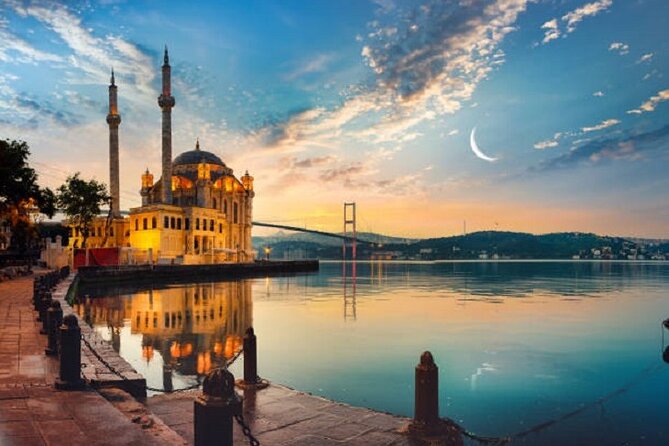
Dolmabahce Palace gives you the Ottoman empire at a more European-leaning moment. It sits on the southern shore by the Bosphorus in Besiktas, and it was the residence of the last Ottoman sultans at different lengths of time. The palace’s design is influenced by European styles like Baroque, Rococo, and Neoclassical, which is exactly why it works after all the classical-feeling stonework in Sultanahmet.
Your time here is listed as about an hour, and admission is not included. Also pay attention to the closure schedule: Dolmabahce Palace is closed on Mondays, so if your day lands on Monday, you need flexibility.
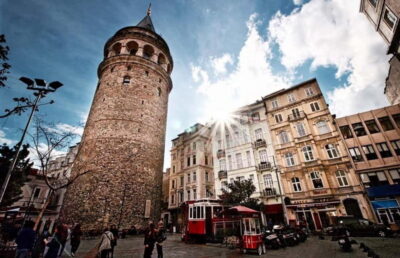
Then you head toward Galata and the Galata Tower, a surviving marker from the Genoese colony. The tower’s location at the entrance of the Golden Horn gives it long-term visibility, and the climb is less about history lectures and more about getting a sense of how the city looks from above.
This stop comes with that “European atmosphere” feeling you hear about in Istanbul: small streets, boutiques, and cafes near the tower area. Even if you do not stop for a long break, the shift in vibe is part of the tour’s value.
Taksim Square and Istiklal Caddesi: city energy in a short window
Once you pivot away from the historic core, Istanbul turns louder and more modern. Taksim Square is the hub, and your guide frames it with how it once distributed water across the city before becoming a major meeting point.
From there, you move to Istiklal Caddesi, a famous street that runs between Taksim Square and Karakoy. A practical detail you might notice right away is the old tram that runs along the route, adding to the “Istanbul is still moving” effect.
These stops are quick, but they help you balance the day. Without them, Istanbul can feel like only domes and museums. With them, you see how people live next to the landmarks.
Bosphorus Cruise time and the one thing to budget for
One of the biggest “Istanbul must-do” experiences in this plan is the Bosphorus cruise. The itinerary describes it as a nostalgic boat ride that passes impressive landmarks on both sides of the city, including mansions and palaces.
Here is the key part: the cruise is not included in admission for museums, and the tour data lists transportation as not included as well. So treat this as something you will likely pay for separately, depending on what your guide arranges and what schedule you have.
If you love skyline views, boats, and layered architecture, this is one of the best investments of your day. If you get seasick easily, you might want to bring what you need or consider a different approach.
Fener and Balat neighborhoods: cobblestones, churches, and UNESCO-level character
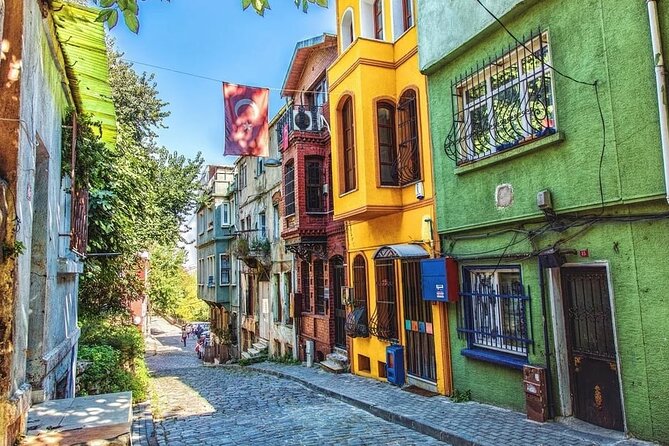
This is where the tour turns from “major highlights” into “a side of Istanbul you want to remember.” Fener and Balat are described as UNESCO heritage districts, and the walking feels more like stepping into small village lanes.
The streets are cobblestoned and winding, with colorful Ottoman houses and religious buildings, plus small craftsmen and merchants. This is also where the city’s multi-community past becomes more visible in daily life, not just in plaques.
Then the tour spends time in Balat, which you can think of as the neighbor with an even stronger feel of color and older quarters. The area is tied to Jewish heritage, with traces described from Greek-speaking Jews in Byzantine times and later Sephardic settlement after exiles from Spain. You also see Byzantine heritage woven into the present, with synagogues and other religious sites.
These sections are not long stops, but they give you something most highlight tours skip: texture. You see why Istanbul is not just a list of monuments.
Fener Greek Patriarchate, St. George, and the Iron Church
Within Fener and its orbit, the tour includes a few religious sites, and each has a distinct identity.
You visit the Fener Greek Patriarchate and the Patriarchal Church of St. George, located in the Fener neighborhood on the Golden Horn. Your tour framing emphasizes it as a major mother-church for the Greek Orthodox world and a center that has remained in Istanbul for centuries.
Then you move to St. George, described as the fifth church housing the Greek Orthodox Patriarchate since the 15th century, with a history that includes use as a convent before becoming patriarchal offices.
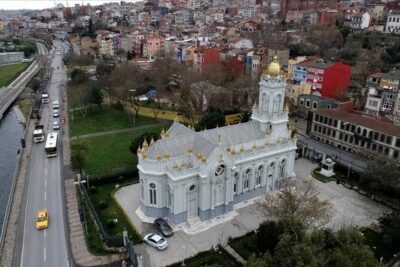
Finally, there is the Bulgarian Orthodox Church, the Church of Saint Stephen, locally known as the Iron Church because it is built of iron and steel. It has been recently restored and is described as having good interior decoration and an icon wall. This is a fascinating contrast point in the middle of a city that often gets discussed only through the lens of Ottoman architecture.
A practical reminder: keep your clothing mosque-ready. Even if you are not entering every space, it is safer to be prepared.
Pierre Loti Tepesi and Halic: finishing with views and context
The tour closes with two stops that give you emotional distance from the big monuments.
At Pierre Loti Tepesi in Eyüp, you get a romantic hill atmosphere named after a French writer, Julien Viaud. The itinerary notes his regular visits to a coffee house there after settling in Istanbul, and that is exactly why this stop tends to feel like more than a viewpoint. It is a small literary footnote made physical.
Then comes Halic, tied to the Golden Horn’s trading harbor past and older residential areas. The itinerary describes how a chain once blocked ships at the entrance and how the Ottoman period drew Jewish immigrants from Spain, creating a multi-ethnic shoreline story with Armenians, Greeks, Gypsies, and Turks.
Even when you only spend a short time here, the framing helps you connect the dots between “places you saw today” and “how this city actually worked.”
Who should book this private tour, and who might want a different plan
This tour fits you best if:
- You want a private guide and you like asking questions
- You want the big Istanbul anchors plus neighborhood walking, not just a museum checklist
- You value practical local steering, especially for managing lines and pacing in crowded zones
It may not fit as well if:
- You dislike long walking days and prefer only a few stops
- You want a mostly relaxed day with no palace or mosque admissions to decide on
- You are traveling on a day when key sites are closed, like Topkapi on Tuesdays, Dolmabahce on Mondays, and Grand Bazaar on Sundays
Also think about the guide factor. In the positives, people praised guides like Atilla, Kaya, Huseyin, and Kivanc for professionalism, flexibility, and good communication. In one negative case, the experience involved an inappropriate tone and a very short day, with less than the planned sites. The takeaway for you is simple: if your guide’s approach does not fit your comfort, speak up early and be clear about what you want, or adjust expectations quickly.
Should you book this Istanbul private highlights tour?
If you want maximum Istanbul in one day with the benefit of a guide who can adapt to your interests, this is a strong option. The price makes sense for the private format, especially when you factor in pickup support and skip-line help at several stops.
Book it if you can handle walking, you are ready to pay museum or palace admissions for the sites marked as not included, and you arrive with mosque-appropriate clothing. If your schedule lands on a closure day, ask your guide to rework the day early, so you do not lose momentum.
If you like structure but still want room for your own pace, this tour gives you that balance. The big “worth it” signal is how the day combines iconic landmarks with neighborhoods like Fener and Balat, so you leave with both the headline sights and the human-feel streets around them.
FAQ
Is this tour private or shared?
This is a private tour, with only your group participating.
How long does the Istanbul tour take?
The duration is about 7 to 8 hours.
Do you get pickup from a hotel or from a cruise port?
Pickup is offered. If your hotel is centrally located, your guide meets you on foot from the hotel. Cruise ship passengers are met at the gate of the port on foot.
Are entrance tickets included?
Admission fees of museums are not included. Food and drinks and transportation are also not included.
Can I visit Hagia Sophia without waiting in line?
The tour includes skip-the-line support with an official tour guide, but Hagia Sophia skip-the-line priority is not provided. You may need to wait in the ticket and security line.
Which attractions are closed on certain days?
Dolmabahce Palace is closed on Mondays. Topkapi Palace is closed on Tuesdays. Grand Bazaar is closed on Sundays.
Are there dress rules for mosque visits?
Yes. Women need to cover their heads, shoulders, and knees. Scarves are provided at mosque entrances for a charge. Men also need to cover knees if shorts or bermudas are over the knee.
Where is the meeting point?
The tour starts and ends at the German Fountain, Binbirdirek, at Meydanı Cd, 34122 Fatih, Istanbul. If you book from a cruise ship, your guide meets you at the port gate on foot.
Newest tours in Istanbul

Full-Day, compared.
Full-Day Highlights Tour with Guide and Lunch
Read our review →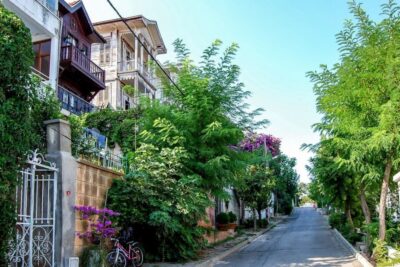
Galata Tower All-Day Entry Ticket with Audio Guide
Read our review →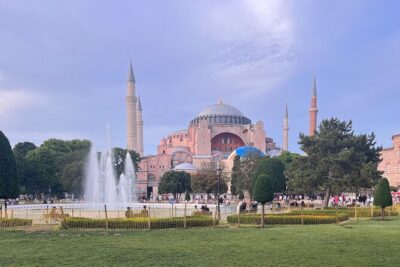
ISTANBUL BEST: Iconic Landmarks Full Day PRIVATE Guided City Tour
Read our review →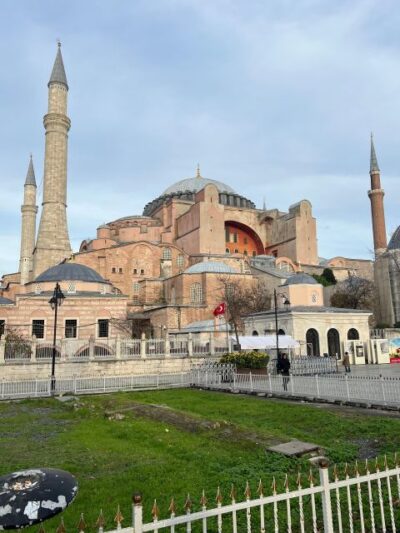

Istanbul to Gallipoli Full Day Tour with Lunch and Transfers
Read our review →