Reviewed · ISTANBUL
First steps in Istanbul
Istanbul hits hard in three hours. This First Steps route is a smart sampler, stacking Hagia Sophia and the Blue Mosque with Ottoman power, Roman remnants, and an underground cistern, all with a professional guide. I like the way it gives you real context, not just photos, and I love that you end in the Grand Bazaar when you already understand the neighborhood. One thing to think about: museum entrance fees are not included, so you will want to budget extra on top of the tour price.
What I really like is the pairing. You see Ottoman art and architecture at the Blue Mosque, then you compare it with the larger-than-life Christian story tied to Hagia Sophia. The other big win is the pace: in 3 hours you hit the key landmarks that usually take a full morning when you do it solo and hunt for what matters.
If you are hoping for a slow, relaxed walk with lots of optional free time, this may feel tight. Also, it is not suitable for people over 70, and you will need comfortable shoes because you are moving between multiple major stops.
In This Review
- Key points before you go
- A 3-hour plan that hits Istanbul icons fast
- Meeting in front of the German Fountain, and how to pace yourself
- Hagia Sophia Cathedral: the building that changed the stakes
- Blue Mosque details that make the visit click
- Hippodrome Square: Roman stage props that survived
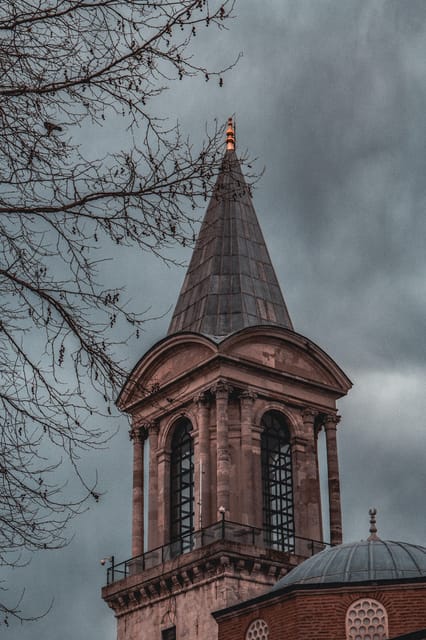
- First courtyard of Topkapi Palace: the sultans front door
- Basilica Cistern: cool air, columns, and a light show
- Grand Bazaar finish: colorful lanes with a guide’s context
- Price and value: what you actually get for $143
- Who this tour suits best (and who should skip it)
- Practical tips so you enjoy every stop
- Should you book First Steps in Istanbul?
- FAQ
- How long is the First Steps in Istanbul tour?
- What size is the group?
- What languages are available for the live tour guide?
- Where do we meet for the tour?
- What is included in the tour price?
- Are museum entrance fees included?
- Which places are visited during the tour?
- Can we skip the ticket line?
- What is the cancellation policy?
- What should I bring, and are bikes or bare feet allowed?
Key points before you go
- Skip-the-ticket-line advantage so you lose less time to queues.
- Basilica Cistern light show experience inside the Roman underground reservoir.
- Blue Mosque specifics like the six minarets, balconies, and blue handmade tiles.
- Topkapi first courtyard focus on the sultans main entrance story, not a full palace marathon.
- Hippodrome Square context with surviving columns and obelisk stories.
- Private group up to 5 with a live guide in Russian, English, or Spanish.
A 3-hour plan that hits Istanbul icons fast
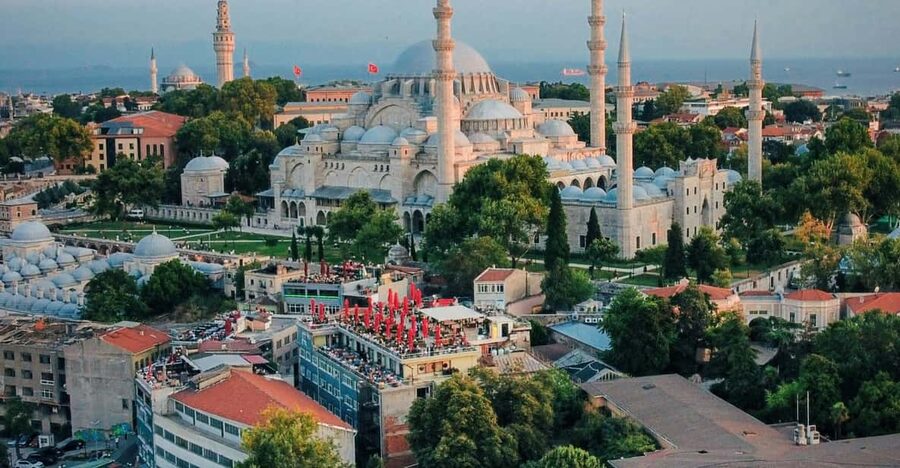
This tour is built for getting your bearings. In just three hours, you roll through a concentrated set of Istanbul landmarks that connect three eras at once: Roman, Byzantine, and Ottoman. It is not trying to be everything. It is trying to help you understand what you are looking at, then point you toward where you might want to go next.
You start with the sights that most visitors circle anyway, but the difference is the order and the explanations. If you have ever visited Hagia Sophia first and felt a bit lost, this format helps you make sense of the city’s layers. You will connect symbols, architecture, and power, rather than treat each stop as a separate postcard.
Also, you do not have to fight for a spot among strangers. It is a private group, up to five people, which makes the pacing feel more human and the questions easier. You can move at a comfortable speed while still covering the big hits.
Two continents, one afternoon left to fill:
- Istanbul: Bosphorus Dinner Cruise & Show with Private Table
★ 4.8 · 62,058 reviews - Istanbul: Daytime or Sunset Sightseeing Cruise & Audio Guide
★ 4.8 · 14,430 reviews - Istanbul: Bosphorus Dinner Cruise & Turkish Night Show
★ 4.8 · 12,954 reviews
Meeting in front of the German Fountain, and how to pace yourself
Your meeting point is simple: in front of the German Fountain. Show up early enough to feel calm, not rushed, because the first minutes matter when you are about to enter busy sites and start ticket handling. If you are prone to walking slowly, plan on matching the group pace from the start.
The tour includes a professional guide and includes time for the major sights, but it is still a short window. Think of it like a guided highlight reel with enough stops to absorb the essentials. Bring comfortable shoes, because every place you visit is a “walk a bit, look up, walk a bit more” situation.
One practical note: entrance fees are not included. That is normal for big Istanbul monuments. But it changes your total budget, so it is worth knowing which places you will pay for while on the route.
Hagia Sophia Cathedral: the building that changed the stakes
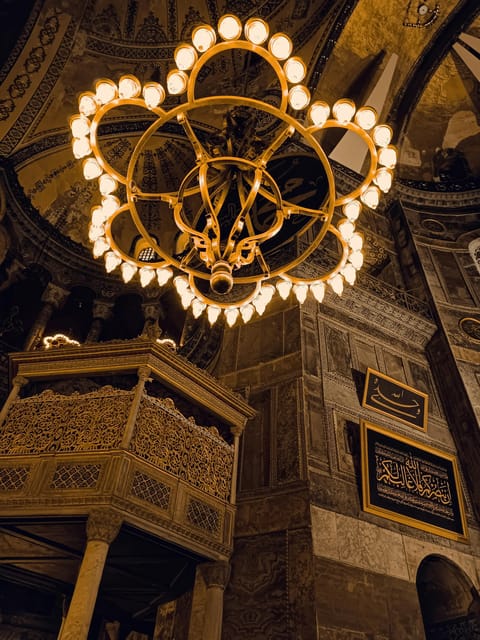
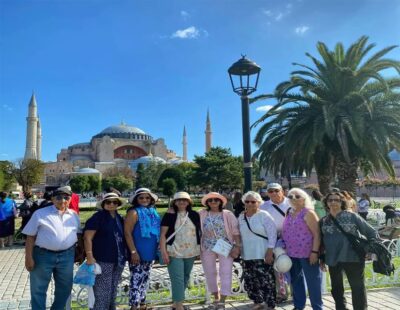
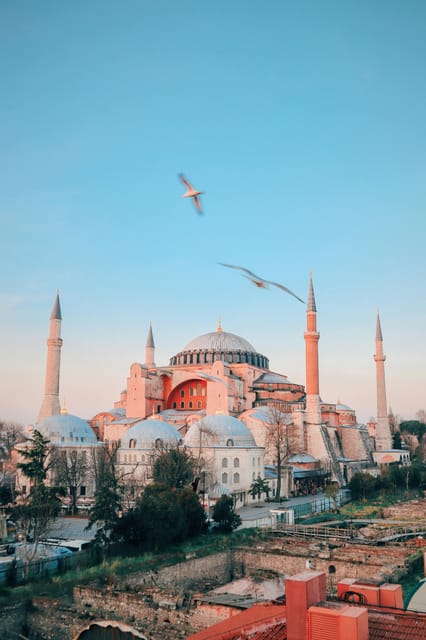
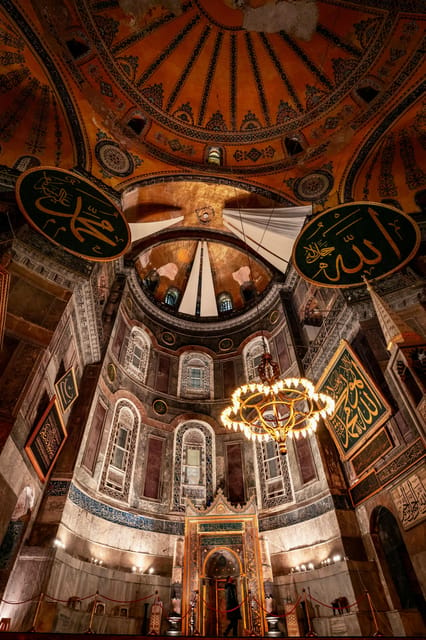
You will spend time at Hagia Sophia, recently converted as a cathedral. Even if you have seen it from the outside a hundred times in photos, seeing it up close hits different. The scale is hard to describe until you are standing there, and the guide helps you read the place as more than a famous dome.
A key part of what you get here is story. You learn how Hagia Sophia influenced the spread of Christianity across the world. That matters because it explains why people fought over it, praised it, and repurposed it over time. Without that context, you just get beauty. With it, you understand why this building kept refusing to fade into the background.
For many people, this is the emotional anchor of the day. Even if you only remember a few details afterward, it is usually the feeling of standing under those massive architectural forms. If you want architecture, symbolism, and empire-level meaning, this is the stop that delivers it.
Blue Mosque details that make the visit click
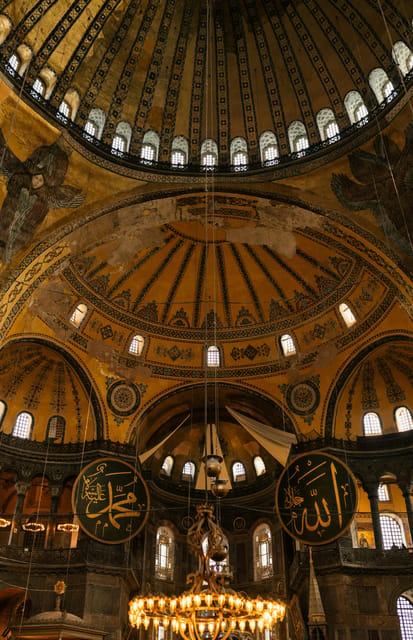
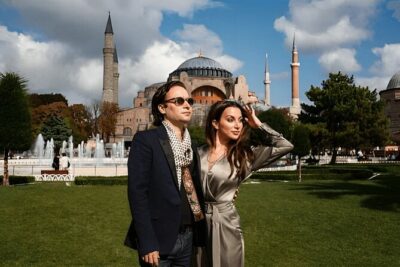
Next is the Blue Mosque, and the best part of a guided stop is that you do not have to guess what to look for. You will hear the mystery of its six minarets, and you will also learn what to notice on the balconies.
Then there are the tiles. The guide points out the thousands of blue handmade tiles, and that is one of those things that seems like marketing until you see the patterns up close. The real value is that you leave knowing that the decorations are not random. They form a visual language meant to guide your eye and your attention.
The Blue Mosque is a place where people often rush, take a few pictures, and move on. With a guide, you slow down just enough to notice what makes it distinctive. You also get a clearer sense of how Ottoman style expressed power through religious architecture.
Hippodrome Square: Roman stage props that survived
Your walk continues to Hippodrome Square, tied to the ancient Roman hippodrome. If you think of it as just a plaza, you miss the point. This is the kind of historic space where the city once held major public spectacles. The guide shares stories behind columns and obelisks that have endured through the ages.
What I like about this stop is how it changes your interpretation of Istanbul streets. The city can feel like it is all mosques and domes, especially early on. Hippodrome Square adds a layer of Roman public life, and it helps you see why this city mattered long before the Ottoman era.
You also get a quick geography lesson without it feeling like homework. When you later wander on your own, you will recognize the area and feel more confident about direction and context.
Add these before you book flights home:
- Best of Istanbul 1, 2 or 3-Day Private Guided Istanbul Tour
- Istanbul: Basilica Cistern Fast-Track Entry and Audio Guide
- Istanbul: Hagia Sophia Skip-the-Line Ticket & Museum Option
- Istanbul: Hodjapasha Whirling Dervishes Show & Exhibition
- Topkapi Palace and Harem Skip-the-Line-Tickets & Audio Guide
- Istanbul: Bosphorus Sightseeing Cruise Tour with Audio Guide
First courtyard of Topkapi Palace: the sultans front door
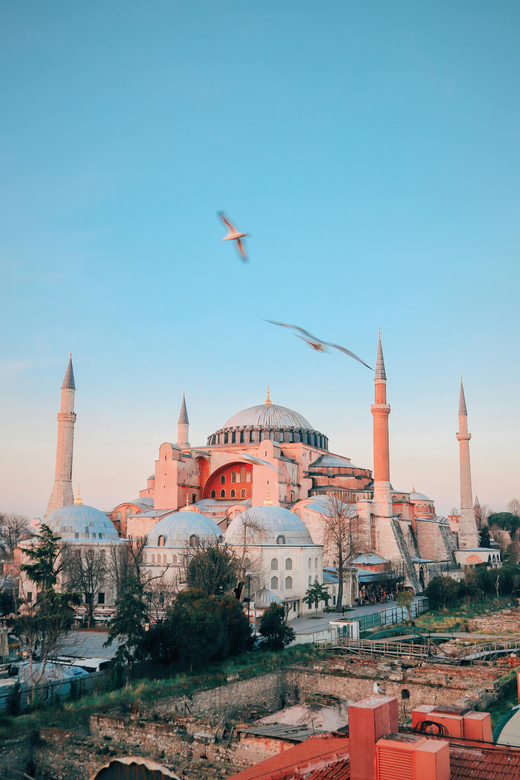
At Topkapi Palace, you focus on the first courtyard. That is smart, because Topkapi can eat an entire day if you try to do it all. Here, you get the key framing: the first courtyard was once the grand entrance to the sultans’ residence.
You learn that Ottoman sultans lived here for 400 years. That one detail alone puts everything into perspective. It is not just a palace you tour. It is a place where people were born, ascended to power, and faced downfall. You will also hear about sultans meeting their fate here, including imprisonment.
In the courtyard and nearby areas, you get a taste of the palace’s luxurious character. Even without touring every wing, you will see enough rich decoration to understand why Topkapi became synonymous with authority.
A small consideration: if you want an in-depth palace museum day, this tour may leave you wanting more. But as an early Istanbul primer, it works well. It gives you the emotional and historical setup, then sets you up to decide if you want to return later for the full palace route.
Basilica Cistern: cool air, columns, and a light show
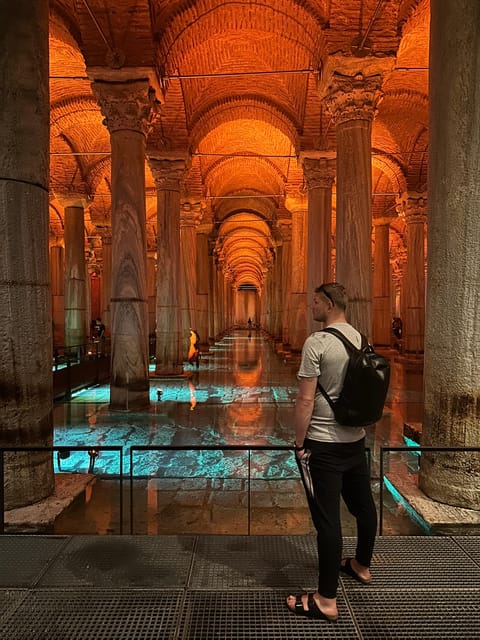
Then you go underground to the Basilica Cistern, one of the Roman Empire’s biggest water reservoirs. This is the stop that often becomes the surprise favorite because the atmosphere changes instantly. Above, the city can be loud and sunlit. Below, it becomes cool and hushed.
The guide explains how water was supplied to the cistern, and you get to examine the marble columns and capitals. That is the kind of visual detail that is easy to miss when you just read a sign. With a guide, you learn what the structure is for and how it functioned.
You will also experience the magical light show. This part is practical as well as scenic. The lighting changes how the space “reads,” so your eyes catch details you might otherwise walk past. It helps the cistern feel like a living space, not a forgotten storage room.
Budget note: Basilica Cistern entrance fees are listed as 1500 (about 37.5 USD or 32 euros). Plan for that extra cost because you will not have everything included.
Grand Bazaar finish: colorful lanes with a guide’s context
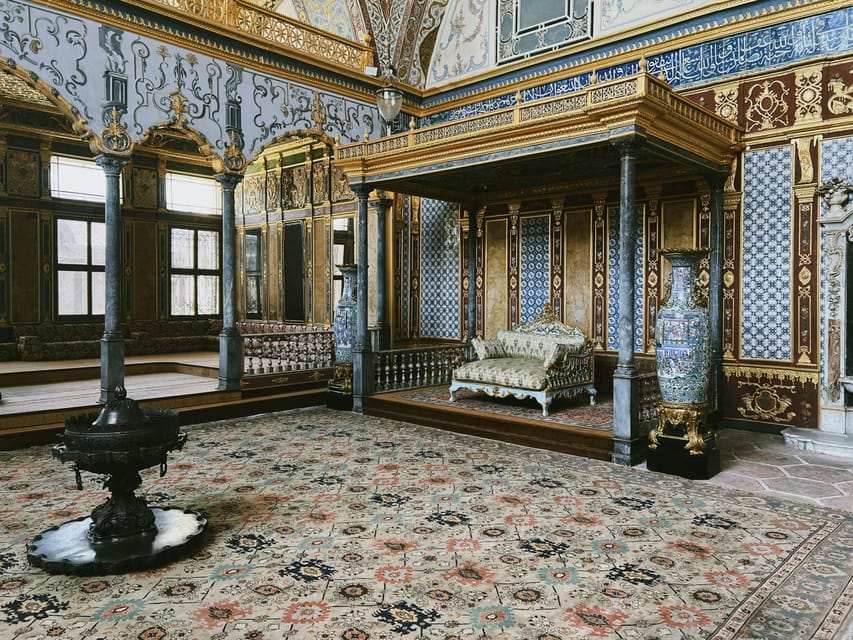
You end at the Grand Bazaar, and that choice is thoughtful. By the time you arrive, you have already learned about empire, power, and religious architecture. Now you see the commercial side of Istanbul, the part where city life and wealth mixed into day-to-day movement.
The bazaar is colorful, and the guide helps you wander with less stress. Even if you do not plan to shop much, you will likely enjoy just watching the maze of stalls and understanding the logic behind the layout.
A key advantage of finishing here is momentum. If you visit a market too early in the day, you can feel overwhelmed before you have context. Ending with the bazaar makes it feel like a destination, not a chore.
Price and value: what you actually get for $143
The price is $143 per group up to 5, with professional guiding services included. That pricing matters because the route covers multiple major sites in a short time, including two of Istanbul’s biggest ticketed landmarks.
The important catch is that museum entrance fees are not included. You have listed fees for:
- Basilica Cistern: 1500 (about 37.5 USD or 32 euros)
- Hagia Sophia: 1250 liras (about 30 USD or 26 euros)
Other sites mention museum entrances generally, but the exact ticket totals for them are not provided here. So, budget for additional entry costs beyond the tour price.
Still, the value is strong if you care about efficiency and interpretation. A guided, private, three-hour run that includes skip-the-ticket-line can be a big time saver in a place where lines and decision-making can eat your morning. For families or small friend groups, the per-group pricing can also feel reasonable compared to paying for separate tickets and separate guides.
Who this tour suits best (and who should skip it)
This fits best if you want a guided Istanbul kickoff with the biggest visual hits, plus context you can carry into later wandering. It also works well if you prefer a private experience rather than joining a large group where you spend half your time waiting.
You might enjoy it most if you:
- Want Hagia Sophia and the Blue Mosque but do not want to spend hours figuring out what matters
- Like history that explains why buildings changed and what symbols meant
- Plan to explore more on your own afterward, especially around the historic center
It is not suitable for people over 70. If that affects you, look for a different day option with fewer physical stops and longer rest breaks.
Practical tips so you enjoy every stop
- Wear comfortable shoes. The route moves you between major sites in a short time window.
- Expect extra costs for Hagia Sophia and Basilica Cistern based on the stated fees.
- Bring a small amount of patience. These landmarks are popular, even with the skip-the-ticket-line advantage.
- Keep your camera ready, but leave a little time for looking up. The best details at the Blue Mosque and Hagia Sophia are architectural, not just scenic.
- This is a private group with live guidance in Russian, English, or Spanish, so choose the language option that will help you ask questions comfortably.
Should you book First Steps in Istanbul?
Yes, if you want a high-impact start. This tour is designed to connect Istanbul’s main eras in one compact loop, with just enough time at each place to feel the meaning behind the famous facades. The guide-driven details, like Hagia Sophia’s Christianity influence story and the Blue Mosque’s six minarets plus tile focus, are exactly what makes a first visit land well.
I would skip it if you hate structured schedules or want a full palace and museum day. This is a starter tour, not an all-day deep dive, and the short duration means you will likely want to return to at least one site later.
If you are traveling as a small group and you value time and context, this one is a solid way to start Istanbul off on the right foot.
FAQ
How long is the First Steps in Istanbul tour?
It lasts 3 hours.
What size is the group?
It is a private group, priced for up to 5 people.
What languages are available for the live tour guide?
The guide is available in Russian, English, and Spanish.
Where do we meet for the tour?
You meet in front of the German Fountain.
What is included in the tour price?
The tour includes professional guiding services.
Are museum entrance fees included?
No. Museum entrance fees are not included.
Which places are visited during the tour?
You visit Hagia Sophia, the Blue Mosque, the first courtyard of Topkapi Palace, the Basilica Cistern, Hippodrome Square, and the Grand Bazaar.
Can we skip the ticket line?
Yes, the tour includes skip-the-ticket-line access.
What is the cancellation policy?
Free cancellation is available up to 24 hours in advance for a full refund.
What should I bring, and are bikes or bare feet allowed?
Bring comfortable shoes. Bikes and bare feet are not allowed.