
Reviewed · DOLMABAHCE PALACE TICKETS
Dolmabahce Palace Ticket
A palace of crystal and brass feels hard to top. Dolmabahçe Palace is an Ottoman seat dressed in European style, right on the Bosphorus, with rooms that keep getting more jaw-dropping. I love the Baccarat crystal staircase and the way the palace mixes ceremonial grandeur with intimate spaces like the Harem.
Another big win is the sheer “wow factor” inside, especially the world’s largest Bohemian crystal chandelier in the Ceremonial Hall. You also get a chance to see Atatürk’s preserved bedroom, a quiet contrast to the flashier state rooms.
One thing to plan for: the so-called skip-the-line approach may not be a separate fast entrance. Expect strict security and be ready to use your ID for the audio guide deposit.
In This Review
- Key highlights to know before you go
- Dolmabahçe Palace: the Ottoman-European palace on the Bosphorus
- What you get with your Dolmabahçe Palace ticket
- Timing your 4 to 5 hours without feeling rushed
- Entering the palace: Medhal Hall, first impressions, and the Medhal vibe
- The Crystal Staircase: why the Baccarat stair matters
- Ceremonial Hall and the Bohemian crystal chandelier
- State rooms: the Red Room and Blue Hall details
- The Harem private quarters: a different kind of palace power
- Atatürk’s preserved bedroom and why it lands emotionally
- Outside time: Bosphorus gardens, ornate gates, and the Clock Tower
- Price and value: is $75 worth it?
- Practical prep: security checks, audio ID deposits, and no re-entry
- Who this Dolmabahçe Palace ticket suits best
- Should you book this Dolmabahçe Palace ticket?
- FAQ
- What does the Dolmabahçe Palace ticket include?
- How long is the visit?
- What are the opening hours?
- Is there re-entry after I leave the venue?
- Do I need ID for the audio guide?
- What items are not allowed inside Dolmabahçe Palace?
- Is the experience near public transportation?
- Can I cancel for free?
Key highlights to know before you go
- Baccarat crystal staircase with brass details that you’ll want to see from multiple angles
- Ceremonial Hall chandelier: the world’s largest Bohemian crystal chandelier is a centerpiece
- 285+ rooms to explore, including the royal Harem private quarters
- Atatürk’s final-days room, with his preserved bedroom
- Bosphorus gardens and Clock Tower views for a calmer finish outside
- Strict security and no re-entry, so you need a smart plan for your 4 to 5 hours
Dolmabahçe Palace: the Ottoman-European palace on the Bosphorus
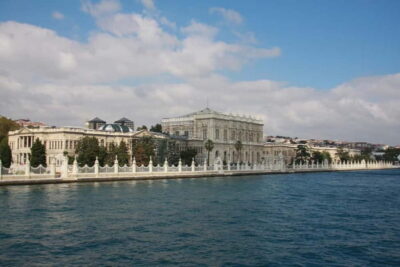
Dolmabahçe Palace is one of Istanbul’s most dramatic “stop and stare” sights. It sits along the water, and that matters, because the palace is meant to feel official, powerful, and public-facing, like a statement along the Bosphorus.
Inside, you get a clear blend of influences. The rooms show Ottoman authority, but the design language also borrows from European palace traditions, with grand staircases, formal state rooms, and showpiece chandeliers. It’s the kind of building where the architecture helps you understand how the empire wanted to present itself.
Crystal staircases and the empire's last address
- Istanbul: Dolmabahce Palace and Harem Fast-Track & Audio
★ 4.7 · 1,772 reviews - Dolmabahce Palace & Harem Skip-the-Line Entry & Audio Guide
★ 4.7 · 927 reviews - Istanbul: Dolmabahce Palace and Harem Skip-the-Line Ticket
★ 4.7 · 751 reviews
What you get with your Dolmabahçe Palace ticket
This ticket experience focuses on your time inside the palace plus key highlights along the route. You’ll be shown through major spaces starting at the ornate Medhal Hall area, then through the big visual hit rooms, and onward to the spaces connected to leadership and ceremony.
You’ll also have access to the palace grounds outside, including the gardens. That outside time is not just a breather. It’s your chance to reset your eyes after wall-to-wall decor, and it gives you the Bosphorus framing the palace like it was always meant to be seen from the water.
Audio support is part of the value, but it comes with a rule. To obtain the audio guide, you need to deposit proof of identification, so bring your passport or photo ID and plan on using it.
Timing your 4 to 5 hours without feeling rushed
Plan for about 4 to 5 hours for a full circuit that includes both signature interior spaces and the outdoor gardens. This is long enough to take breaks and look closely, but short enough that you still need a direction once you’re inside.
Re-entry is not allowed after you leave the venue. That means once you step out of the palace areas during the visit, you should expect you cannot come back in. If you need something like water or a restroom break, do it early, before you feel committed to one wing.
Because the visit includes security checks before entry, I suggest arriving with breathing room. You want your first rooms to be calm, not rushed, because the early halls set the tone for everything you see later.
Entering the palace: Medhal Hall, first impressions, and the Medhal vibe
Your visit begins in the Medhal Hall area, where the palace immediately signals formal ceremony. Expect grand chandeliers, richly decorated furnishings, and a sense that this space was built to impress people in high-stakes settings.
This first room is more than a warm-up. It helps you calibrate the palace style, so when you move into rooms with heavier ornament and large-scale showpieces, you can spot the design logic. Once you see how the lighting and decor work here, the rest of the palace reads more clearly.
One practical tip: look up in the first minute. The ceiling and lighting patterns help you orient fast, and you will naturally start noticing details rather than only “where am I?”
The Crystal Staircase: why the Baccarat stair matters
If you like the kind of architecture that makes you slow down, the Crystal Staircase is your moment. It is described as made of Baccarat crystal and brass, and that combination is exactly why it feels so different from typical palace staircases.
Crystal creates sparkle and movement, even when you’re standing still. Brass adds warmth and structure, so the staircase doesn’t just look fragile, it looks engineered to catch light and reflect it. This is one of the best spots to take your time because your eyes keep finding new highlights as lighting shifts.
Don’t just take one quick glance and move on. I’d give yourself at least a few minutes to observe how the stair looks from different positions, because the way the crystals catch light changes as you shift your stance.
More of Istanbul beyond the obvious sights
- Istanbul: Hagia Sophia Skip-the-Line Ticket & Museum Option
- Topkapi Palace and Harem Skip-the-Line-Tickets & Audio Guide
- Istanbul: Blue Mosque & Hagia Sophia Guided Tour w/ Tickets
- Istanbul: Hagia Sophia Entry Ticket with Audio Guide
- Istanbul: Topkapi Palace and Harem Ticket with Audio Guide
- Istanbul: Basilica Cistern Skip-the-Line Entry Ticket
Ceremonial Hall and the Bohemian crystal chandelier
The Ceremonial Hall is where the palace turns up the drama. You’ll see the world’s largest Bohemian crystal chandelier, and it’s a centerpiece meant to make an entrance feel like an event.
Chandeliers like this do two things at once. They create a lighting spectacle, and they also communicate wealth and authority through scale. In Dolmabahçe Palace, that chandelier sits in a room designed for public-facing ceremony, so the effect is bigger than just visual beauty.
Here’s the practical takeaway. Spend time in this room even if you think you’ve “seen enough chandeliers.” This one is tied to the empire’s state rituals, so it helps you understand why the palace is so theatrical in the first place.
State rooms: the Red Room and Blue Hall details
After the big ceremonial spaces, you’ll move through lavish state rooms, including the Red Room and the Blue Hall. These rooms are decorated with gold accents, velvet upholstery, and fine artwork, so you get a quieter kind of luxury.
This is the section where it’s easy to see “pretty rooms” and move too fast. I recommend switching your focus. Instead of scanning everything, pick two elements in each room, like the color treatment (red or blue), then the gold framing, then the artwork. That keeps the visit from becoming one long blur.
The value here is contrast. After chandeliers and staircases, these rooms feel more like living spaces of power. Even though they’re part of a museum visit, they still communicate ceremony through texture and color.
The Harem private quarters: a different kind of palace power
Dolmabahçe Palace also includes the royal Harem private quarters. That changes the tone of your walk, because it’s connected to personal life rather than public ceremony.
This part of the palace can feel more human than the state rooms. The architecture still aims for prestige, but the purpose is different, so you tend to notice different details, like how the palace spaces feel more contained and oriented.
If you prefer your palace visits to include more than just the flashiest halls, plan to slow down here. The Harem area is where you can better feel how daily life and authority overlapped in palace settings.
Atatürk’s preserved bedroom and why it lands emotionally
One of the most compelling stops is the room connected to Mustafa Kemal Atatürk, where he spent his final days. The experience highlights his preserved bedroom, which turns the visit from pure spectacle into something more reflective.
This is valuable for travelers who want more than visual charm. The palace becomes a bridge between eras, connecting Ottoman imperial power to the early years of modern Turkey.
Even if you’re not an expert on Turkish political history, this stop is easy to understand. Look at the room as a shift in atmosphere. The palace is still ornate, but the meaning changes, and that emotional change is part of why this palace is such an important Istanbul visit.
Outside time: Bosphorus gardens, ornate gates, and the Clock Tower
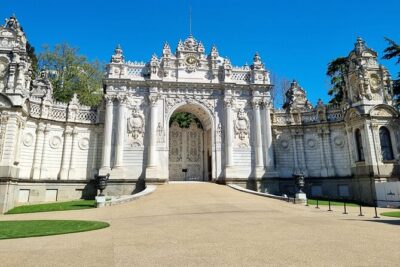
Don’t rush out after the interior. The palace gardens give you a calmer pace and spectacular Bosphorus views, framed by ornate gates and palace elements.
This outside time is where the palace makes sense as a whole. When you see the scale from the exterior and then look back toward the palace structures, you understand why the palace was designed the way it was, built for sightlines and presence.
You’ll also find the Dolmabahçe Clock Tower outside. It’s a smaller detail compared to the chandeliers, but that’s exactly why it’s nice. It gives you a human, everyday-feeling landmark to end with, after all the ceremonial interiors.
Price and value: is $75 worth it?
At $75.00 per person, this ticket isn’t a budget add-on, so I look at what it gives you for that price. You’re paying for access to a major Istanbul palace, time inside some of the most famous rooms, and audio guidance that requires an ID deposit.
This is also a popular attraction, and the booking pattern shows strong demand. With an average booking window of about 76 days in advance, getting your dates set earlier can help you avoid last-minute availability issues.
In pure value terms, I’d say it’s worth it if you care about major interior highlights and want a structured route through the palace’s biggest rooms. If you only want a quick photo stop, you might find the cost harder to justify for your priorities.
Practical prep: security checks, audio ID deposits, and no re-entry
This experience includes a strict security check before entering the venue. That means you should plan to move through with patience and avoid anything that could slow you down.
There are also clear prohibited items inside the venue, including bottles, firecrackers, lasers, and other things that may disturb or inconvenience other attendees. If you’re unsure about something you’re carrying, treat the policy as strict and leave it behind. Your future self will thank you at the security line.
For the audio guide, you’ll need to deposit proof of identification. Bring your passport or photo ID, and be ready to use it for the deposit process. Keep it accessible, because the audio setup is easiest when you’re not digging for documents.
Finally, remember the big rule: re-entry is not allowed after you leave the venue. That affects how you pace your visit, especially if you plan to spend time in the gardens. I recommend committing to the inside route first, then doing your outside viewing without expecting to come back in.
Who this Dolmabahçe Palace ticket suits best
I’d book this if you want a palace visit that balances spectacle with meaning. The combination of ceremonial spaces, the Harem quarters, and Atatürk’s preserved bedroom gives you more than one kind of payoff.
You’ll also enjoy it if you like architecture that’s tied to status. The crystal stair, the huge chandelier, and the gold-and-velvet state rooms are designed for visual impact, and they reward slow looking.
It’s also a good match for most travelers since the experience notes most people can participate. If you’re traveling with limited time in Istanbul and want to hit the palace’s signature elements in one go, this format makes sense.
Should you book this Dolmabahçe Palace ticket?
Yes, with a smart expectation. Book it if you want access to Dolmabahçe Palace’s core highlights, you’re comfortable with security procedures, and you plan to stay for the full experience window.
I’d be cautious if you’re expecting a true separate fast entrance, because one common complaint is that the idea of skipping the line may not mean much in practice. Go in ready for security and for the ID steps tied to the audio guide.
If you want an Istanbul palace that blends Ottoman authority with European-style grandeur, and you also care about seeing Atatürk’s preserved final-days room, this is a strong choice.
FAQ
What does the Dolmabahçe Palace ticket include?
The experience includes admission to Dolmabahçe Palace, plus access to major palace areas and an audio guide that requires an ID deposit.
How long is the visit?
The duration is about 4 to 5 hours.
What are the opening hours?
For the listed operating period, it is Tuesday to Sunday from 9:00 AM to 4:00 PM. During the winter season (November 1 to March 31), it opens around 9:00 AM and closes around 4:00 PM.
Is there re-entry after I leave the venue?
No. Re-entry is not allowed after you leave the venue.
Do I need ID for the audio guide?
Yes. To obtain the audio guide, you need to deposit proof of identification.
What items are not allowed inside Dolmabahçe Palace?
Dangerous materials and items that may disturb or inconvenience other attendees are prohibited, including bottles, firecrackers, and lasers.
Is the experience near public transportation?
Yes, it is listed as being near public transportation.
Can I cancel for free?
Yes. You can cancel up to 24 hours in advance for a full refund. If you cancel less than 24 hours before the start time, the amount you paid is not refunded.
Newest tours in Istanbul




Dolmabahce Palace Tickets, compared.

Dolmabahce Palace and Harem Fast-Track & Audio
Read our review →
Dolmabahce Palace & Harem Skip-the-Line Entry & Audio Guide
Read our review →
Dolmabahce Palace and Harem Skip-the-Line Ticket
Read our review →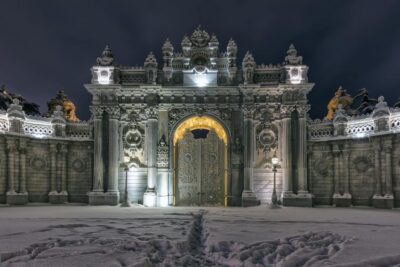
Full-Day Tour with Dolmabahce & Bosphorus Cruise
Read our review →
Istanbul Boat Cruise and Dolmabahce Palace & Two Continents
Read our review →
Dolmabahçe Palace and Sunset Tour on Luxury Yacht
Read our review →Browse the lists this tour appears in