
Reviewed · GRAND BAZAAR SHOPPING TOURS
Carpets, Rugs and Kilims bazaar, Grand Bazaar and Egyptian Bazaar
Carpets and spices in one smart Istanbul walk. This tour strings together three iconic shopping areas with a real reason to pay attention, from Vezirhan carpet viewing inside a 17th-century caravanserai to the Grand Bazaar with thousands of stalls. I especially like the rug education, where you learn about patterns and even natural dyes before you shop, and I like how the spice stop turns shopping into a smell-first sensory lesson. One drawback to plan for: you will be walking in tight lanes and busy market spaces, so wear comfortable shoes.
You also get a simple pacing structure, about 3 hours 20 minutes total, in an English-led group capped at 10 people, starting at Çemberlitaş, Mollafenari and ending near the Egyptian Bazaar by Galata Bridge. Coffee or tea and entrance fees are included, but private transportation and meals like lunch are not.
In This Review
- Key Highlights You Will Feel Fast
- Why This Rug and Bazaar Route Works (3 Hours 20 Minutes)
- Vezirhan Caravanserai: Handwoven Carpets and Kilims With Context
- Grand Bazaar in 1 Hour 10 Minutes: How to Not Get Lost
- Spice Bazaar (Egyptian Bazaar) in 25 Minutes: Smell-First Istanbul Shopping
- Mahmutpasha Bazaar and Eminönü Backstreets: Local Shopping Break
- Price and Value: What $66.51 Includes
- How to Shop Smarter for Rugs and Spices
- For rugs, use questions that reveal quality
- For spices, trust your nose, but check freshness
- For bargaining, keep it polite
- Who This Tour Suits Best, and Who Should Skip It
- Should You Book Carpets, Rugs, Kilims Bazaar, Grand Bazaar and Egyptian Bazaar?
- FAQ
- How much does the tour cost?
- What is the duration of the tour?
- Is the tour offered in English?
- What is the group size?
- Where does the tour start?
- Where does the tour end?
- What is included in the price?
- Is private transportation included?
- Can I cancel for a full refund?
Key Highlights You Will Feel Fast
- Vezirhan Caravanserai sets the tone with Ottoman-era arches and courtyards, then focuses on handwoven carpets and kilims
- Carpet know-how in plain language helps you spot patterns, origins, and the meaning behind designs
- Grand Bazaar navigation help keeps you from wandering aimlessly through its covered streets
- Egyptian Bazaar Spice Bazaar in 25 minutes swaps crowds for strong aromas and concentrated shopping
- Eminönü backstreet stop adds everyday local shopping for textiles, kitchenware, and copper items
Why This Rug and Bazaar Route Works (3 Hours 20 Minutes)
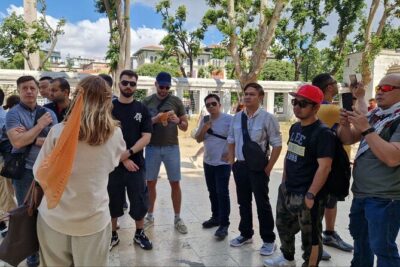
If you only have half a day in Istanbul’s Old City, this is a solid way to spend it with direction. The big win is that it is not just a checklist of famous markets. It’s a storyline: handwoven textiles first, then a maze of Ottoman trade, then a sensory food-market stop, then a quick detour into local shopping streets in Eminönü.
The group size matters here. With a maximum of 10 people, you are less likely to get swallowed by the crowd, and your guide can help you keep moving. The tour is also offered in English and uses a mobile ticket, so you do not waste time with paper confusion.
The route starts near Çemberlitaş, Mollafenari and finishes in front of the Egyptian Bazaar (Spice Bazaar) area by Galata Bridge. That end point is convenient because it drops you right back into one of the most useful neighborhoods to keep exploring afterward.
Finally, the price of $66.51 per person starts to make sense because coffee or tea and entrance fees are included. You still need to manage your own meals, though. No brunch, no snacks plan, no lunch.
Saffron, sumac, and stalls piled with color
- Small-Group Bosphorus Cruise and Istanbul’s Egyptian Bazaar
★ 3.5 · 208 reviews - Istanbul Spice Market & Historic Centre Food Tour w/ 10 Tastings
★ 5.0 · 63 reviews - Istanbul: Basilica Cistern, Blue Mosque & Spice Bazaar Tour
★ 5.0 · 41 reviews
Vezirhan Caravanserai: Handwoven Carpets and Kilims With Context
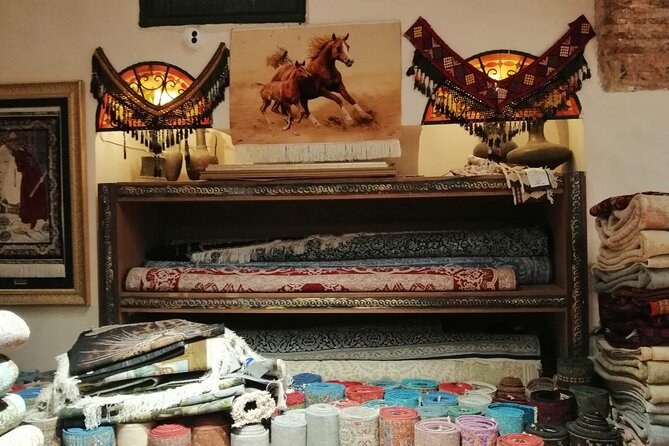
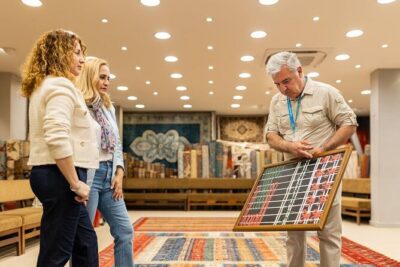
Most people rush through Istanbul’s textile shopping without asking why any of it matters. This stop flips that. You spend about 1 hour 10 minutes at Vezirhan Handmade Carpets & Kilims, a caravanserai in the Old City that dates back to the Ottoman period, built in the 17th century.
Why this place feels different: you are not just shopping in a storefront. You are inside a historic han, meant for Silk Road merchants to rest, store goods, and trade valuable items like silk, spices, and textiles. The courtyards and arches make the whole setting feel like a working memory of commerce, not a modern mall.
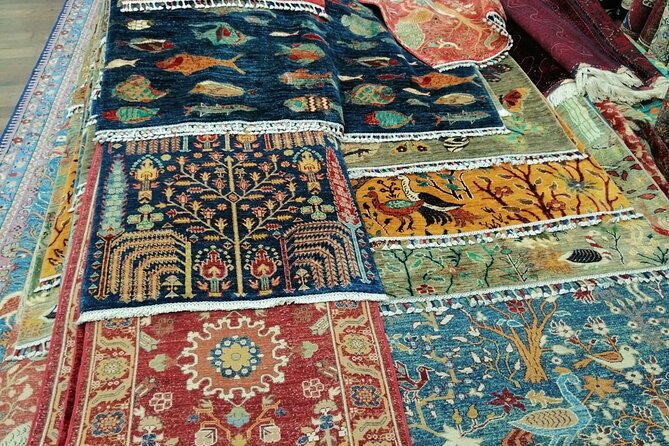
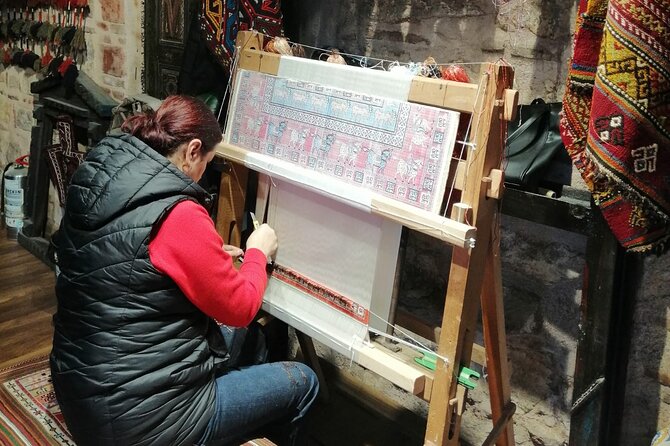
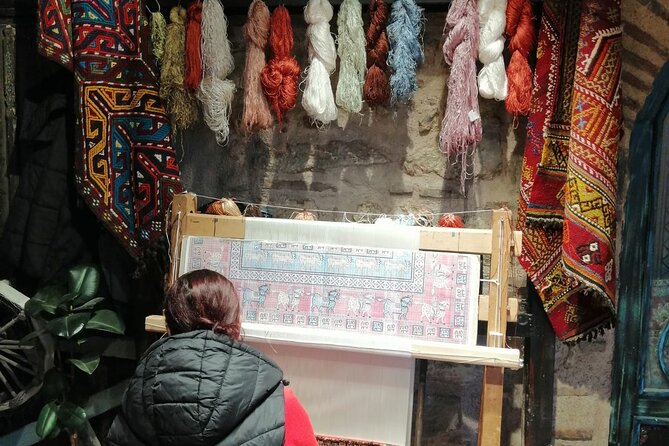
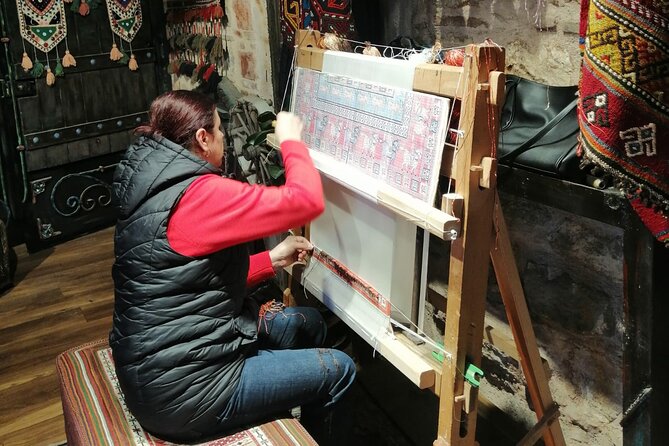
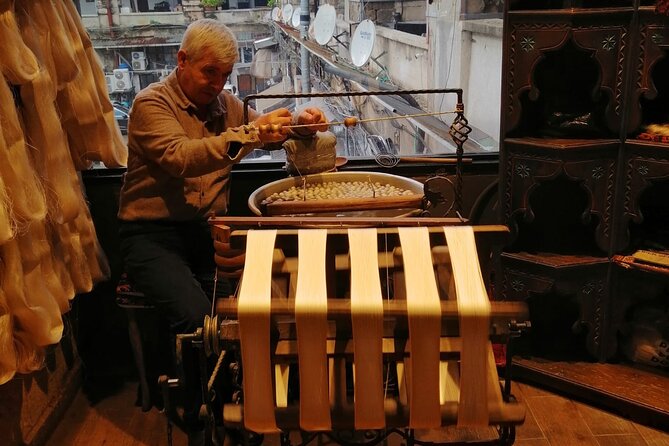
What you are actually there to see is a collection of handwoven carpets and kilims. This is where the tour’s education payoff kicks in. You learn how Turkish rugs are more than decoration. Traditionally, they were woven by hand, and each piece can reflect the weaver’s life, emotions, beliefs, and hopes. That meaning can sound poetic until you start noticing repeating forms, motifs, and pattern logic as you look.
A small practical tip: when you have a limited time window, your best move is to walk in with questions ready. At Vezirhan, focus on pattern origins and design meaning, and ask about natural dyes. That theme comes up for a reason, and it is the kind of detail that helps you separate a rug that just looks nice from one you genuinely understand.
Possible drawback: because this is a shopping-focused stop, you might feel pressure to compare pieces quickly. If you are not ready to buy, you can still enjoy it by treating it like a crash course. The goal is understanding, not rushing toward a decision.
Grand Bazaar in 1 Hour 10 Minutes: How to Not Get Lost
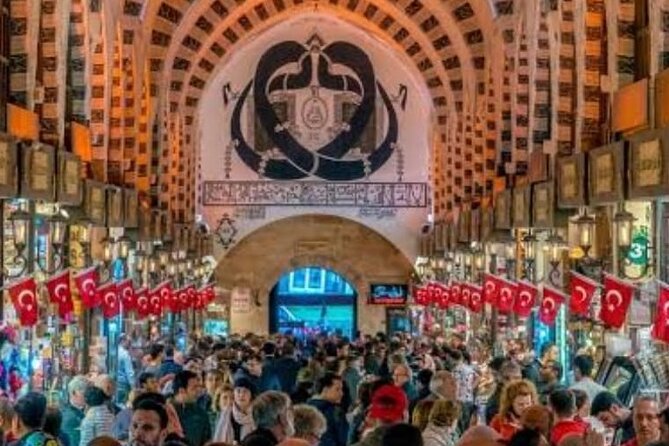
Next comes the Grand Bazaar, the famous covered market whose history traces back to shortly after the Ottomans conquered Constantinople, in the 15th century. Your time here is about 1 hour 10 minutes, so the key is strategy.
One thing I love about the way this tour frames the Grand Bazaar is that it is described like a small city inside the city. It has its own internal order, with security and closing hours, and merchants organized by trade. That means you can expect streets and sections that lean toward specific categories like carpets, gold, leather, ceramics, and more.
The architecture is not just decoration either. The arched ceilings, domes, and decorative structure help protect traders and shoppers from heat, rain, and fire. In other words, it is a market designed for daily commerce, not for photo ops only.
With only 1 hour 10 minutes, the guide’s job is crucial. You do not want to spend that time bouncing between doors and dead ends. The value here is getting help navigating the covered streets so you can experience the scale without losing your head.
Here’s what you should do when you reach the Grand Bazaar:
- Pick one theme before you go in (carpets, ceramics, leather, or jewelry)
- Walk a main loop once for orientation
- Then slow down for the one category you care about most
If shopping is not your priority, you can still enjoy the Grand Bazaar for the sheer sense of organized trade and the historic indoor atmosphere. The downside is the obvious one: it is busy. Your best protection against frustration is good shoes and a clear plan.
Spice Bazaar (Egyptian Bazaar) in 25 Minutes: Smell-First Istanbul Shopping
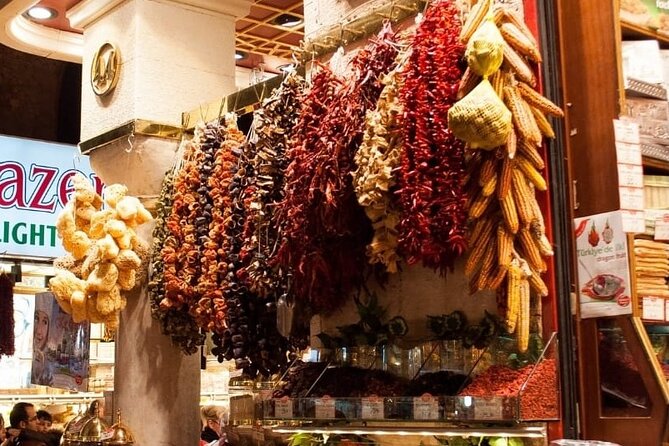
Then you switch gears to Mısır Çarşısı, also known as the Egyptian Bazaar or Spice Bazaar. You get about 25 minutes here, and that short timeframe is actually perfect for this kind of market.
This bazaar was built in the 17th century and became a center for the spice trade in Istanbul. The name ties to the fact that many spices and goods arrived through Egypt, which was an important Ottoman province.
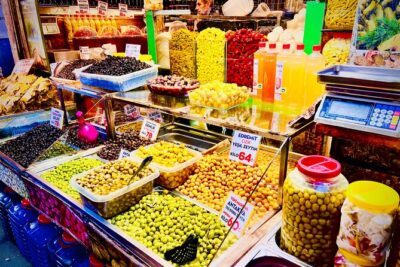
The biggest difference from the Grand Bazaar is sensory. When you step in, the first thing you notice is smell: cinnamon, cumin, saffron, sumac, dried fruits, nuts, and herbs. Spices were historically extremely valuable, used not just for flavor, but also for medicine, preservation, and perfumes. That context matters because it turns shopping from casual browsing into understanding why these goods were once treated like treasure.
Beyond spices, the market also focuses on everyday edible gifts and Turkish favorites:
- Turkish delight
- teas
- dried fruits
- honey
- natural products
You also get the benefit of a smaller footprint. Compared with the Grand Bazaar, it is easier to explore in a shorter time. It is not as much of a maze, so your 25 minutes are more likely to feel productive.
Practical advice: if you plan to bring food home, check packaging and smell before you commit. Look for shops that keep items fresh and tidy, because in a spice market, the quality is often visible and partly obvious by aroma.
Mahmutpasha Bazaar and Eminönü Backstreets: Local Shopping Break
After the two big-name bazaars, the tour adds a short stroll through Eminönü Çarşısı in the area linked to Mahmutpasha Bazaar. This is about 20 minutes, and it plays a different role than the headline markets.
Instead of focusing on the most famous tourist lanes, you are looking at textile shops, traditional kitchenware, and copper items, the kind of goods locals buy when they need what they need. It is a nice change of pace because it shifts you from “I am seeing Istanbul” to “I am walking alongside how Istanbul buys things day to day.”
There is also a coffee break. The tour includes trying Turkish coffee at the backyard of a very famous coffee shop. Even if you are not a coffee enthusiast, this kind of stop matters because it gives you a mental reset. You will have spent time around intense aromas and crowded corridors, so a quick sit-down is actually part of the value.
A possible drawback: because this is only 20 minutes, it is best treated as a sampling walk. If you want deeper browsing here, you’ll likely want to return on your own later.
Learn the knots behind the pattern
- Turkish Carpet Rug Weaving Workshop (Halı Kilim Dokuma Atölyesi)
- Istanbul: Turkish Carpet/Rug Weaving Workshop with Artisan
- Private Turkish Carpet Shopping at Historic Caravanserai
- Istanbul Turkish Carpet & Rug Experience – Handmade Weaving
- Istanbul Turkish Carpet Shopping (Expert Guidance)
- Istanbul Carpet Weaving Workshop & Carpet Gallery Tour
Price and Value: What $66.51 Includes
Let’s talk money in a way that helps you decide. At $66.51 per person for about 3 hours 20 minutes, you are paying for a guided route through three major shopping zones plus one local backstreet stop.
Included items that affect the value:
- Coffee and/or tea
- Entrance fees (for the sites on the route)
- Mobile ticket
- English guide
- Group size capped at 10 people
Not included:
- Private transportation
- Brunch, snacks, or lunch
The important thing is that the tour gives you “arrive, follow, learn, browse” structure. If you tried to stitch together these markets by yourself, you would likely spend time deciding where to go next, and you would miss the rug context that helps you shop with more confidence.
Also, the starting area and route are described as near public transportation, so you can keep your overall day budget under control. You just need to plan your own meals and snacks.
How to Shop Smarter for Rugs and Spices
Even if you do not plan to buy, you can still shop like you know what you are doing.
For rugs, use questions that reveal quality
Since the tour focuses on traditional Turkish rug understanding, your best questions tend to be the ones that connect design choices to real materials. For example:
- Ask about natural dyes
- Ask about the origin or design logic of patterns
- Take your time matching motifs to what you were told about their meanings
The goal is to build a mental checklist so you can recognize craftsmanship, not just appearance.
For spices, trust your nose, but check freshness
The Spice Bazaar is all about aroma. Use that to guide you, then verify by simple cues:
- Are jars and packages sealed well?
- Do the spices smell strong and clean rather than stale?
- Do shop owners show you what is fresh?
If you are buying gifts, consider choosing a few focused items instead of trying to carry everything. Your end point is near Galata Bridge, which makes it easier to continue your day without dragging heavy bags too far.
For bargaining, keep it polite
The data does not spell out any specific bargaining rules, so I’ll keep this general: in busy markets, prices can vary widely. If you negotiate, do it calmly and ask questions first. If you feel rushed, step back and reset. Your goal is clarity, not a win.
Who This Tour Suits Best, and Who Should Skip It
This tour is a strong fit if you want:
- A guided route through carpet shopping plus Istanbul’s top bazaar stops
- A quick education on handwoven carpets and kilims, including design meaning and natural dyes
- A sensory food-market stop in the Egyptian Bazaar
- A mix of famous sights and local shopping streets in Eminönü
It is also a good match for people who appreciate organized pacing. With the route timed at about 3 hours 20 minutes and a maximum group size of 10, you get enough coverage without feeling like you are trapped in a full-day shopping marathon.
Who might not love it:
- If you strongly dislike crowded indoor market spaces, the Grand Bazaar and Spice Bazaar can feel intense
- If you want a super slow, sit-and-stare cultural museum style outing, this is more about browsing and shopping context than lingering
Service animals are allowed, and most people can participate, which makes it easier to plan around different comfort levels.
Should You Book Carpets, Rugs, Kilims Bazaar, Grand Bazaar and Egyptian Bazaar?
I think this is a smart booking if you want a focused half-day that connects craft to shopping. The mix of Vezirhan rug education, the Grand Bazaar navigation, and the Spice Bazaar sensory stop is efficient, and the included coffee or tea adds a needed pause.
Book it if you:
- Want more than random bazaar wandering
- Like textiles, patterns, and the meaning behind design
- Appreciate market food culture and smell-first shopping
Skip it if you:
- Hate crowds and narrow lanes
- Want a non-shopping itinerary with lots of long breaks and quiet time
If you land somewhere in the middle, do it. This route gives you structure, context, and a clear finish near the Egyptian Bazaar by Galata Bridge, so you can keep exploring with less stress.
FAQ
How much does the tour cost?
The price is $66.51 per person.
What is the duration of the tour?
The tour lasts about 3 hours 20 minutes.
Is the tour offered in English?
Yes, it is offered in English.
What is the group size?
The tour has a maximum of 10 travelers.
Where does the tour start?
It starts at Çemberlitaş, Mollafenari, 34120 Fatih, Istanbul, Turkey.
Where does the tour end?
It ends in front of the Egyptian Bazaar (Spice Bazaar) near Galata Bridge, at Rüstem Paşa, 34116 Fatih, Istanbul.
What is included in the price?
Coffee and/or tea are included, along with entrance fees.
Is private transportation included?
No, private transportation is not included. The tour is described as near public transportation.
Can I cancel for a full refund?
Yes. You can cancel up to 24 hours in advance for a full refund.
More Shopping Tours in Istanbul
- Imperial Istanbul Half-Day Tour: Hagia Sophia and Grand Bazaar★ 3.5 · 64 reviews
- Istanbul Mosaic Lamp Workshop in Grand Bazaar★ 5.0 · 63 reviews
- Best of Istanbul: Basilica Cistern – Blue Mosque – Grand Bazaar★ 4.5 · 54 reviews
- Small Group Istanbul Tour: Hagia Sophia, Blue Mosque & Bazaar★ 4.5 · 50 reviews
- Private: Topkapi Palace, St. Sophia, Blue Mosque, Grand Bazaar, Hipodromme★ 5.0 · 40 reviews
More Markets in Istanbul
- Istanbul: Hagia Sophia, Blue Mosque, Cistern & Bazaar Tour★ 4.9 · 189 reviews
- Culinary Backstreets of the Bazaar Quarter★ 5.0 · 118 reviews
- Private Guided Tour Hagia Sophia, Cistern, Topkapi and Bazaar★ 5.0 · 79 reviews
- Private Istanbul Shopping in Grand Bazaar with Personal Shopper★ 5.0 · 68 reviews
- Private 5-6h: Topkapi + Hagia Sophia + Blue Mosque + Grand Bazaar★ 5.0 · 67 reviews
Grand Bazaar Tours
- Istanbul Grand Bazaar: From Rooftops to the Secret Passages★ 4.8 · 337 reviews
- Istanbul: Hagia Sophia, Blue Mosque and Grand Bazaar Tour★ 4.5 · 222 reviews
- Istanbul: Hagia Sophia, Blue Mosque, and Grand Bazaar Tour★ 4.5 · 162 reviews
- Istanbul Old City: Basilica Cistern – Blue Mosque – Grand Bazaar★ 5.0 · 112 reviews
- Morning Istanbul: Half-Day Tour with Blue Mosque, Hagia Sophia, Hippodrome and Grand Bazaar★ 4.5 · 103 reviews
Newest tours in Istanbul


Grand Bazaar Shopping Tours, compared.
Istanbul Grand Bazaar: From Rooftops to the Secret Passages
Read our review →
Hagia Sophia, Blue Mosque and Grand Bazaar Tour
Read our review →
Hagia Sophia, Blue Mosque, and Grand Bazaar Tour
Read our review →
Istanbul Old City: Basilica Cistern – Blue Mosque – Grand Bazaar
Read our review →
Morning Istanbul: Half-Day Tour with Blue Mosque, Hagia Sophia, Hippodrome and Grand Bazaar
Read our review →
Private Istanbul Shopping in Grand Bazaar with Personal Shopper
Read our review →
Private 5-6h: Topkapi + Hagia Sophia + Blue Mosque + Grand Bazaar
Read our review →
Imperial Istanbul Half-Day Tour: Hagia Sophia and Grand Bazaar
Read our review →Browse the lists this tour appears in