Reviewed · ISTANBUL
Byzantium Spirit of Istanbul
Byzantine Istanbul hits your senses quickly. I love the focus on Golden Horn history and the way hotel or port pickup keeps the day from turning into a scavenger hunt. In a single afternoon you trace the Byzantine story from Orthodoxy at Fener to the holy-water sites of Blachernae.
The route is packed for a 4-hour window, so expect a moderate pace and some church and palace walking. If you prefer slow museum time, you might feel tight timing compared with exploring on your own.
Snacks and bottled water are included, and the air-conditioned vehicle with WiFi helps between stops. Your driver-guide explains what you are seeing, and because it is private, you get one-on-one attention rather than being lost in a crowd.
In This Review
- Key Highlights You Get in This 4-Hour Byzantine Loop
- Why This Byzantine Route Makes Sense in 4 Hours
- Starting With The Golden Horn: Istanbul’s Harbor, Power, and Trade
- The Patriarchate of Constantinople in Fener: Orthodox Authority, Up Close
- Panagia of Blachernae: Holy Water, Sacred Bath, and an Imperial Origin Story
- Tekfur Sarayı (Tekfur Palace) and Blachernae’s Power Zones
- Chora Museum: When the Restoration Story Is Part of the Visit
- Hagia Sophia Grand Mosque (Ayasofya): The One Building Everyone Knows
- Theodosius II City Walls: Military Istanbul in Plain View
- Price and Value: What $506.20 Covers in Real Terms
- What’s Included, What You Should Bring, and How to Get the Most
- Who This Private Byzantine Tour Fits Best
- Should You Book Byzantium Spirit of Istanbul?
- FAQ
- How long is the Byzantine Spirit of Istanbul tour?
- Is hotel or port pickup included?
- Which stops have admission tickets included?
- Is this tour private?
- What is included for comfort during the tour?
- What is the cancellation policy?
Key Highlights You Get in This 4-Hour Byzantine Loop
- Private pickup from your hotel or port, so you start instantly and avoid that first stress moment
- Orthodox Istanbul at the Patriarchate of Constantinople (Fener), with admission included
- Panagia of Blachernae and its holy-water tradition, tied to a 5th-century imperial story
- Tekfur Sarayı (Tekfur Palace) plus the surrounding Blachernae power-and-fortification zone
- Chora and Hagia Sophia with admission included, with guided context at both
Why This Byzantine Route Makes Sense in 4 Hours
This is a smart way to sample the Byzantine layer of Istanbul without burning your whole day. You get a tight sequence of religious and political landmarks that help you understand the city’s logic, not just its photo stops.
The biggest value is the driver-guide format. You do not just wander from building to building hoping it clicks. You get explanations that connect places, like how an important church community in Fener fits into the wider Byzantine world, or how the Golden Horn shaped naval power and commerce.
The tour also makes practical sense. You get an air-conditioned vehicle, onboard WiFi, and included snacks and bottled water, so you can stay comfortable while the clock stays on your side. And since it is private, your guide can adjust to your pace, your questions, and how much you want to linger at each doorway and courtyard.
Two continents, one afternoon left to fill:
- Istanbul: Bosphorus Dinner Cruise & Show with Private Table
★ 4.8 · 62,058 reviews - Istanbul: Daytime or Sunset Sightseeing Cruise & Audio Guide
★ 4.8 · 14,430 reviews - Istanbul: Bosphorus Dinner Cruise & Turkish Night Show
★ 4.8 · 12,954 reviews
Starting With The Golden Horn: Istanbul’s Harbor, Power, and Trade
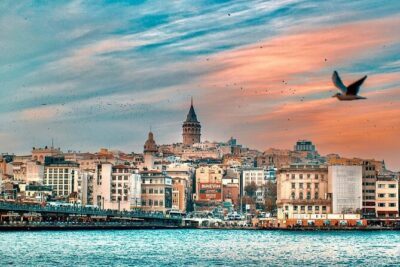
The tour begins at the Golden Horn, the horn-shaped estuary that divides European Istanbul. This is not just a pretty water view. It is described as one of the world’s best natural harbors, and it is where Byzantine and Ottoman naval and commercial shipping interests centered.
What I like about starting here is that it gives you context fast. When you understand the harbor, a lot of the later sites make more sense. Fener, palaces, walls, and churches all sit in a city that was built to protect, move, and control people and goods.
Today, the Golden Horn area is known for parks and open space, so you are not walking straight from one indoor crowd to the next. Even when you are learning, you also get a sense of where daily life and historic power overlapped.
Tip for your visit: take a moment to look out toward the water before you move on. It helps you mentally map the city so the guide’s connections feel real, not abstract.
The Patriarchate of Constantinople in Fener: Orthodox Authority, Up Close
Next is the Patriarchate of Constantinople in Fener, the seat of world Orthodoxy. The complex is described as surprisingly humble for something so influential, and that contrast is part of the lesson your guide will likely highlight.
You are also told about the line of leadership, including the fact that it is home to the 270th successor of the Apostle Andrew. Even if you are not deep into church history, the guide’s job is to translate why that detail matters, and what it means for continuity across centuries.
This stop includes admission and is set for about 45 minutes, which is enough time to orient yourself. You will also get the benefit of being there with a guide who can steer you toward what to notice, instead of leaving you to figure it out alone.
Possible drawback: this is a religious site, so it can feel more controlled and less like a casual sightseeing walk. If you prefer open-ended roaming, you may want to mentally switch from sightseeing mode to attentive, respectful visiting mode.
Panagia of Blachernae: Holy Water, Sacred Bath, and an Imperial Origin Story
After Fener, you move into the Blachernae area and its famous holy-water tradition. The tour focuses on the Church of Panagia of Blachernae, known for holy water and a sacred bath, plus the story behind the shrine.
Here is the historical anchor you will hear: in 450, Empress Aelia Pulcheria started building near a fountain of holy water outside the walls of Theodosius II. After her death in 453, the shrine became an important religious location.
What you take from this stop is how Byzantium mixed everyday experience with sacred belief. Water was not just symbolic. It was tied to health, ritual, and devotion, and that is why the site matters beyond architecture.
Even if you are not personally interested in miracles or ritual water practices, this is still valuable. It gives you a human scale to the empire. You start thinking less like a tourist and more like someone living in Constantinople, where faith was woven into how people sought healing and meaning.
Practical note: because the tour is only about four hours, your guide likely keeps the holy-water context tight. If you want extra time for personal reflection, ask at the start whether you can slow down for this one moment.
Tekfur Sarayı (Tekfur Palace) and Blachernae’s Power Zones
One of the most dramatic stops in this route is Tekfur Sarayı (Tekfur Palace). The description places it as a late 13th-century Byzantine palace in the north-western part of old Constantinople, in the general Blachernae area.
This is where the story shifts from pure religious sites to imperial staging grounds and elite residence spaces. Your guide’s job here is key, because without context, a palace can look like ruins and walls. With context, you can start to read the site like a political map.
The tour also includes Blachernae Palace and the Anemas Dungeons area as part of the broader Blachernae theme. Even when you do not have every architectural detail in front of you, the effect is the same: you see how power, defense, and status occupied this zone.
Why this matters to you: if your interest is Byzantine, you might worry you will only do churches. This stop helps balance that. It reminds you that the empire was not only prayer and doctrine. It was also administration, protection, and control.
Comfort tip: palace and dungeon areas can involve uneven surfaces. The tour asks for moderate physical fitness, so wear shoes you trust.
Add these before you book flights home:
- Best of Istanbul 1, 2 or 3-Day Private Guided Istanbul Tour
- Istanbul: Basilica Cistern Fast-Track Entry and Audio Guide
- Istanbul: Hagia Sophia Skip-the-Line Ticket & Museum Option
- Istanbul: Hodjapasha Whirling Dervishes Show & Exhibition
- Topkapi Palace and Harem Skip-the-Line-Tickets & Audio Guide
- Istanbul: Bosphorus Sightseeing Cruise Tour with Audio Guide
Chora Museum: When the Restoration Story Is Part of the Visit
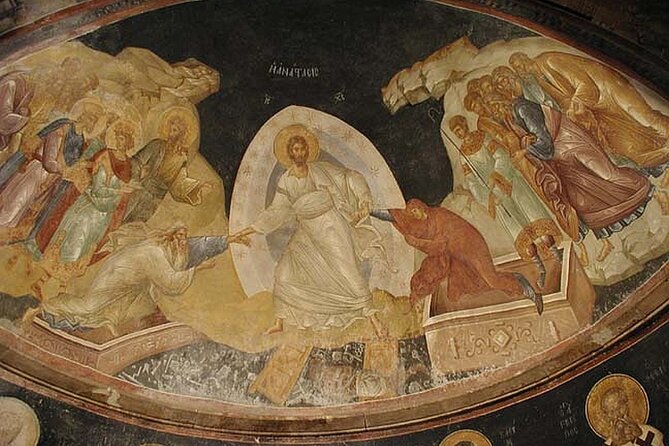
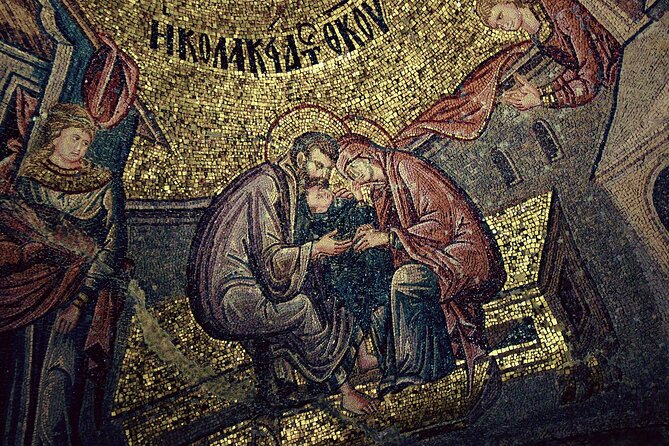
Then you head to the Chora Museum. The tour description includes a welcome update: after many years of restoration, Chora is back.
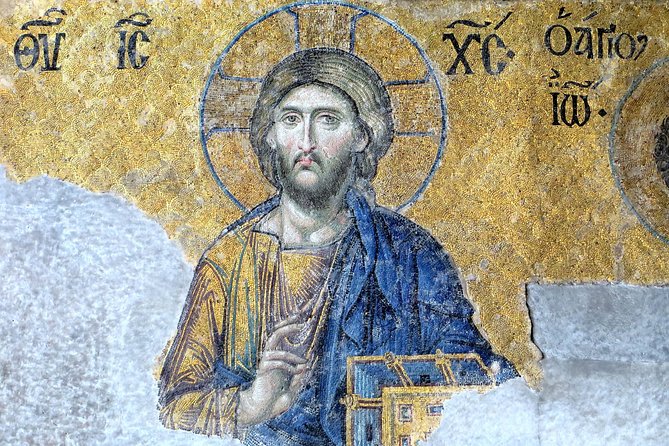
That detail sounds small, but it changes how you experience the stop. It means the museum is not just another stop in an overstuffed day. It is a site that carries a recent comeback story, so your guide can frame what it means to preserve Byzantine art and architecture through modern restoration work.
Chora’s stop includes admission and is scheduled for about 45 minutes. That length is a practical compromise. You have enough time to get oriented and see what the museum is doing today, while still leaving energy for the bigger finale.
What you should do: plan to ask your guide what you are most likely to miss if you only skim. In a place like Chora, you benefit from knowing where the guide wants your eyes to go. Otherwise, the day can feel like you are rushing from door to door.
Hagia Sophia Grand Mosque (Ayasofya): The One Building Everyone Knows
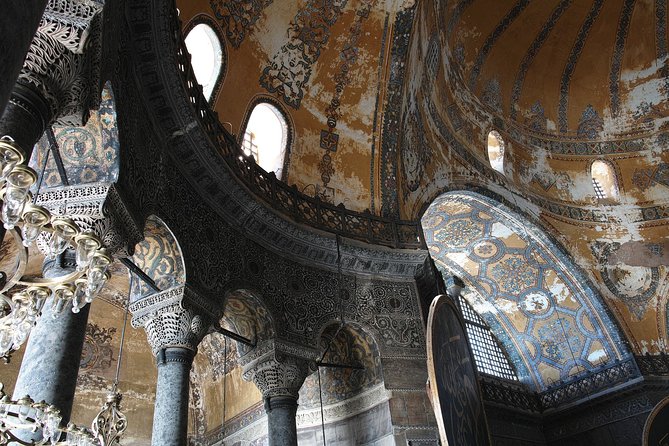
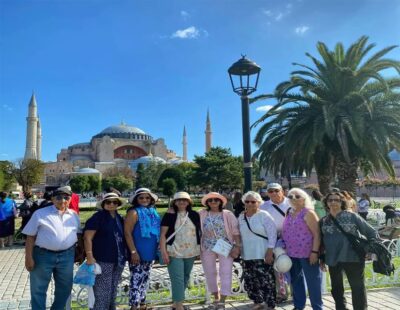
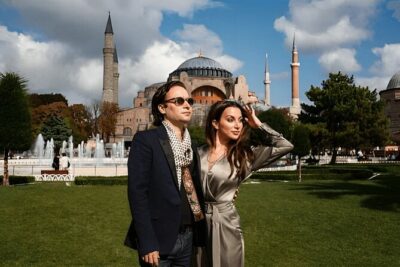
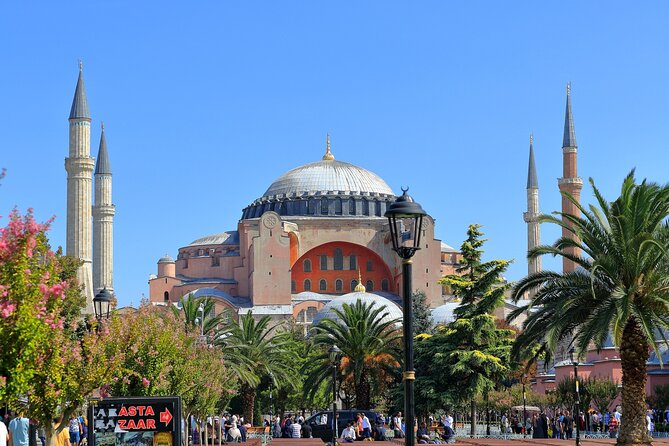
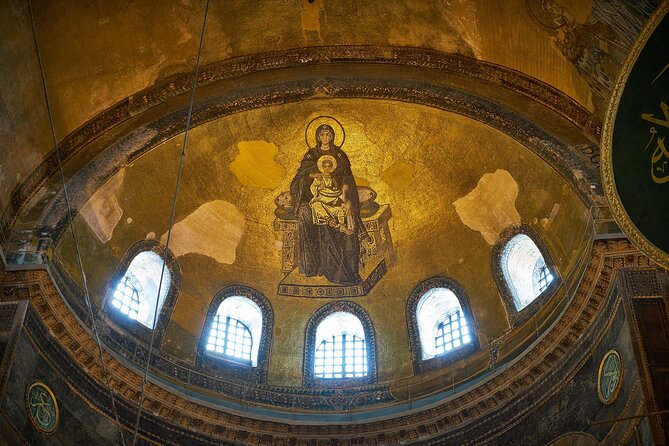
Next comes Hagia Sophia Grand Mosque, now called the Ayasofya Museum in the description. This stop is scheduled for about 45 minutes and includes admission.
Your guide will give you the core historical beats: the basilica began under Constantine the Great and was reconstructed by Justinian in the 6th century. Even if you have seen photos, a live visit always hits differently because the scale and design force you to slow down and look up.
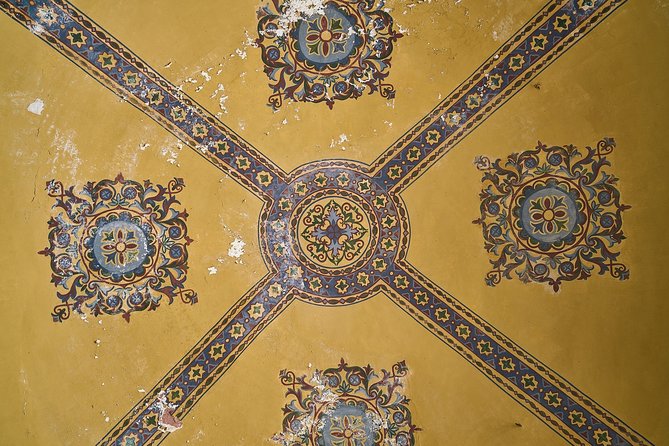
This is not a museum visit where you only learn dates. It is a visit where you learn how one building can hold layered meanings. When you have a guide, you also learn how to read the architecture quickly, like where the emphasis sits and why people kept returning to this place for centuries.
If you are planning your day around Hagia Sophia, I recommend treating this as your emotional anchor. Let the guide explain the big narrative once, then use your last minutes to soak in the space yourself.
Theodosius II City Walls: Military Istanbul in Plain View
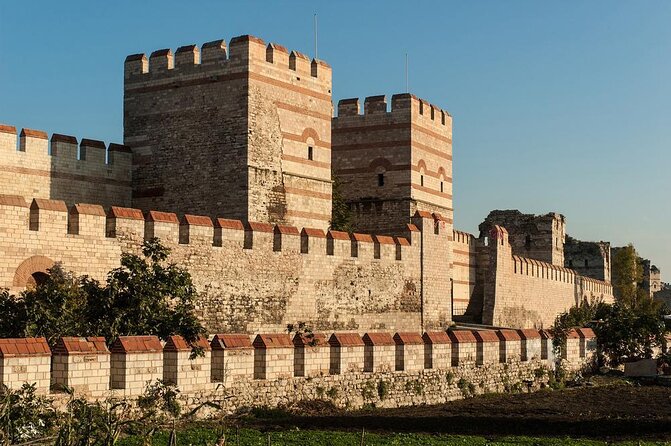
The tour also includes the city walls of Theodosius II, a major piece of the empire’s defense planning. The description highlights the length, about 6,650 metres, and the idea of a second line of defenses.
You are also told that the second line of defense dates to 447. That helps you connect military engineering to the rest of what you see. Churches and palaces were important, but the empire also needed walls that could slow down threats and protect the city’s lifelines.
This stop is especially useful if you want your Byzantine view to include more than religious symbolism. Walls are where the empire shows its practical side: planning, investment, and long-term thinking.
Time note: because this is a half-day tour, you likely see the walls through guided orientation rather than a long multi-hour walk along every stretch. Still, it is a valuable way to feel the scale of the fortifications without turning the day into a marathon.
Price and Value: What $506.20 Covers in Real Terms
At $506.20 per person for a private, half-day tour, you are paying for a package of convenience plus guided interpretation. In Istanbul, a big part of travel cost often comes from logistics, and this tour tries to protect your time and reduce your stress.
Here is what the price realistically buys you, based on what is included:
- Private transportation in an air-conditioned vehicle
- Hotel or port pickup so you start without confusion
- Driver-guide explanations that connect the sites
- Onboard WiFi, plus snacks and bottled water
- Practical extras like fuel surcharge and parking fees
The “admission included” parts matter too. Admission tickets are included for the Patriarchate of Constantinople, Chora Museum, and Hagia Sophia Grand Mosque. Those stops are often the most ticket-and-line sensitive, so having admission handled reduces friction.
Is it worth it? If you are traveling with a group, or you want a guided plan that hits major Byzantine themes quickly, this is one of those prices that can feel fair. If you are the type who likes wandering freely with no structure and no guide, then you might find the cost steep. For you, a self-guided day could work, but you would give up the connecting stories that make the sites click.
What’s Included, What You Should Bring, and How to Get the Most
This tour includes several comfort items that make a difference in a short day. You get an air-conditioned vehicle, snacks, bottled water, and WiFi on board. Parking fees and fuel surcharge are covered, so your guide is not juggling extra charges mid-visit.
Because you are visiting active religious and museum spaces, bring practical basics:
- A camera or phone with enough storage, because you will want to reference details
- Comfortable walking shoes for uneven outdoor areas like the palace and wall zones
- Layers, since you might move between open-air and indoor spaces
- Any essentials you personally need, like medication or small personal snacks, in case you prefer more than what is provided
Also, keep in mind the tour lists a moderate physical fitness level. That is your clue to pace yourself and wear shoes you can trust on stone floors and outdoor paths.
One more thing: the tour is private, but it is also a coordinated route. If you want to linger, ask early. A guide can often adjust a bit, but it depends on the day.
Who This Private Byzantine Tour Fits Best
This is ideal if you are:
- A history lover who wants the Byzantine story explained in a logical sequence
- Short on time and you want a strong half-day itinerary
- Traveling with a small group or as a couple and you want personalized attention
It also fits well if you like guides who can link architecture to meaning. In one example booking tied to Deren Koray Tourism, the guide named Alp was described as friendly and especially good at bringing the stops together as one story. That aligns with what you want from a Byzantine themed route, because the best part is the connections.
If you are visiting Istanbul for the first time and feel overwhelmed by how many sites are “must-sees,” this tour can act like a guided backbone. If you are already a Constantinople specialist, you may still enjoy it, but you might want to add extra time on your own afterward to go slower.
Should You Book Byzantium Spirit of Istanbul?
I would book this if you want a focused Byzantine experience that balances harbor life, Orthodox authority, holy-water tradition, imperial palaces, and defense walls. The biggest strengths are the private pickup, the included snacks and water, and the admissions for the big ticket stops.
I would hesitate if you are the kind of traveler who needs long, quiet museum time or you do not enjoy walking through multiple sites in a single afternoon. At 4 hours, the tour moves. It is designed for momentum, not for a slow daydream.
If your goal is to leave Istanbul with a clearer picture of how the Byzantine Empire shaped the city’s sacred and political spaces, this route is a solid choice.
FAQ
How long is the Byzantine Spirit of Istanbul tour?
It is approximately 4 hours.
Is hotel or port pickup included?
Pickup is offered, including hotel or port pickup, so you should not have to hunt for a meeting spot.
Which stops have admission tickets included?
Admission tickets are included for the Patriarchate of Constantinople, Chora Museum, and Hagia Sophia Grand Mosque.
Is this tour private?
Yes. It is a private tour/activity, meaning only your group participates.
What is included for comfort during the tour?
The tour includes an air-conditioned vehicle, private transportation, parking fees, fuel surcharge, WiFi on board, snacks, and bottled water.
What is the cancellation policy?
You can cancel for free up to 24 hours in advance for a full refund. If you cancel less than 24 hours before the start time, the amount paid is not refunded.