
Reviewed · CYCLING TOURS
3-Hour Private Bike Tour in Istanbul
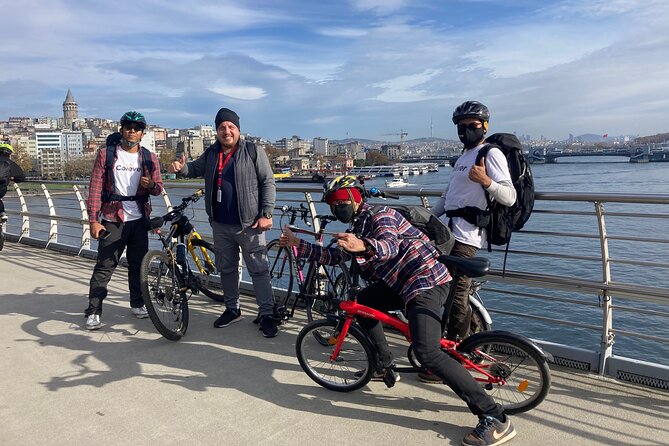
Cycle past Istanbul’s big icons, then slow down. This private bike tour threads together major landmarks and everyday neighborhoods in a tight 3 hours, with narration in English and a route planned to handle Istanbul’s hills. You’ll ride with Osman Altay, and one rider noted the guide helped them avoid the worst up-hills while keeping things close to the water.
I like the way this tour balances big-ticket sights with smaller, meaningful stops. You’ll get a quick look at places tied to multiple faiths along the Golden Horn, then move into the Ottoman-era core around Hagia Sophia, the Blue Mosque, and the historic squares. The only real drawback is the pace: many stops are brief, so you should not expect long indoor time at each landmark.
In This Review
- Key highlights before you pick up your bike
- From Balat meeting point to a ride built for Istanbul’s hills
- Phanar Greek Orthodox Patriarchate and Fener Balat’s mix of communities
- Eminönü and the Sirkeci Station moment by the Golden Horn
- Gulhane Park, the Topkapı Palace grounds, and quick hits near Hagia Sophia
- Blue Mosque and Hippodrome: Ottoman power in one side-by-side setting
- Beyazıt Square, the Grand Bazaar, and the merchant-sultan connection
- Süleymaniye Mosque and why its dome matters
- Vefa Bozacısı and the Cibali Gate after the big landmarks
- Price and value for a 3-hour private ride
- Should you book this private bike tour?
- FAQ
- How long is the 3-hour private bike tour?
- How much does the tour cost?
- Is the tour private?
- What language is the tour offered in?
- Where does the tour start, and where does it end?
- Do I need to bring a printed ticket?
- What fitness level is required?
- Are there admission tickets required for the listed stops?
- What if the weather is bad?
- What is the cancellation policy?
Key highlights before you pick up your bike
- Private route planning with a guide who adjusts the ride to how your legs feel, including easier uphill choices
- A powerful faith-and-culture mix around Fener and Balat, where different religious communities sit close together
- Sirkeci Station and the Orient Express story, right at the edge of the Golden Horn
- A best-of-it loop on the historic peninsula from Gulhane Park to Hagia Sophia and the Blue Mosque
- Food-and-old-streets moments, with a stop at Vefa Bozacısı and a quieter approach toward Cibali
From Balat meeting point to a ride built for Istanbul’s hills
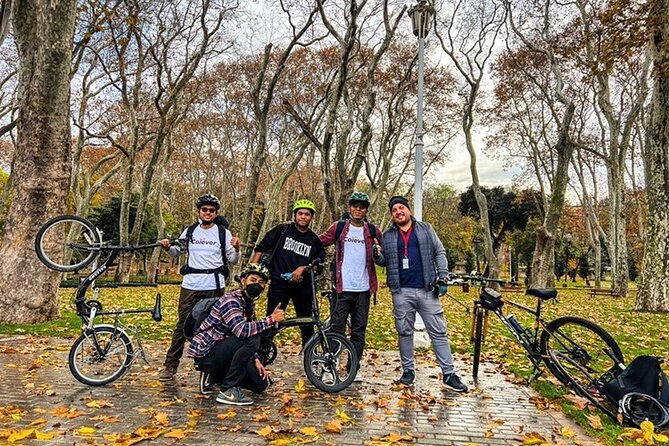
Your tour starts at Balat, Vodina Cd. No:116, 34087 Fatih/İstanbul, Turkey, and it ends back at the same meeting point. That matters more than it sounds. With a 3-hour private format, you do not want to lose time with complicated transfers or a long one-way bike route.
What I especially like here is the practical, problem-solving vibe that comes through in the ride. In one of the past reviews, Osman provided a hybrid road-mountain bike and took care to route around the steepest climbs. That kind of planning turns a “bike tour of Istanbul” into something you can actually enjoy without white-knuckling every hill.
Also, this is described as requiring moderate physical fitness. That usually means: you should be comfortable cycling for a few hours, and you should not expect a flat, easy cruise. If you’re fine with some effort, the reward is a better view of the city than you get from standing still.
Finally, the whole schedule is designed around short stops. Each of the listed major stops shows around 10 minutes, plus riding time between them. In other words, you’ll get bearings fast and see a lot, but you’ll move on while the site is still interesting.
More of Istanbul beyond the obvious sights
- Istanbul Eurasia Bike & Boat Tour
★ 5.0 · 96 reviews - Istanbul: Eurasia Bike & Boat Half-Day Tour
★ 4.6 · 91 reviews - Princes’ Islands ( Büyükada ) E-bike Tour
★ 5.0 · 30 reviews
Phanar Greek Orthodox Patriarchate and Fener Balat’s mix of communities
One of the tour’s strongest threads is the way it starts with the Golden Horn neighborhoods of Fener and Balat. This is where the city’s layered identity becomes obvious quickly. You’ll see churches, synagogues, and mosques near each other, all within the same neighborhood pattern.
The first spiritual stop is the Phanar Greek Orthodox Patriarchate, also known as the Ecumenical Patriarchate of Constantinople. The key detail to pay attention to is the timeline. The institution dates back to the 4th century, so even before you understand the full story, the place feels anchored in a long arc of religious history.
Then the tour shifts into the broader streetscape of Fener and Balat, where the “religious map” is not separated into different parts of town. Instead, it’s side by side. That’s one of those things you can read about, but it hits differently when you’re seeing the buildings up close and moving through the streets on a bike.
What to watch for here is pacing and respect. You’re passing through active city areas, not visiting a closed theme park. If you want the best photos, aim for quick stops, then keep moving so you don’t get stuck behind other people at small corners.
A small note on value: the tour description lists Admission Ticket Free for the stop segments in this area. That helps keep the budget predictable when you’re stacking multiple sights in one afternoon.
Eminönü and the Sirkeci Station moment by the Golden Horn
After Fener and Balat, the route goes toward Eminönü, the “crossroads” district where Istanbul’s waterfront energy meets old transport routes. This is the kind of place where the city looks like it’s been busy for centuries and still is.
The tour then focuses on Sirkeci Station, in Sirkeci by the tip of the historic peninsula, near Gülhane Park and Topkapı Palace. Here’s the detail that makes this stop more than just a pretty station building: Sirkeci Station was built in 1890 by the Oriental Railway as the eastern terminus of the world-famous Orient Express.
You’ll hear the story that connects Paris and Istanbul through the period when the train ran between those cities. Even if you’ve never ridden it, the building and location give you instant context for how travel and commerce shaped the peninsula.
If you’re a fan of “how a city works,” this is a good place to slow down for a minute. You’re not just looking at a landmark. You’re seeing how Istanbul turned transport into identity, then layered that identity into the surrounding streets.
And because this is a bike tour with short site breaks, it’s smart to come here ready for a quick mental snapshot. You won’t have time to fully study every architectural element. But you will get the big picture, and then you’ll move into the main monument zone.
Gulhane Park, the Topkapı Palace grounds, and quick hits near Hagia Sophia
Once you reach Gülhane, the vibe shifts to open space. Gülhane Park sits near Topkapı Palace and Sultanahmet Square, and it started as the outer gardens of the sultan’s palace. Today it’s public, and part of it includes a forest area with trees dating back to the 1800s.
Practically, that makes Gülhane a useful reset point. After denser neighborhoods and station streets, you get a breathing space and a chance to re-check your route and camera settings before the big religious monuments.
From there, you’ll pass by Topkapı Palace. The palace is described as the residence of the Ottoman sultans plus the administration, education, and center of the empire. It was ordered by Fatih Sultan Mehmed and built on the site of the Byzantine acropolis in Sarayburnu, between 1453 and 1478.
That’s a lot to take in during a short stop, but the value is in how the tour connects the eras. You’re cycling from a station linked to late 19th century travel, into a palace complex born right after the conquest period. It’s a timeline you can feel.
Then comes Hagia Sophia, one of the most important monuments in the history of world architecture. The key points you should remember are: it has been built three times in the same place, it was first called Megale Ekklesia (Great Church), and from the 5th century it was defined as Hagia Sophia, or Sacred Wisdom. It served as the capital’s largest church, where monarchs were crowned.
Even if you know the headline facts, seeing it in person plus hearing the “three builds, many roles” idea helps your brain connect the dots. This is one of those sights where architecture tells a political story, and the tour gives you the framework in minutes.
The only drawback here is time. With short stop windows, you’ll want to prioritize your must-see view angle. If you’re trying to photograph everything, you’ll lose the moment. Pick one or two shots and let the rest be something you notice while you roll past.
Blue Mosque and Hippodrome: Ottoman power in one side-by-side setting
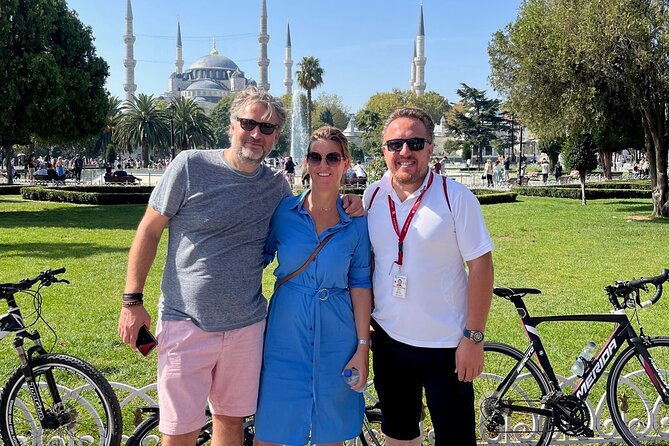
Next on the loop: Sultan Ahmet Mosque, known as the Blue Mosque because of intense blue Iznik tiles. The mosque was built in the 17th century by Sultan Ahmet I, with Sedefkar Mehmet Ağa credited as the architect. One of the details that makes this mosque feel engineered for grandeur is the scale of its complex.
The description lists a whole system around the mosque, including madrasahs, sultan’s pavilion, arasta, shops, a Turkish bath, fountains, a tomb, a hospital, a primary school, an almshouse, and rental rooms. That means you’re not just looking at a worship space. You’re seeing a hub that supported community life.
Then the tour moves to Hippodrome, also called Atmeydanı in the Ottoman era. This area was Hippodrome in Constantinople during the Byzantine period. The tour points out that the Blue Mosque sits to the east of the square, while the Turkish and Islamic Arts Museum and İbrahim Pasha Palace sit to the west.
That spatial relationship is a big deal for understanding Istanbul. The city didn’t replace older systems with new ones in neat layers. It kept reusing and reinterpreting spaces, and this square is a clear example.
In the middle of the walkway, there are structures you can look for: the Knitted Obelisk, Serpent Column, Theodosius Obelisk, and the German Fountain. Again, you’re not getting museum-level detail in 10 minutes, but you will learn enough to recognize these shapes on future visits.
If you’re someone who likes a “big photo plus one fact” style of sightseeing, this segment fits you well.
Add these before you book flights home:
- Istanbul: Bosphorus Dinner Cruise & Show with Private Table
- Istanbul: Daytime or Sunset Sightseeing Cruise & Audio Guide
- Istanbul: Bosphorus Dinner Cruise & Turkish Night Show
- Best of Istanbul 1, 2 or 3-Day Private Guided Istanbul Tour
- Istanbul: Basilica Cistern Fast-Track Entry and Audio Guide
- Istanbul: Hagia Sophia Skip-the-Line Ticket & Museum Option
Beyazıt Square, the Grand Bazaar, and the merchant-sultan connection
From Hippodrome, the route reaches Beyazıt Square, described as one of the most important political and historical places in Istanbul. It was built by Emperor Theodosius in 393 AD as the largest square in the city. At the time, it was known as Form Tauri Square because of bronze bull heads on a giant triumphal arch in the middle.
That ancient origin is an important contrast. By the time you’re standing in this square, you’ve just come from Byzantine and Ottoman symbols. Now you’re back to a much earlier civic stage.
Then the tour transitions into the Grand Bazaar, one of the most important commercial centers in the region. The big value here is how the bazaar is explained as part of a wider system. Its foundation was laid in 1461, with structures built by Fatih Sultan Mehmed to bring income to Hagia Sophia. Over time, it grew with additions, and it became home to the richest tradesmen of Istanbul, trading jewelry and precious jewels from around the world.
Even on a bike tour, the bazaar stop has practical payoff. You’ll understand the city’s engine. Istanbul isn’t just palaces and churches. It’s also trade, and that trade used to be housed in places like this.
One consideration: the Grand Bazaar can be dense and crowded. Since the tour lists a short time window, treat it as a street-level orientation stop. If you want to shop, come prepared for fast choices and plan to return later on your own if you get hooked by something.
Süleymaniye Mosque and why its dome matters
The tour heads to Süleymaniye Mosque, built by Mimar Sinan between 1551 and 1558, ordered by Ottoman sultan Suleiman the Magnificent. The description highlights it as a masterpiece of classical Ottoman architecture.
Here are the scale details that are worth remembering: the dome is 53 meters high, and the complex includes four minarets each rising to about 75 meters. The minarets have three balconies each. Those numbers help you “read” the building even if you don’t have time for a full architectural tour.
The description also notes an interesting way to connect Sinan’s work, suggesting that you compare it to Sinan’s masterpiece, Selimiye Mosque in Edirne. Even if you never go to Edirne, this kind of comparison gives context and makes Istanbul feel like one coherent school of architecture.
If you like religious architecture, this is a stop where the exterior alone can satisfy you. Just don’t expect a long stay. The goal is to recognize why people keep returning to these buildings and to understand what makes the design feel intentional.
Again, the stop is listed as Admission Ticket Free. That can matter for people trying to keep costs controlled while still ticking off major sights.
Vefa Bozacısı and the Cibali Gate after the big landmarks
After the Ottoman-era anchors and the bazaar, the tour makes space for something more local.
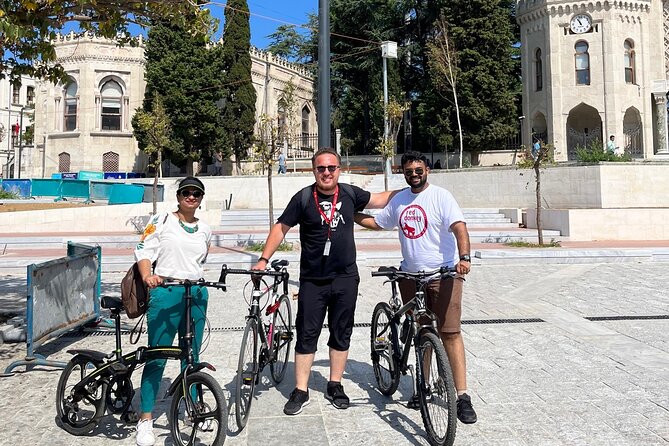
First: Vefa Bozacısı in the Vefa district. The story here is simple and appealing. It’s a centuries-old establishment where you can savor boza, a traditional Turkish fermented drink. The district also includes the Vefa Kilise Mosque, described as a former Byzantine church.
Then the route heads toward Cibali, on the shores of the Golden Horn. Cibali is described as a lesser-known part of Istanbul with old-world charm and cultural heritage. You’ll pass traditional Ottoman houses, local markets, and a significant historic remnant: the Cibali Gate, part of the ancient city walls connected to the Byzantine era.
This is where I think the tour earns its keep. Cycling the main monuments is the easy part. The harder part is making sure you get a taste of everyday Istanbul and not just photo stops. Boza and Cibali’s walls shift the experience from “sightseeing” into “how people live near the past.”
Also, one of the reviews mentions the guide ended the tour offering something to drink and eat. Even without assuming you will have the exact same moment, it’s a nice sign that the tour is designed to finish with a small local break, not just a hard stop.
Price and value for a 3-hour private ride
At $119.14 per person for about 3 hours, the price is fair for what you get, mainly because it is private and because it’s built around a lot of recognizable stops.
Here’s how I’d judge value:
- Private format means you can adjust pace and route, which matters in Istanbul where hills and foot traffic can slow you down fast.
- English narration is included, which helps you understand Hagia Sophia, the Blue Mosque, and the palace era without guessing.
- The description lists Admission Ticket Free for each stop segment shown, so you are not stacking entry fees on top of the tour price.
What you should also consider is the time structure. With many stops listed at about 10 minutes each, you’re buying breadth, not deep museum time. If you want to spend 45 minutes inside Hagia Sophia or linger in the bazaar with zero schedule pressure, you might feel a little rushed.
But if you want a smart loop that connects neighborhoods, monuments, and city texture in one afternoon, the cost makes sense. This is the kind of tour that can save you from spending your whole trip just getting from point A to B.
Should you book this private bike tour?
I’d book this tour if you like cycling, you want a guided route through the historic peninsula, and you want to understand Istanbul beyond one neighborhood. It’s especially a good match if you’re interested in the Golden Horn’s mix of religious communities, and you also want the big landmarks like Hagia Sophia and the Blue Mosque without spending an entire day in transit.
I would pass if your ideal day is slow sightseeing with long indoor time, or if you’re not comfortable with a moderate fitness level for a few hours of riding in a hilly city.
If you do book, do it with the right mindset: treat the stops as quick, meaningful checkpoints. You’ll come away with clear orientation, a strong sense of how different eras overlap, and a route you can use as your backbone for return visits.
FAQ
How long is the 3-hour private bike tour?
The tour lasts about 3 hours.
How much does the tour cost?
It costs $119.14 per person.
Is the tour private?
Yes. It is a private tour or activity, so only your group will participate.
What language is the tour offered in?
The tour is offered in English.
Where does the tour start, and where does it end?
The meeting point is Balat, Vodina Cd. No:116, 34087 Fatih/İstanbul, Turkey, and the activity ends back at the meeting point.
Do I need to bring a printed ticket?
You receive a mobile ticket.
What fitness level is required?
The tour is listed as suitable for travelers with a moderate physical fitness level.
Are there admission tickets required for the listed stops?
The stop details show Admission Ticket Free for the included segments.
What if the weather is bad?
This experience requires good weather. If it is canceled due to poor weather, you will be offered a different date or a full refund.
What is the cancellation policy?
You can cancel for a full refund up to 24 hours in advance. If you cancel less than 24 hours before the start time, the amount paid will not be refunded.
Newest tours in Istanbul
Cycling Tours, compared.
Istanbul Quad Bike Safari with Optional Zipline Experience
Read our review →Browse the lists this tour appears in